


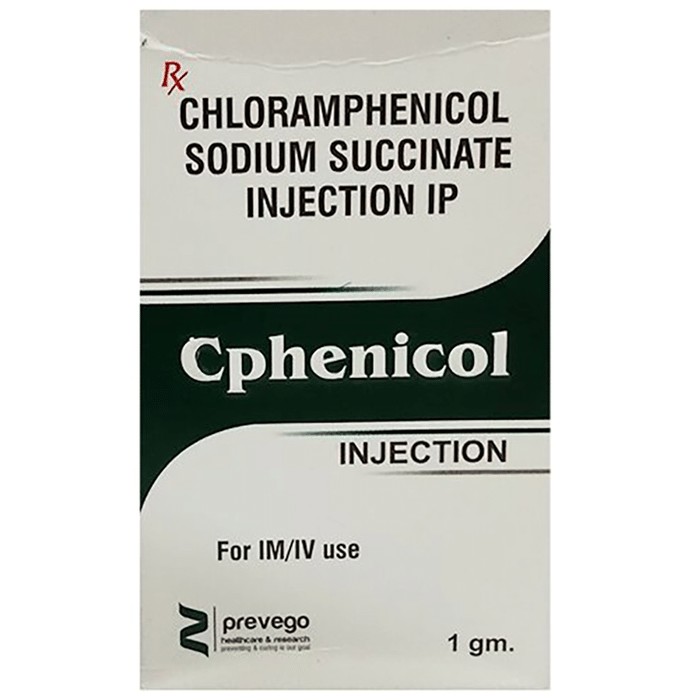


Cphenicol Injection

Marketer
Prevego Healthcare & Research Private Limited
Salt Composition
Chloramphenicol (1gm)
Overview Cphenicol Injection
Chloramphenicol injection is a potent antibacterial agent effective against various bacterial infections, particularly when other antibiotics prove ineffective. Its mechanism involves bacterial cell death, targeting severe infections in hospitalized patients. Importantly, it is not effective against viral infections. Administered intravenously, either via drip or direct injection, under strict medical supervision, the dosage is individualized based on infection severity, location, and type. Complete the prescribed course, even with symptom improvement; premature discontinuation risks relapse or worsened infection. Potential side effects include nausea, vomiting, diarrhea, altered taste, and localized injection site reactions (redness, swelling). These are usually transient, resolving during treatment. Report persistent or bothersome side effects to your physician. Prior to commencing treatment, disclose any pre-existing liver or kidney conditions, or antibiotic allergies. Regular blood tests to monitor blood cell counts may be recommended. Pregnant or breastfeeding individuals should seek medical counsel before use.
Uses of Cphenicol Injection
Management of serious bacterial infections
Major Benefits of Cphenicol Injection:
Administering this medication will be handled by your healthcare provider. Self-medication is strongly discouraged.
Common Side effects of Cphenicol Injection:
- Vomiting
- Nausea
- Diarrhea
- Taste change
- Injection site reactions (pain, swelling, redness)
How to use Cphenicol Injection:
This medication will be administered by your physician or registered nurse; self-medication is strictly prohibited.
How Cphenicol Injection works:
Chloramphenicol Injection is a bacteriostatic antibiotic that inhibits bacterial proliferation. This action is achieved by interfering with the synthesis of proteins crucial for bacterial survival. While not directly bactericidal, it effectively limits bacterial growth, ultimately resolving the infection.
SAFETY ADVICE
 AlcoholUNSAFE
Ingestion of alcohol during Cphenicol Injection treatment can lead to adverse effects including facial flushing, tachycardia, nausea, thirst, chest pain, and hypotension (a disulfiram-like reaction).
 PregnancyCONSULT YOUR DOCTOR
Chloramphenicol injection carries potential risks during pregnancy. While human data is scarce, animal research indicates adverse effects on fetal development. A physician will assess the advantages against possible hazards prior to prescribing. Seek medical advice.
 Breast feedingCONSULT YOUR DOCTOR
Chloramphenicol injection is likely unsafe for breastfeeding mothers. Available human data indicates potential transfer to breast milk, posing a risk to the infant.
 DrivingUNSAFE
Following administration of chloramphenicol injection, temporary blurred vision may occur. Refrain from driving until visual acuity returns to normal.
 KidneySAFE IF PRESCRIBED
Chloramphenicol injection appears safe for individuals with impaired renal function. Existing evidence indicates that dosage modification may not be necessary for this population. Physician consultation is recommended.
 LiverCONSULT YOUR DOCTOR
Insufficient data exists regarding the administration of chloramphenicol injections to individuals with hepatic impairment. Physician consultation is advised.
What if you forget to take Cphenicol Injection :
Omit a dose of Chloramphenicol Injection? Seek your physician's advice.
Facts to Know About Cphenicol Injection
| Label | Value |
|---|---|
| Chemical Category | Amphenicol antibiotics |
| Developing Habits | No. |
| Treatment Category | Antimicrobial Agents |
| Action Class | Chloramphenicol |
 3,018 People bought this recently