


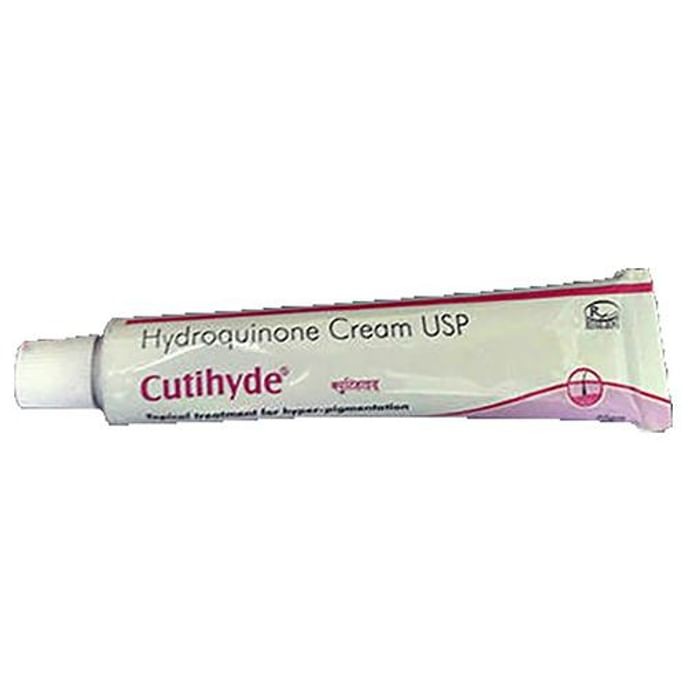
Cutihyde Cream

Marketer
Resilient Cosmecueticals Pvt Ltd
Salt Composition
Hydroquinone (3% w/w)
Overview Cutihyde Cream
Melasma treatment utilizes Cutihyde Cream, a topical depigmenting agent. This medication lightens hyperpigmented skin patches by diminishing melanin production, facilitating reversible skin lightening. Apply only externally, following your doctor's prescribed dosage and duration. Always wash hands before and after application for hygiene. Consistent use maximizes efficacy; avoid overuse to minimize potential adverse events. While rare, side effects such as dryness, itching, burning, peeling, or redness may occur. Report persistent or bothersome side effects immediately. Consult the accompanying patient information leaflet. Eye contact should be avoided; rinse thoroughly with water if it occurs. A patch test on unbroken skin near the affected area for several days is recommended to assess for allergic reactions; discontinue use if irritation, significant inflammation, or swelling develops. Pregnant individuals should seek medical advice before use. Treatment should cease after two months if no improvement is observed.
Uses of Cutihyde Cream
Hyperpigmentation of the face
Major Benefits of Cutihyde Cream:
Apply this medication topically only. Follow your physician's instructions precisely regarding dosage and treatment length. Always consult the product label for application details. Ensure the affected area is clean and dry before applying the cream. Afterwards, wash your hands thoroughly, except when the hands themselves are the treatment site.
Common Side effects of Cutihyde Cream:
- Erythema (skin redness)
- Dryness and fissuring of paranasal and infraorbital areas
- Stinging sensation
How to use Cutihyde Cream:
Apply this medication topically only. Follow your physician's instructions precisely regarding dosage and treatment length. Always consult the product label for application details prior to use. Ensure the affected skin is clean and dry before applying the cream. Wash your hands thoroughly afterwards, except when the affected area is on your hands.
How Cutihyde Cream works:
Cutihyde Cream reduces skin pigmentation.
SAFETY ADVICE
 AlcoholNone
No known drug interactions.
 PregnancyCONSULT YOUR DOCTOR
Employing Cutihyde Cream during pregnancy may pose risks. While human research is scant, animal studies indicate potential harm to the unborn child. A physician will assess the advantages against possible dangers prior to any prescription. Seek medical advice.
 Breast feedingSAFE IF PRESCRIBED
The use of Cutihyde Cream while breastfeeding is likely safe. Available human data indicates minimal risk to the infant.
 DrivingNone
No known drug interactions.
 KidneyNone
No known drug interactions.
 LiverNone
No drug interactions identified.
What if you forget to take Cutihyde Cream :
Should you forget a Cutihyde Cream application, use it at your earliest convenience. However, if your next scheduled application is imminent, omit the missed one and resume your usual routine. Never apply a double dose.
Facts to Know About Cutihyde Cream
| Label | Value |
|---|---|
| Chemical Category | Hydroquinone-based compound |
| Developing Habits | No. |
| Behavioral Class | Brightening and depigmenting skin treatment |
 3,018 People bought this recently