


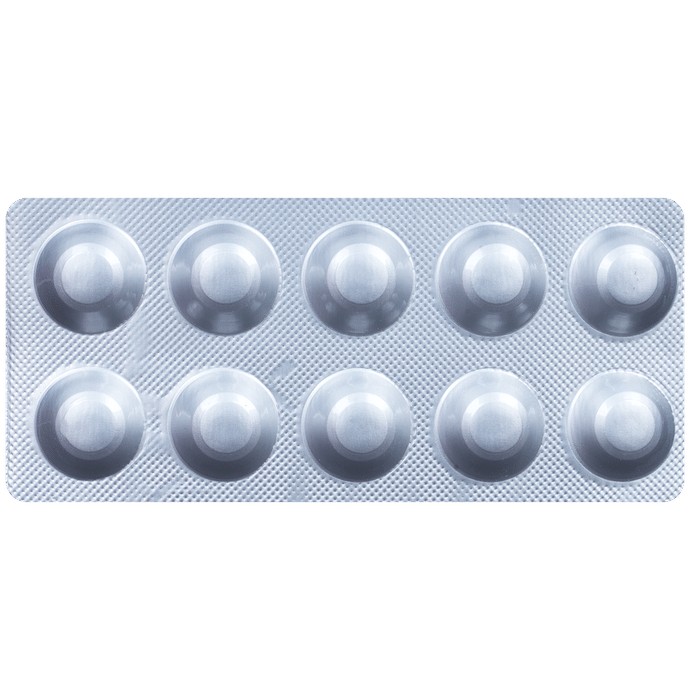
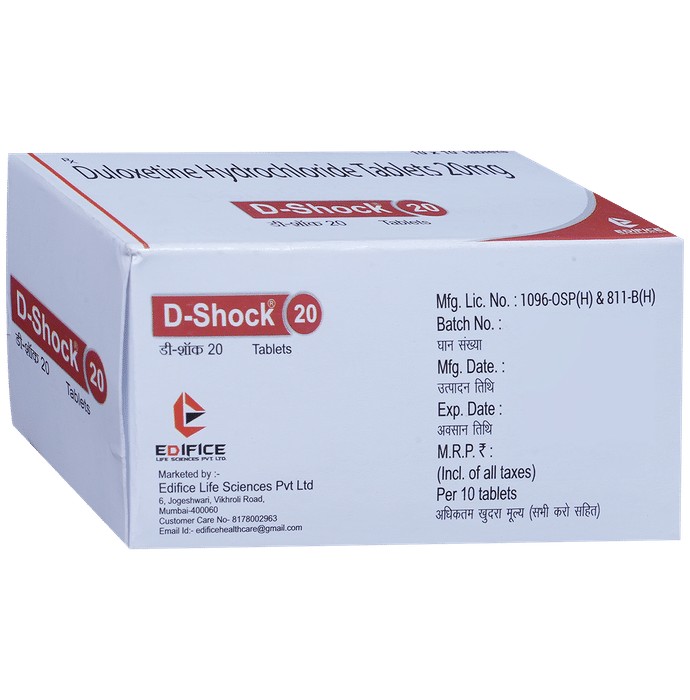
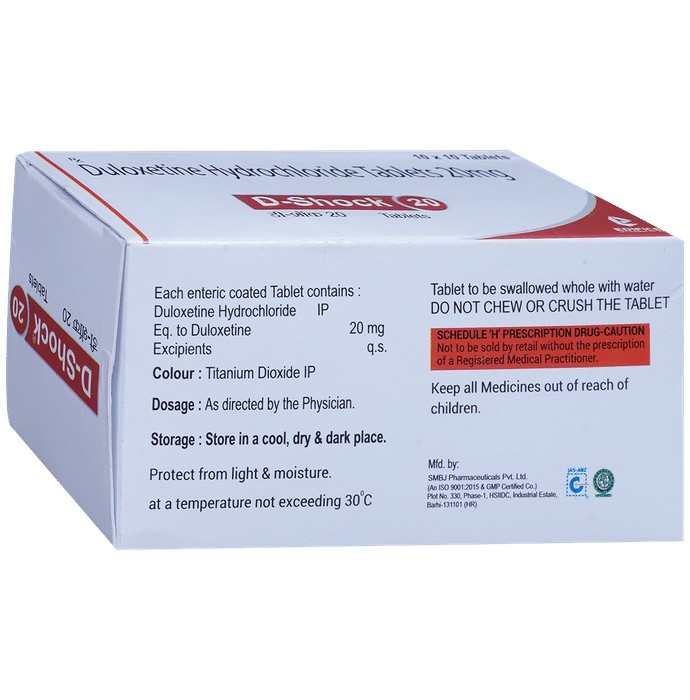
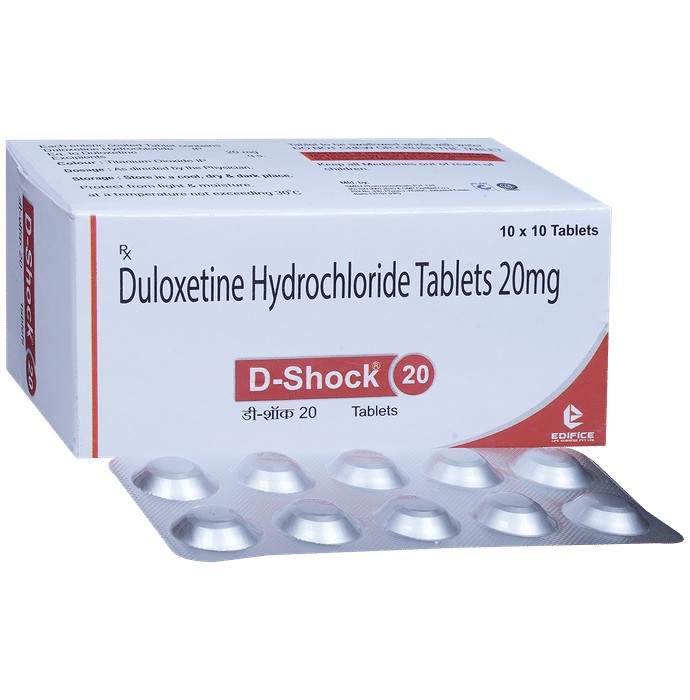
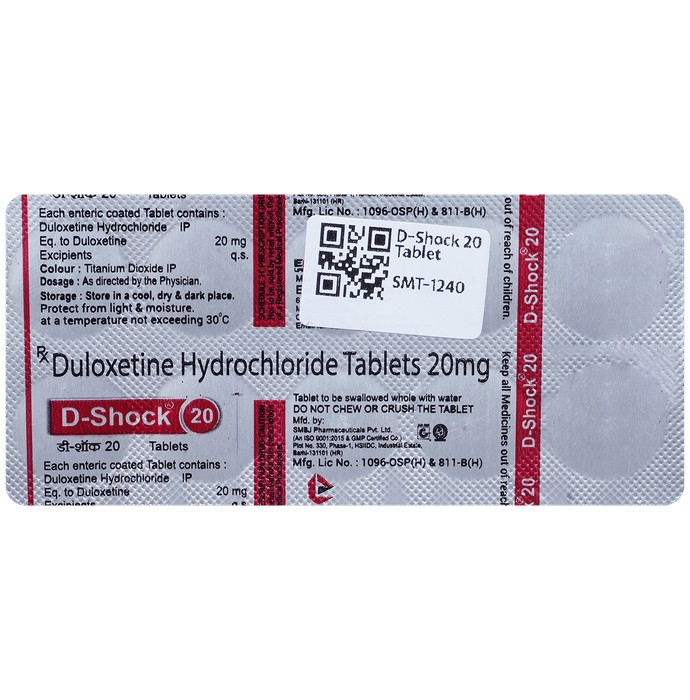
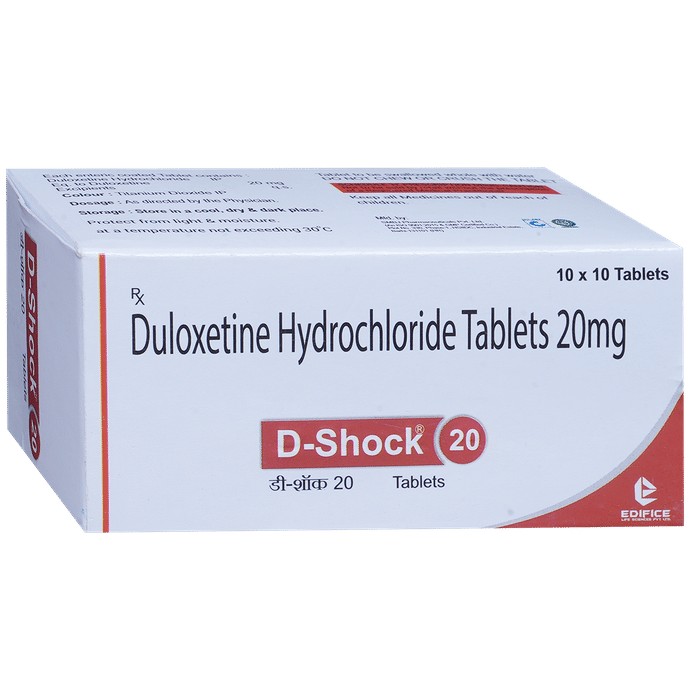
D-Shock 20 Tablet

Marketer
Edifice Laboratories
Salt Composition
Duloxetine (20mg)
Overview D-Shock 20 Tablet
Deprex-20 tablets effectively manage depression, anxiety, diabetic neuropathy, fibromyalgia (characterized by widespread body pain and tenderness), neuropathic pain, and stress incontinence. Deprex-20 achieves this by boosting brain levels of serotonin and norepinephrine, neurotransmitters that promote calmness and nerve relaxation. It can be administered with or without food; consistent daily dosing ensures stable blood levels. Missed doses should be taken promptly upon recollection; complete the prescribed course, even with symptom improvement. Abrupt cessation is inadvisable due to potential symptom exacerbation. Common, typically transient, side effects include nausea, headache, reduced libido, vivid dreams, blurred vision, and dry mouth. Dizziness and drowsiness may occur, necessitating caution with driving or tasks requiring concentration until the medication's effects are known. Persistent or bothersome side effects warrant medical consultation. Prior to commencing Deprex-20, disclose any kidney, heart, or liver conditions, or a history of seizures. Report any unusual mood or behavioral shifts, worsening depression, or suicidal ideation to your physician immediately.
Primary Ingredients of D-Shock 20 Tablet
No text provided. Please provide the text you wish me to rewrite.
Uses of D-Shock 20 Tablet
Managing diabetic neuropathy, depression, and anxiety; addressing neuropathic pain, fibromyalgia, and stress incontinence.
Major Benefits of D-Shock 20 Tablet:
Administer this medication precisely as your physician directs, adhering to both the prescribed dosage and treatment duration. Ingest the tablet whole; avoid chewing, crushing, or fracturing it. D-Shock 20 Tablets can be consumed with or without food, though consistent timing is recommended.
Common Side effects of D-Shock 20 Tablet:
- Nausea
- Headache
- Dryness in mouth
- Sleepiness
- Dizziness
- Blurred vision
- Decreased libido
- Abnormal dreams
How to use D-Shock 20 Tablet:
Follow your doctor's instructions precisely regarding the dosage and treatment length for D-Shock 20 Tablets. Ingest the tablet whole; do not crush, chew, or divide it. D-Shock 20 Tablets can be taken with or without food, although consistent timing is recommended.
How D-Shock 20 Tablet works:
D-Shock 20 Tablets elevate brain levels of serotonin and noradrenaline, neurotransmitters crucial for emotional equilibrium and the inhibition of pain signals.
SAFETY ADVICE
 AlcoholUNSAFE
Consuming alcohol while taking D-Shock 20 Tablet is dangerous.
 PregnancyCONSULT YOUR DOCTOR
The use of D-Shock 20 Tablet during pregnancy may pose risks. While human research is scant, animal studies indicate potential harm to a developing fetus. A physician will assess the potential benefits against any risks prior to prescribing. Consult your doctor for advice.
 Breast feedingCONSULT YOUR DOCTOR
The use of D-Shock 20 Tablets while breastfeeding is likely inadvisable. Preliminary human data indicate potential transfer of the medication into breast milk, posing a possible risk to the infant.
 DrivingUNSAFE
Taking D-Shock 20 Tablets might reduce attentiveness, impair vision, and cause drowsiness or dizziness. Refrain from driving if you experience these effects.
 KidneyCAUTION
Patients with severe kidney impairment should use D-Shock 20 Tablet cautiously, potentially requiring dosage modification. Physician consultation is recommended.
 LiverUNSAFE
The use of D-Shock 20 Tablets is likely contraindicated for individuals with hepatic impairment and should be omitted. Physician consultation is recommended.
What if you forget to take D-Shock 20 Tablet :
Should you forget to take a D-Shock 20 Tablet, administer it at your earliest convenience. If, however, your next scheduled dose is imminent, omit the missed tablet and resume your usual dosing regimen. Never take more than the prescribed dose.
Facts to Know About D-Shock 20 Tablet
| Label | Value |
|---|---|
| Chemical Classification | Naphthalenic Compound |
| Developing Habits | No. |
| Treatment Category | Neuroscience of the Central Nervous System |
 3,018 People bought this recently