


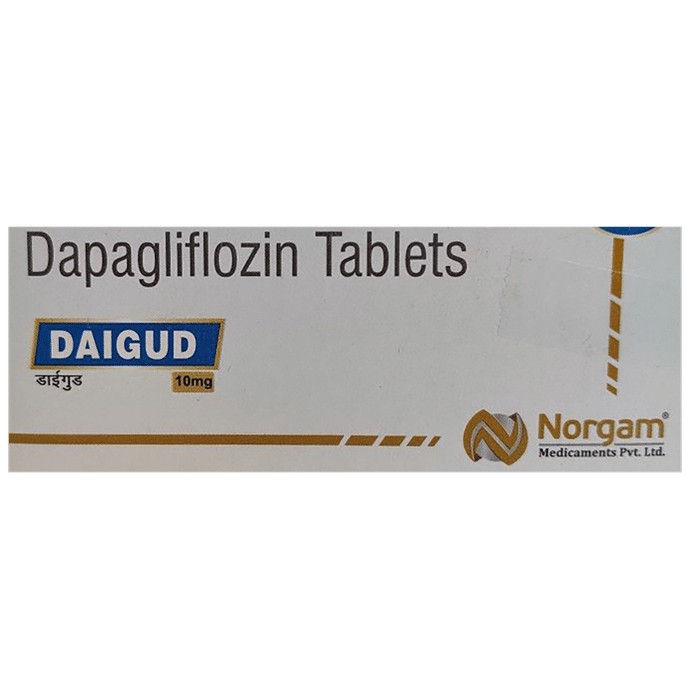
Daigud 10mg Tablet

Marketer
Norgam Medicaments Pvt Ltd
Salt Composition
Dapagliflozin (10mg)
Overview Daigud 10mg Tablet
Glycemia-10 tablets (10mg) are indicated, either monotherapeutically or in conjunction with other medications, for managing type 2 diabetes. It effectively regulates elevated blood glucose, mitigating the risk of severe diabetic complications and contributing to cardiovascular health preservation. Glycemia-10 may be administered with or without food, consistently at the same time daily, as prescribed by your physician. Discontinuation requires medical consultation, as abrupt cessation can lead to hyperglycemia and potentially serious sequelae such as nephropathy and retinopathy. This medication forms part of a comprehensive treatment regimen, encompassing a balanced diet, regular physical activity, and weight management, under professional guidance. Commonly reported adverse effects include vaginal candidiasis, nasopharyngitis, and urinary tract infections; dehydration is also a possibility, necessitating adequate hydration. Practicing meticulous hygiene minimizes the likelihood of genital fungal infections. Prior to commencement, patients with renal or hepatic impairment, urinary tract infections, or those using diuretics should consult their physician. Pregnant or lactating individuals should seek medical counsel before initiating treatment. Excessive alcohol consumption should be avoided, given its potential to exacerbate adverse reactions. Regular blood glucose monitoring is crucial throughout therapy.
Primary Ingredients of Daigud 10mg Tablet
No text provided. Please provide the text you wish me to rephrase.
Uses of Daigud 10mg Tablet
Managing type 2 diabetes
Major Benefits of Daigud 10mg Tablet:
Consume this medication precisely as your physician directs, adhering to both the prescribed dosage and treatment period. Ingest the 10mg Daigud tablet whole; avoid chewing, crushing, or fracturing it. While it can be taken with or without food, consistent timing is recommended for optimal results.
Common Side effects of Daigud 10mg Tablet:
- Polyuria
- Nausea
- Vomiting
- Dyslipidemia
- Genital fungal infection
- Nasopharyngitis (inflammation of the throat and nasal passages)
- Urinary tract infection
How to use Daigud 10mg Tablet:
Follow your doctor's instructions precisely regarding dosage and treatment length for this medication. Ingest the 10mg Daigud Tablet whole; avoid chewing, crushing, or breaking it. This medication can be taken with or without food, though consistent timing is recommended.
How Daigud 10mg Tablet works:
Daigud 10mg tablets manage blood sugar levels. This medication achieves this by facilitating the excretion of surplus glucose via the urine.
SAFETY ADVICE
 AlcoholUNSAFE
Avoid alcohol while taking Daigud 10mg tablets.
 PregnancyCONSULT YOUR DOCTOR
Use of Daigud 10mg Tablet during pregnancy may pose risks. While human research is scant, animal studies indicate potential harm to the fetus. A physician will assess the benefits against possible risks prior to prescribing. Seek medical advice.
 Breast feedingCONSULT YOUR DOCTOR
Limited evidence indicates potential risks associated with Daigud 10mg Tablet use while breastfeeding. The drug might transfer to breast milk, posing a possible threat to the infant.
 DrivingCAUTION
Driving ability can be impaired by both hypoglycemia and hyperglycemia. Refrain from driving if you experience these conditions.
 KidneyUNSAFE
Individuals with kidney impairment should likely refrain from using Daigud 10mg Tablets due to potential safety risks. Medical advice is recommended.
 LiverSAFE IF PRESCRIBED
Daigud 10mg tablets pose no safety concerns for patients with hepatic impairment; no dosage modification is necessary.
What if you forget to take Daigud 10mg Tablet :
Should you forget a Daigud 10mg Tablet dose, take it immediately. If your next dose is imminent, however, omit the missed dose and resume your usual dosing schedule. Never take a double dose.
Facts to Know About Daigud 10mg Tablet
| Label | Value |
|---|---|
| Chemical Category | Phenolic Glycoside Derivative |
| Developing Habits | No. |
| Treatment Category | Diabetes Management |
| Action Class | Sodium-glucose cotransporter 2 (SGLT2) inhibitors |
 3,018 People bought this recently