


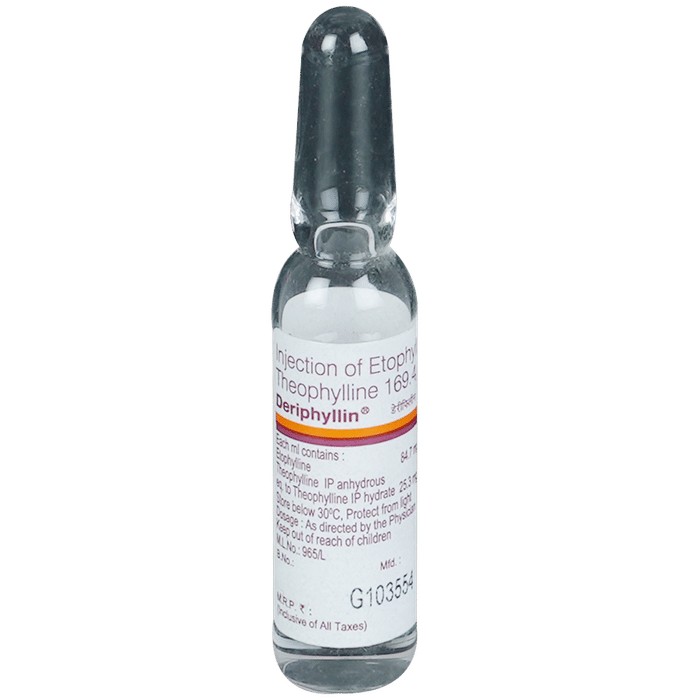
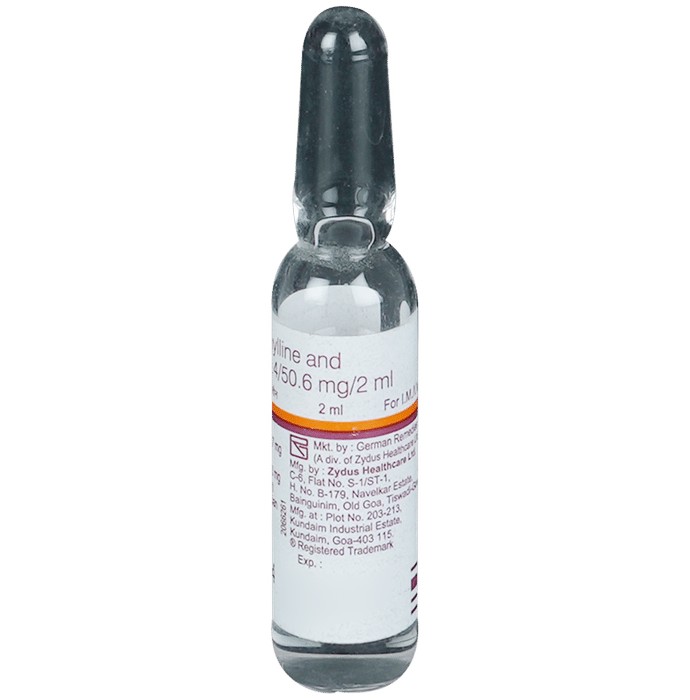
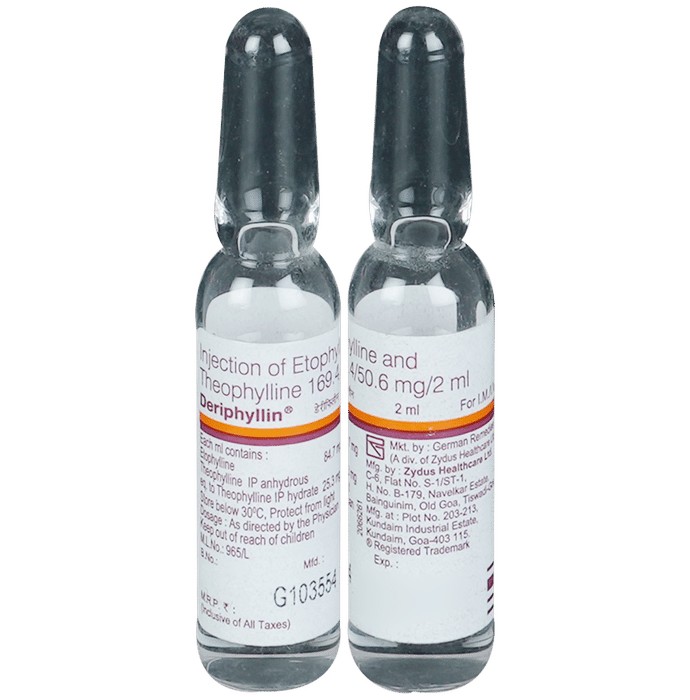
Deriphyllin Injection

Marketer
Zydus Cadila
Salt Composition
Etofylline (84.7mg) + Theophylline (25.3mg)
Overview Deriphyllin Injection
Aminophylline injection is indicated for managing asthma and chronic obstructive pulmonary disease (COPD), a lung condition characterized by restricted airflow. Its mechanism of action involves bronchodilation, easing breathing difficulties. Administration is strictly by a medical professional, with dosage tailored to individual patient needs and response. Continuous use, as directed by your physician, is crucial; premature cessation may lead to symptom recurrence and disease exacerbation. Complete disclosure of all other medications to your healthcare provider is essential due to potential drug interactions. Commonly reported adverse effects include nausea, vomiting, dyspepsia, headache, and agitation; these are usually transient. Report any concerning side effects immediately to your doctor. Prior to treatment, disclose any pre-existing cardiac, renal, or hepatic conditions to allow for appropriate dose adjustment. Similarly, inform your doctor of pregnancy, pregnancy intentions, or breastfeeding.
Uses of Deriphyllin Injection
Managing Chronic Obstructive Pulmonary Disease (COPD)
Major Benefits of Deriphyllin Injection:
Administering this medication will be done by your healthcare provider. Self-medication is strongly discouraged.
Common Side effects of Deriphyllin Injection:
- Nausea
- Vomiting
- Headache
- Restlessness
How to use Deriphyllin Injection:
The medication will be administered by your healthcare provider. Self-medication is strongly discouraged.
How Deriphyllin Injection works:
Etofylline and theophylline, the active components of Deriphyllin Injection, act synergistically as bronchodilators. By relaxing airway muscles, they increase airway diameter, thereby facilitating respiration.
SAFETY ADVICE
 AlcoholUNSAFE
Deriphyllin Injection should not be used concurrently with alcohol.
 PregnancyCONSULT YOUR DOCTOR
Use of Deriphyllin Injection during pregnancy may pose risks. While human data is scarce, animal research indicates potential harm to a developing fetus. A physician will assess the potential advantages against any risks prior to prescribing. Patient consultation with their doctor is advised.
 Breast feedingSAFE IF PRESCRIBED
Deriphyllin Injection poses minimal risk during lactation. Research in humans indicates negligible transfer of the medication into breast milk, posing no significant threat to the infant. A precautionary measure to minimize any potential exposure is to delay breastfeeding for two to four hours following Deriphyllin administration.
 DrivingCONSULT YOUR DOCTOR
Driving ability while using Deriphyllin Injection is undetermined. Refrain from driving if experiencing symptoms impairing concentration or reaction time.
 KidneyCONSULT YOUR DOCTOR
Data regarding Deriphyllin Injection use in individuals with renal impairment is scarce. Physician consultation is recommended.
 LiverCAUTION
Theophylline injection requires careful administration in individuals with hepatic impairment. Dosage modification may be necessary. Physician consultation is advised.
What if you forget to take Deriphyllin Injection :
Should you forget a Deriphyllin Injection dose, seek your physician's advice.
Facts to Know About Deriphyllin Injection
| Label | Value |
|---|---|
| Developing Habits | No. |
| Type of Therapy | Breathing |
 3,018 People bought this recently