


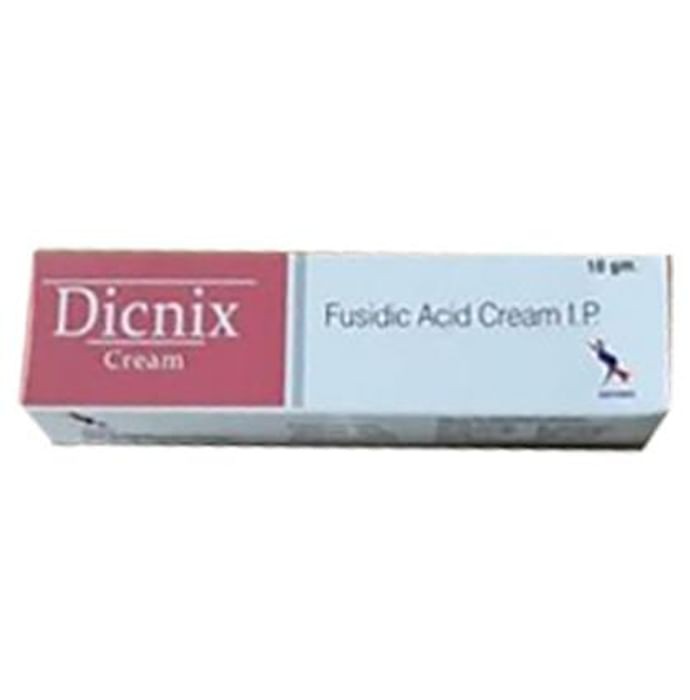
Dicnix Cream

Marketer
Saphnix Life Sciences
Salt Composition
Fusidic Acid (2% w/w)
Overview Dicnix Cream
DermaClear cream, an antibacterial topical treatment, effectively combats bacterial skin infections like impetigo and infected eczema. Its mechanism involves inhibiting the growth of infectious organisms, thus alleviating infection symptoms. Always adhere to your physician's prescribed dosage and treatment duration. This medication is for external use only; consistent application ensures optimal results. Avoid overuse, as this won't accelerate healing and may heighten potential side effects. Apply to clean, dry skin. Thorough hand washing before and after application is crucial. A temporary burning sensation, irritation, itching, or redness may occur upon application; these typically resolve spontaneously. Report any persistent or worsening symptoms to your doctor. Prevent eye contact; if accidental contact occurs, immediately flush with water and seek medical advice. Unless advised by a doctor, avoid airtight bandages on the treated area to minimize side effect risk. Inform your doctor about pregnancy, pregnancy plans, or breastfeeding.
Uses of Dicnix Cream
Management of bacterial dermatological and ophthalmological infections
Major Benefits of Dicnix Cream:
Apply this medication topically only. Follow your physician's instructions regarding dosage and treatment length. Always consult the product label for application details. Ensure the affected skin is clean and dry before applying the cream. Wash your hands thoroughly afterward, except when the hands themselves are being treated.
Common Side effects of Dicnix Cream:
- Application site reactions (burning, irritation, itching and redness)
How to use Dicnix Cream:
Apply this medication solely to the skin's surface. Follow your physician's instructions precisely regarding dosage and treatment length. Always consult the product label for application guidelines. Ensure the affected area is clean and dry before applying the cream. Afterwards, wash your hands thoroughly, except when the hands themselves are the treatment site.
How Dicnix Cream works:
Dicnix Cream, an antibacterial topical agent, inhibits bacterial protein synthesis, thereby combating the microorganisms responsible for skin infections and limiting their spread.
SAFETY ADVICE
 AlcoholNone
No known drug interactions.
 PregnancySAFE IF PRESCRIBED
Dicnix Cream is typically deemed safe for use while pregnant. Preclinical trials in animals revealed minimal or no harmful consequences to the fetus; nevertheless, data from human trials are scarce.
 Breast feedingSAFE IF PRESCRIBED
Using Dicnix Cream while breastfeeding is likely safe. Available human data indicates minimal risk to the infant.
 DrivingNone
No known drug interactions.
 KidneyNone
No drug interactions identified.
 LiverNone
No known drug interactions.
What if you forget to take Dicnix Cream :
Should you forget to use Dicnix Cream, apply it at your earliest convenience. If your next application is nearly due, however, omit the missed dose and resume your usual regimen. Avoid applying a double dose.
Facts to Know About Dicnix Cream
| Label | Value |
|---|---|
| Chemical Category | Steroidal esters |
| Developing Habits | No. |
| Type of Therapy | DERMA |
| Action Class | Drugs that block protein production |
 3,018 People bought this recently