


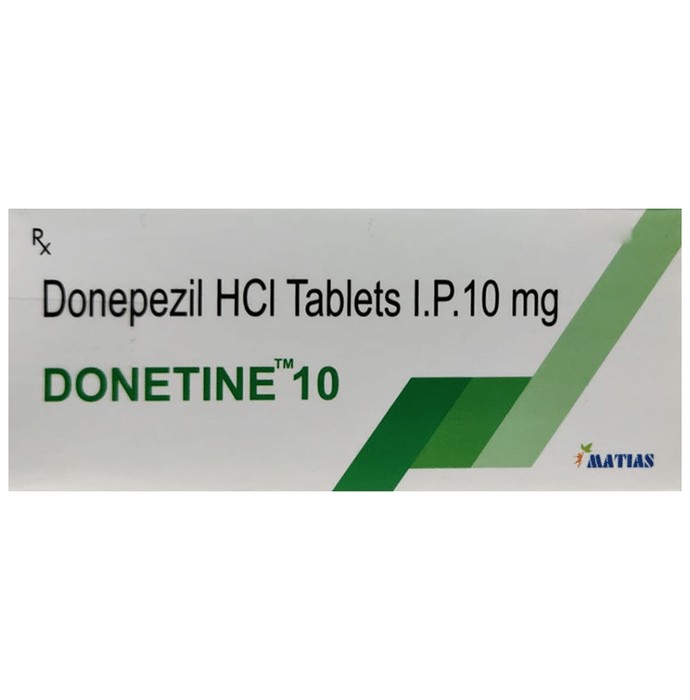
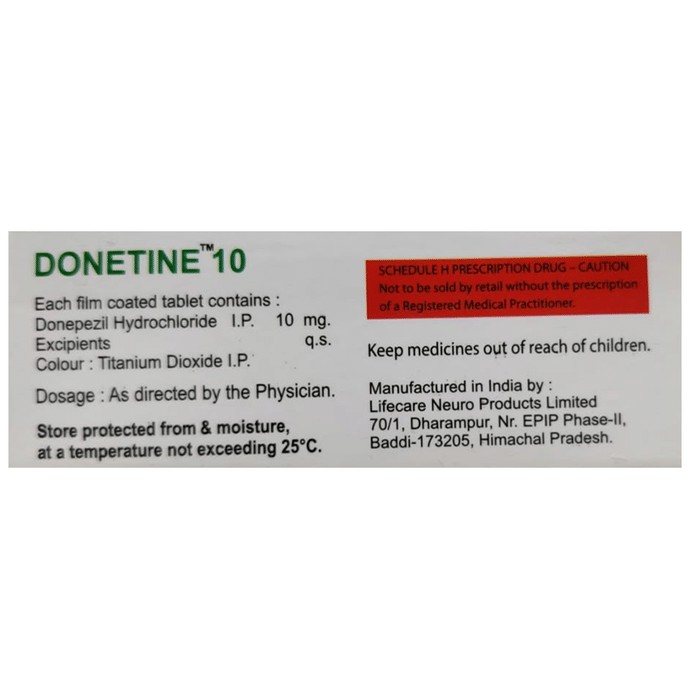
Donetine 10 Tablet

Marketer
Matias Healthcare Pvt Ltd
Salt Composition
Donepezil (10mg)
Overview Donetine 10 Tablet
Alderon 10mg tablets are indicated for managing mild to moderate Alzheimer's disease symptoms. This progressive condition gradually impairs cognitive function and memory; Alderon 10mg does not offer a cure but can potentially alleviate symptoms and enhance cognitive abilities. Your physician will provide specific administration instructions; the medication can be taken with food, ideally before bedtime. Adherence to prescribed dosage and frequency is crucial for optimal therapeutic outcomes. Dosage adjustments may occur to personalize treatment. Symptom improvement may take several weeks; consistent use is therefore vital. Discontinuing Alderon 10mg necessitates prior consultation with your doctor. Potential side effects include nausea, diarrhea, sleeplessness, vomiting, muscle spasms, tiredness, appetite loss, headache, upper respiratory infection, urinary leakage, and skin rashes. Maintain adequate hydration. Side effects may be more pronounced initially or following dosage increases, typically subsiding with continued use. Persistent or severe side effects warrant immediate medical attention. Prior to commencing Alderon 10mg, inform your doctor of any pre-existing conditions such as cardiac issues, peptic ulcers, seizures, or respiratory ailments. Potential drug interactions exist; disclose all current medications for safety. Use during pregnancy requires explicit medical approval.
Uses of Donetine 10 Tablet
Senile dementia of the Alzheimer type
Major Benefits of Donetine 10 Tablet:
Administer this medication precisely as your physician directs, adhering to the prescribed dosage and treatment schedule. Ingest the tablet whole; avoid chewing, crushing, or fracturing it. Donetine 10 Tablets can be consumed with or without food; however, consistent daily timing is recommended.
Common Side effects of Donetine 10 Tablet:
- Common cold
- Urinary incontinence
- Rash
- Nausea
- Diarrhea
- Insomnia (difficulty in sleeping)
- Weight loss
- Accidental injury
How to use Donetine 10 Tablet:
Administer this medication precisely as directed by your physician, adhering to the prescribed dosage and treatment period. Ingest the tablet whole; avoid chewing, crushing, or fracturing it. Donetine 10mg tablets can be consumed with or without food, though consistent timing is recommended.
How Donetine 10 Tablet works:
Cognitive decline characteristic of Alzheimer's arises from impaired neuronal communication. Donetine 10 Tablet, a cholinesterase inhibitor, elevates acetylcholine, a neurotransmitter crucial for nerve signaling. This enhancement facilitates improved cognitive function and memory.
SAFETY ADVICE
 AlcoholUNSAFE
Combining Donetine 10 Tablet with alcohol is inadvisable.
 PregnancyCONSULT YOUR DOCTOR
The use of Donetine 10 Tablet during pregnancy may pose risks. While human research is scarce, animal studies indicate potential harm to the fetus. A physician will assess the potential advantages against any risks prior to prescribing. Seek medical advice.
 Breast feedingCONSULT YOUR DOCTOR
Using Donetine 10 Tablet while breastfeeding is likely inadvisable. Preliminary human evidence indicates potential transfer to breast milk, posing a possible risk to the infant.
 DrivingUNSAFE
Taking Donetine 10mg tablets might reduce alertness, impair vision, and cause drowsiness or dizziness. Refrain from driving if you experience these effects.
 KidneySAFE IF PRESCRIBED
Use of Donetine 10 Tablet in patients with kidney disease appears to pose minimal risk. Existing evidence indicates dose modification may be unnecessary, however, physician consultation is recommended.
 LiverCAUTION
Individuals with hepatic impairment should exercise caution when using Donetine 10 mg tablets. Dosage modification may be necessary. Physician consultation is advised.
What if you forget to take Donetine 10 Tablet :
Omit any missed Donetine 10 Tablet dose and resume your regular medication regimen. Avoid taking a double dose.
Facts to Know About Donetine 10 Tablet
| Label | Value |
|---|---|
| Chemical Type | Carbamate-based compound |
| Developing Habits | No. |
| Treatment Category | Neuroscience, Central Nervous System |
| Behavioral Class | Treating Alzheimer's with Cholinesterase Inhibitors |
 3,018 People bought this recently