


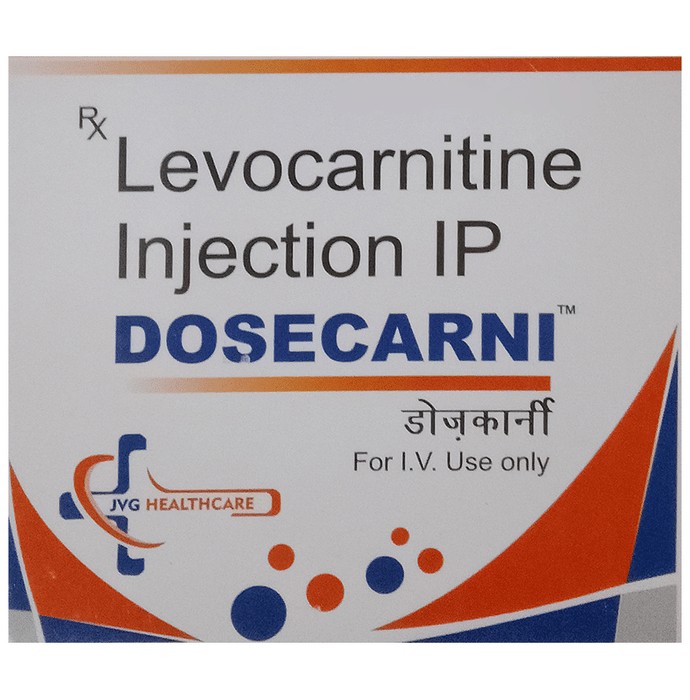
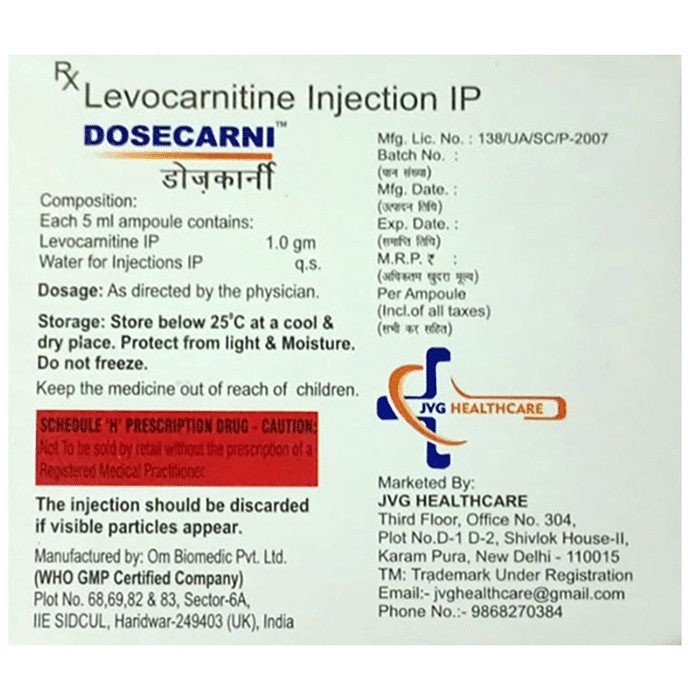
Dosecarni Injection

Marketer
JVG Healthcare
Salt Composition
Levo-carnitine (1gm)
Overview Dosecarni Injection
Carnitine-based Dosecarni Injection treats carnitine deficiency by boosting energy production and overall bodily function. Administered only by medical professionals, self-injection is strictly prohibited. Common, usually mild and transient, side effects include injection site pain, swelling, and redness. While generally safe, Dosecarni may also cause nausea, vomiting, diarrhea, abdominal discomfort, and injection site reactions. Blood glucose monitoring may be necessary during treatment. Prior to commencing treatment, disclose all existing health conditions and medications to your physician. Individuals with severe renal impairment should only use this injection under strict medical supervision.
Primary Ingredients of Dosecarni Injection
No text provided to rephrase.
Uses of Dosecarni Injection
Insufficient carnitine levels
Major Benefits of Dosecarni Injection:
This medication will be administered by your healthcare provider. Self-medication is strongly discouraged.
Common Side effects of Dosecarni Injection:
- Vomiting
- Nausea
- Injection site reactions (pain, swelling, redness)
- Diarrhea
- Abdominal pain
How to use Dosecarni Injection:
This medication will be administered by your healthcare provider. Self-medication is strictly prohibited.
How Dosecarni Injection works:
Carnitine's left-handed isomer, levocarnitine, is an amino acid derivative that functions by augmenting deficient bodily carnitine.
SAFETY ADVICE
 AlcoholCONSULT YOUR DOCTOR
Alcohol consumption alongside Dosecarni Injection poses an unknown safety risk. Seek medical advice before combining them.
 PregnancySAFE IF PRESCRIBED
The administration of Dosecarni Injection is typically deemed safe for pregnant individuals. Preclinical trials using animal models have revealed minimal or no negative consequences for fetal development; nevertheless, research involving human subjects remains insufficient.
 Breast feedingSAFE IF PRESCRIBED
Administering Dosecarni Injection while breastfeeding is likely safe. Available human data indicate minimal risk to the infant.
 DrivingSAFE
Driving ability is typically unaffected by Dosecarni Injection.
 KidneyCAUTION
For individuals with kidney impairment, administration of Dosecarni Injection requires careful consideration. A modified Dosecarni Injection dosage might be necessary. Physician consultation is advised.
 LiverSAFE IF PRESCRIBED
Administering Dosecarni Injection to patients with hepatic impairment appears to pose minimal risk. Current evidence indicates dose modification may be unnecessary in such cases. However, physician consultation is recommended.
What if you forget to take Dosecarni Injection :
Should you forget a Dosecarni Injection, seek your physician's advice.
Facts to Know About Dosecarni Injection
| Label | Value |
|---|---|
| Chemical Type | Amino acids |
| Developing Habits | No. |
| Type of Treatment | Essential Nutrients |
| Actions | The building blocks of proteins |
 3,018 People bought this recently