


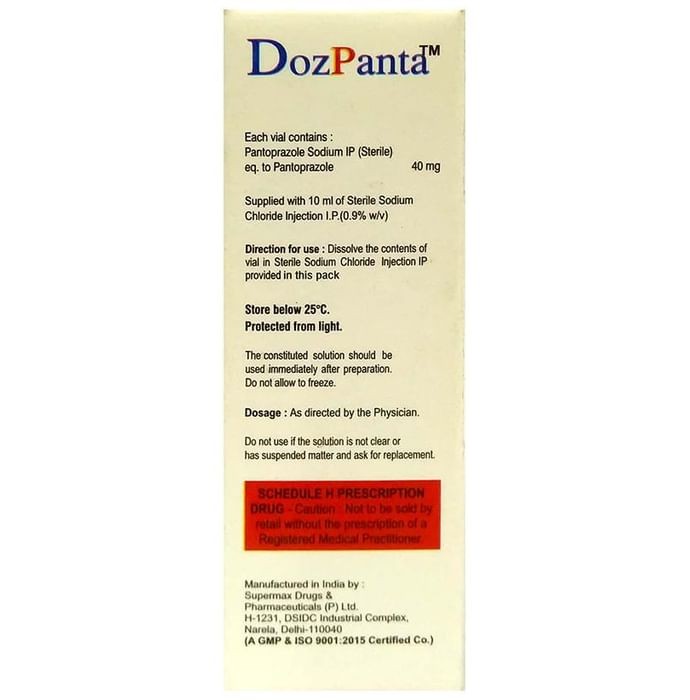
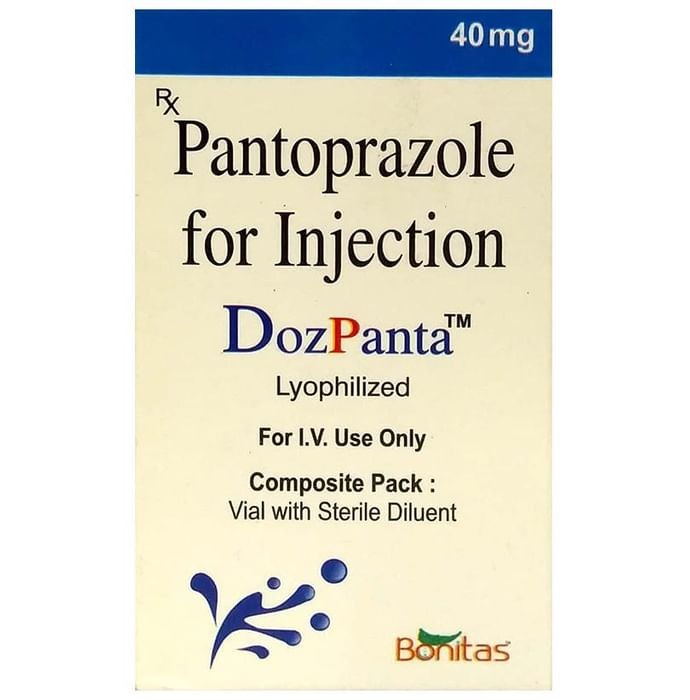
Dozpanta Injection

Marketer
Bonitas Life Science Pvt Ltd
Salt Composition
Pantoprazole (40mg)
Overview Dozpanta Injection
AcidGard Injection lowers stomach acid production. It treats acid-related stomach and intestinal disorders like gastroesophageal reflux disease (GERD), peptic ulcers, and Zollinger-Ellison syndrome, alleviating symptoms and fostering healing. AcidGard Injection also prevents stress ulcers in critically ill patients and is used pre-anesthesia to mitigate aspiration risks. A proton pump inhibitor (PPI), it's intravenously administered by a healthcare provider only when deemed more appropriate than oral medication. Dosage depends on your condition and response; your doctor determines treatment length, which should be completed as prescribed even with rapid symptom resolution. Lifestyle modifications, such as smaller, more frequent meals and avoidance of caffeine, spicy foods, and fatty foods, can enhance treatment effectiveness. Common side effects include nausea, vomiting, headache, dizziness, gas, diarrhea, abdominal pain, and thrombophlebitis (vein inflammation). While usually mild, persistent or bothersome symptoms warrant medical attention. Prolonged use, particularly exceeding one year or at high doses, may elevate bone fracture risk. Discuss bone loss prevention strategies, like calcium and vitamin D supplementation, with your physician. AcidGard Injection is unsuitable for individuals with severe liver disease, those taking HIV medications, those with prior allergic reactions to similar drugs, or those with osteoporosis. Pregnant or breastfeeding individuals should consult their doctor before use. Alcohol should be avoided due to its acid-increasing effect. Refrain from operating machinery if dizziness or drowsiness occurs.
Uses of Dozpanta Injection
Management of gastroesophageal reflux disorder (GERD) | Therapy for peptic ulcers | Zollinger-Ellison syndrome: therapeutic approaches
Major Benefits of Dozpanta Injection:
Administering this medication will be handled by your physician or registered nurse; self-medication is strictly prohibited.
Common Side effects of Dozpanta Injection:
- Diarrhea
- Flatulence
- Headache
- Joint pain
- Nausea
- Stomach pain
- Vomiting
- Dizziness
- Thrombophlebitis
How to use Dozpanta Injection:
Administering this medication will be performed by your doctor or nurse; self-medication is strictly prohibited.
How Dozpanta Injection works:
Dozpanta Injection, a proton pump inhibitor, decreases stomach acid production, thus alleviating heartburn and acid indigestion.
SAFETY ADVICE
 AlcoholUNSAFE
Do not drink alcohol while using Dozpanta Injection.
 PregnancyCONSULT YOUR DOCTOR
The use of Dozpanta Injection during pregnancy may pose risks. While human research is scarce, animal studies indicate potential harm to the fetus. A physician will assess the advantages against possible risks prior to prescribing. Seek medical advice.
 Breast feedingSAFE IF PRESCRIBED
Administration of Dozpanta Injection while breastfeeding is likely safe. Available human data indicates minimal risk to the infant.
 DrivingCONSULT YOUR DOCTOR
The effect of Dozpanta Injection on driving ability is unknown. Refrain from driving if you develop symptoms impairing concentration or reaction time.
 KidneySAFE IF PRESCRIBED
Dozpanta Injection poses no safety concerns for individuals with kidney impairment; no dosage modification is necessary.
 LiverCAUTION
Exercise caution when administering Dozpanta Injection to individuals suffering from advanced hepatic impairment. Dosage modifications for Dozpanta Injection might be necessary. Physician consultation is advised.
What if you forget to take Dozpanta Injection :
Omit a Dozpanta Injection dose? Seek your physician's advice.
Facts to Know About Dozpanta Injection
| Label | Value |
|---|---|
| Pharmaceutical Classification | Benzimidazole sulfoxide compound |
| Potential for Dependence | None. |
| Type of Medication | Gastrointestinal system |
| Mechanism of Action | Gastric acid secretion suppressants |
 3,018 People bought this recently