


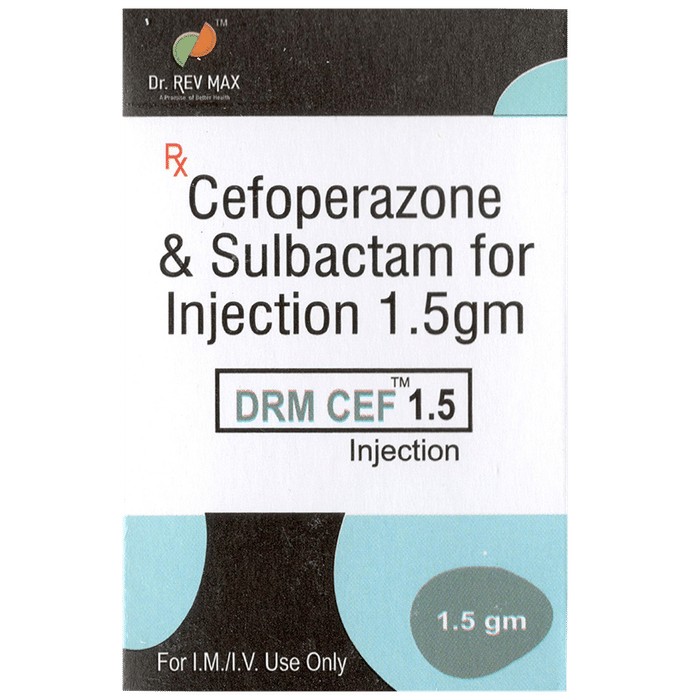
DRM Cef 1.5 Injection

Marketer
Dr.Revmax Healthcare
Salt Composition
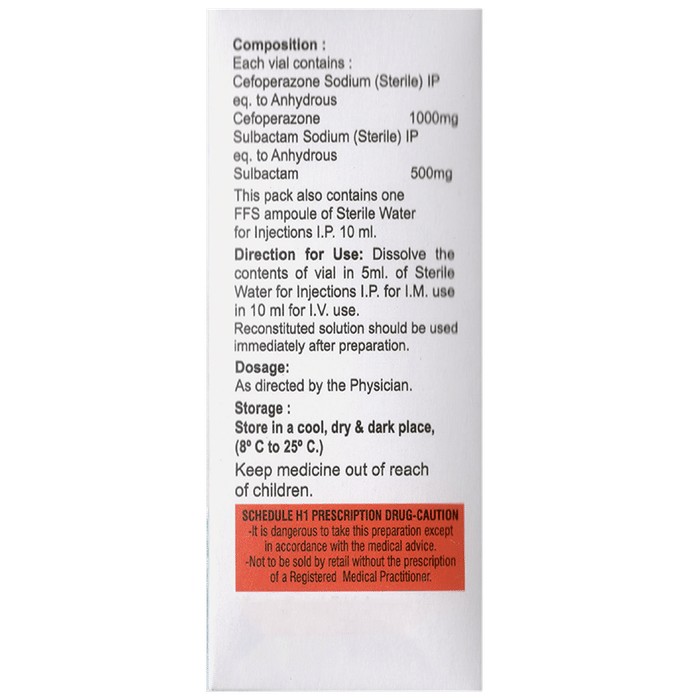
Cefoperazone (1000mg) + Sulbactam (500mg)
Overview DRM Cef 1.5 Injection
Cefixime 1.5g Injection is a dual-action medication used to combat diverse bacterial infections. Its mechanism inhibits bacterial proliferation, thereby curbing infection spread. Administration must be strictly under a physician's guidance; adhere to all scheduled doses. Complete the prescribed treatment cycle, even with symptom improvement; premature cessation may compromise efficacy. Potential side effects include nausea, vomiting, diarrhea, and dyspepsia. Escalating side effects necessitate immediate medical consultation. Seek emergency medical care for allergic reactions (skin rashes, pruritus, edema, dyspnea). Inform your doctor of all concurrent medications, including those for pre-existing conditions. Pregnant or lactating individuals require physician approval prior to use. Alcohol consumption should be avoided due to potential additive drowsiness. While usually non-impairing to driving ability, avoid driving if drowsiness or dizziness occurs. Rest, a nutritious diet, and ample hydration are crucial for optimal recovery. Follow-up laboratory and diagnostic tests may be ordered to monitor treatment response.
Primary Ingredients of DRM Cef 1.5 Injection
The provided text is "undefined," therefore no rewriting is possible.
Uses of DRM Cef 1.5 Injection
Managing bacterial illnesses
Major Benefits of DRM Cef 1.5 Injection:
This medication will be administered by your healthcare provider. Self-medication is strongly discouraged.
Common Side effects of DRM Cef 1.5 Injection:
- Decreased white blood cell count (neutrophils)
- Decreased white blood cell count (lymphocytes)
- Decreased hemoglobin
- Decreased hematocrit level
- Low blood platelets
- Coagulation disorder
- Increased white blood cell count (eosinophils)
- Diarrhea
- Nausea
- Increased alanine aminotransferase
- Increased aspartate aminotransferase
- Increased alkaline phosphatase level in blood
- Vomiting
- Increased bilirubin in the blood
How to use DRM Cef 1.5 Injection:
This medication will be administered by your healthcare provider. Self-medication is strictly prohibited.
How DRM Cef 1.5 Injection works:
Cefoperazone and Sulbactam Injection (DRM Cef 1.5) combines an antibiotic with a resistance-blocking agent. Cefoperazone, the antibiotic component, disrupts bacterial cell wall synthesis, hindering bacterial survival. Sulbactam, a beta-lactamase inhibitor, counters bacterial resistance mechanisms, thereby boosting Cefoperazone's effectiveness.
SAFETY ADVICE
 AlcoholUNSAFE
Ingestion of alcohol during treatment with DRM Cef 1.5 Injection can trigger adverse reactions including facial flushing, tachycardia, nausea, increased thirst, chest discomfort, and hypotension (a Disulfiram-like effect).
 PregnancySAFE IF PRESCRIBED
Cefdinir injection (1.5g) is typically deemed safe for use in pregnancy. Preclinical trials in animals have revealed minimal or no negative impacts on fetal development; however, data from human studies are scarce.
 Breast feedingSAFE IF PRESCRIBED
Cefadroxil 1.5 gram injection (e.g., DRM Cef 1.5) poses minimal risk during lactation. Research in humans indicates negligible drug transfer to breast milk, suggesting minimal infant exposure and no associated harm.
 DrivingCONSULT YOUR DOCTOR
The effect of DRM Cef 1.5 Injection on driving ability is undetermined. Refrain from operating a vehicle if you experience symptoms impairing concentration or reaction time.
 KidneyCONSULT YOUR DOCTOR
Insufficient data exists regarding the administration of DRM Cef 1.5 Injection to individuals with renal impairment. Seek medical advice from your physician.
 LiverCONSULT YOUR DOCTOR
Insufficient data exists regarding the administration of DRM Cef 1.5 Injection to individuals with hepatic impairment. Physician consultation is advised.
What if you forget to take DRM Cef 1.5 Injection :
Omit a DRM Cef 1.5 Injection dose? Seek your physician's advice.
Facts to Know About DRM Cef 1.5 Injection
| Label | Value |
|---|---|
| Developing Habits | No. |
| Type of Therapy | Antimicrobial Agents |
 3,018 People bought this recently