


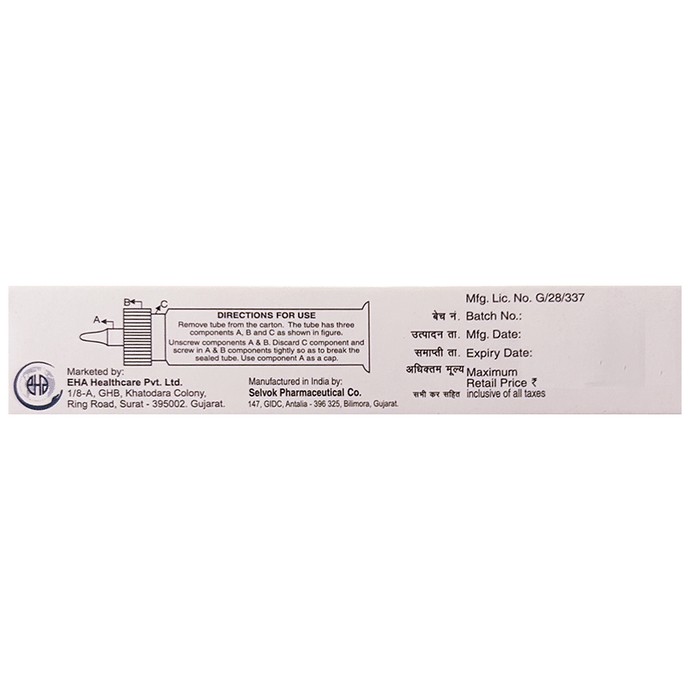
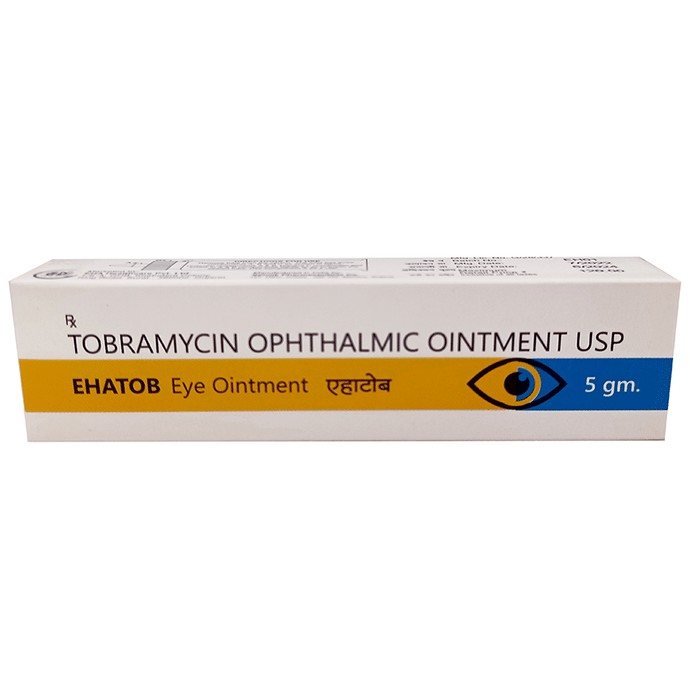
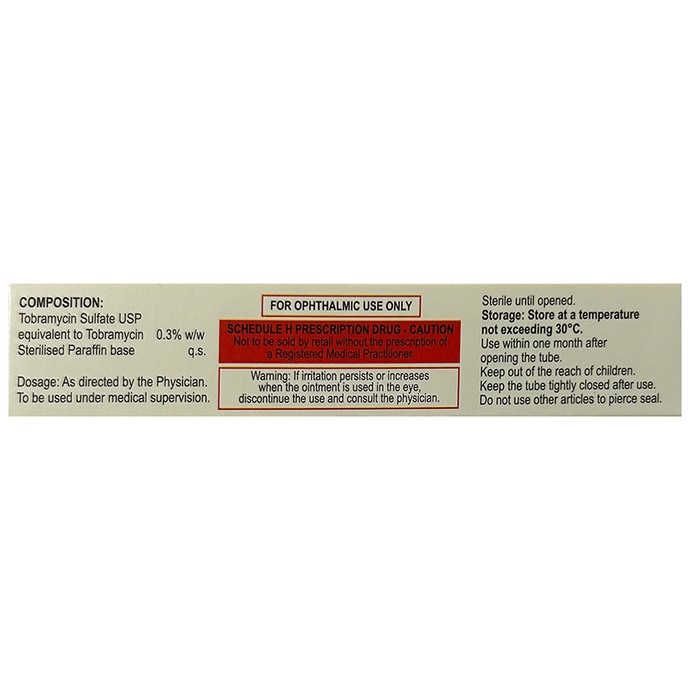
Ehatob Eye Ointment

Marketer
Eha Healthcare Pvt. Ltd.
Salt Composition
Tobramycin (0.3% w/w)
Overview Ehatob Eye Ointment
Opticlear Antibiotic Ointment combats bacterial eye infections such as conjunctivitis and blepharitis, and helps prevent post-surgical or injury infections. This medication halts bacterial growth, resolving the infection. Strictly adhere to your physician's instructions for application, waiting at least five minutes before using other eye medications. Maintain consistent, evenly spaced dosages as prescribed; complete the entire course, even if symptoms improve, to prevent recurrence. Opticlear is ineffective against non-bacterial infections (e.g., viral) and should only be used under medical supervision. Overuse diminishes antibiotic efficacy. Temporary side effects may include mild burning, itching, redness, and irritation; persistent symptoms or worsening condition warrant medical attention. Expect brief, initial visual blurring; avoid driving immediately after application. Refrain from wearing contact lenses during treatment and while the infection persists.
Primary Ingredients of Ehatob Eye Ointment
No information provided. Please provide the text you wish me to rephrase.
Uses of Ehatob Eye Ointment
Managing bacterial infections of the eye
Major Benefits of Ehatob Eye Ointment:
Apply this medication topically only. Administer as prescribed by your physician, adhering to the recommended dosage and treatment schedule. Consult the product label for application instructions prior to use. Position the applicator near the eye, avoiding contact. Gently dispense the medication into the lower conjunctival sac.
Common Side effects of Ehatob Eye Ointment:
- Burning sensation
- Eye redness
- Eye itching
- Eye irritation
How to use Ehatob Eye Ointment:
Apply this medication solely to the outer skin. Follow your physician's instructions precisely regarding dosage and treatment length. Always consult the product label for application guidelines. Keep the applicator tip near, but not touching, the eye. Carefully dispense the medication into the lower eyelid sac.
How Ehatob Eye Ointment works:
Ehatob Ophthalmic Ointment is a bactericidal medication. Its mechanism of action involves inhibiting bacterial protein synthesis, thereby disrupting crucial bacterial processes and resolving the eye infection.
SAFETY ADVICE
 AlcoholNone
No known drug interactions.
 PregnancyCONSULT YOUR DOCTOR
Use of Ehatob Eye Ointment is contraindicated during pregnancy due to established risks to the fetus. In exceptional, life-threatening circumstances, a physician might prescribe it if the potential benefits outweigh the known hazards. Physician consultation is recommended.
 Breast feedingSAFE IF PRESCRIBED
Ehatob ophthalmic ointment is likely safe for breastfeeding mothers. Available human data indicate minimal risk to the infant.
 DrivingCAUTION
Driving may be impaired by excessively low or high blood sugar levels. Refrain from driving if such symptoms arise.
 KidneyNone
No known drug interactions.
 LiverNone
No known drug interactions.
What if you forget to take Ehatob Eye Ointment :
Should you forget a dose of Ehatob Eye Ointment, apply it promptly. Nevertheless, if your next scheduled application is imminent, omit the missed dose and resume your usual dosing regimen. Avoid applying a double dose.
Facts to Know About Ehatob Eye Ointment
| Label | Value |
|---|---|
| Chemical Type | Aminoglycoside antibiotics |
| Developing Habits | No. |
| Type of Therapy | Eye and Ear Care |
 3,018 People bought this recently