


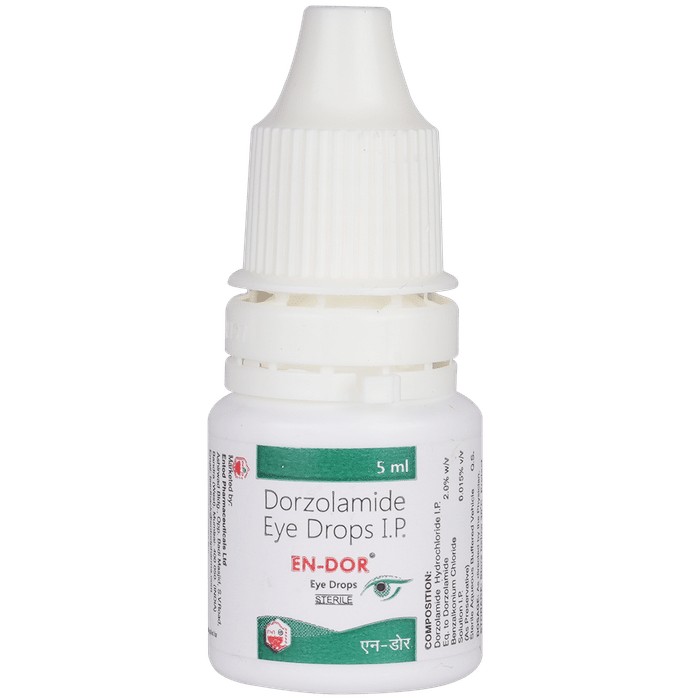
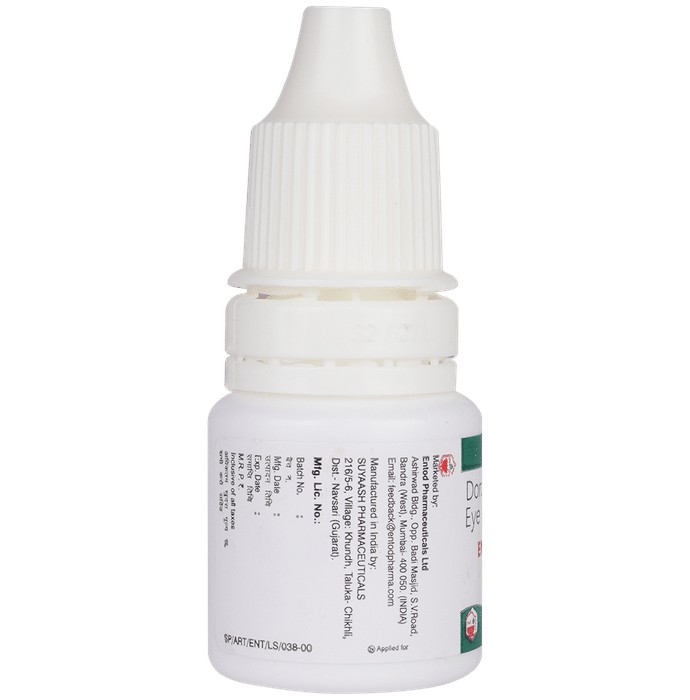
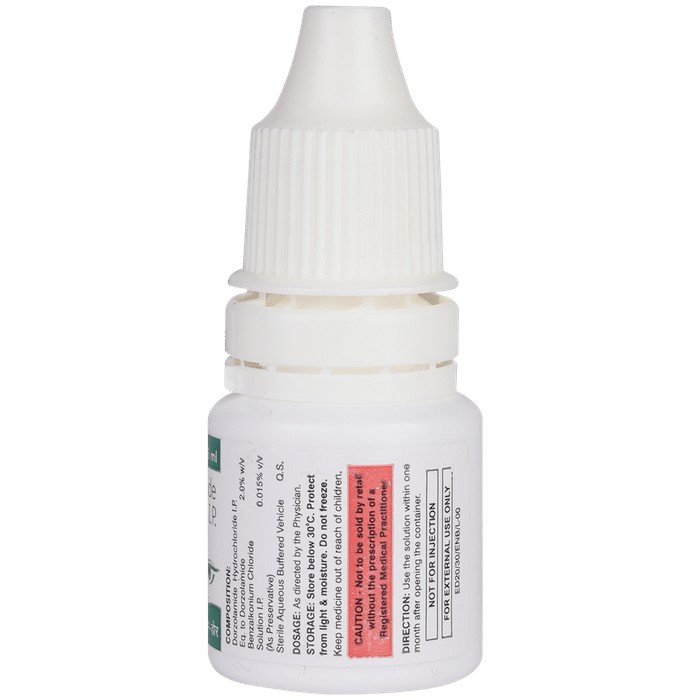
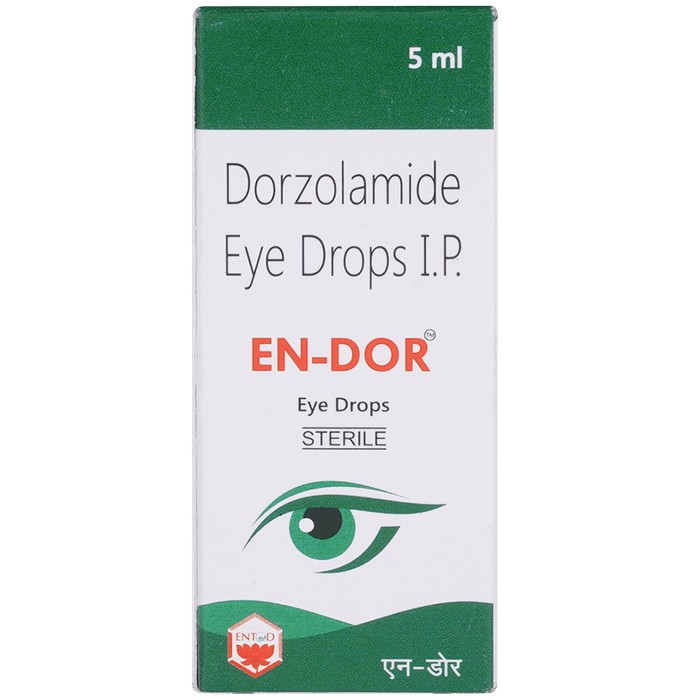
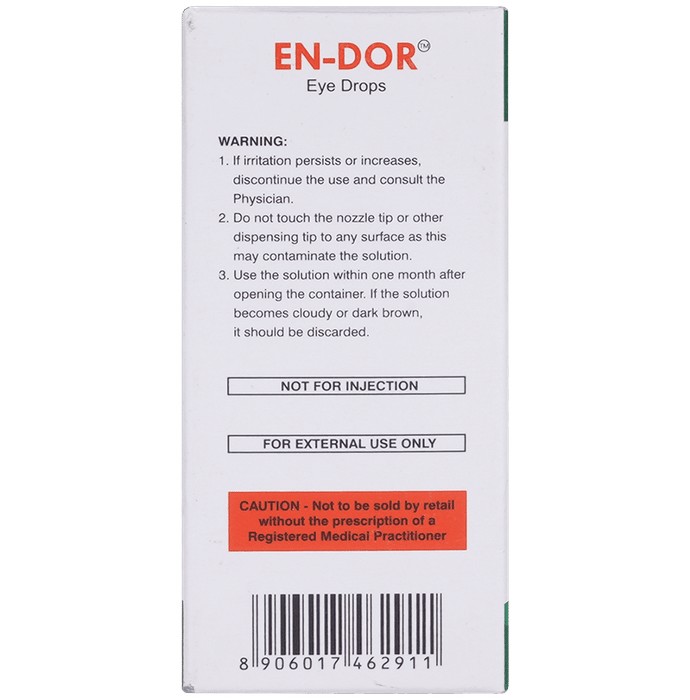
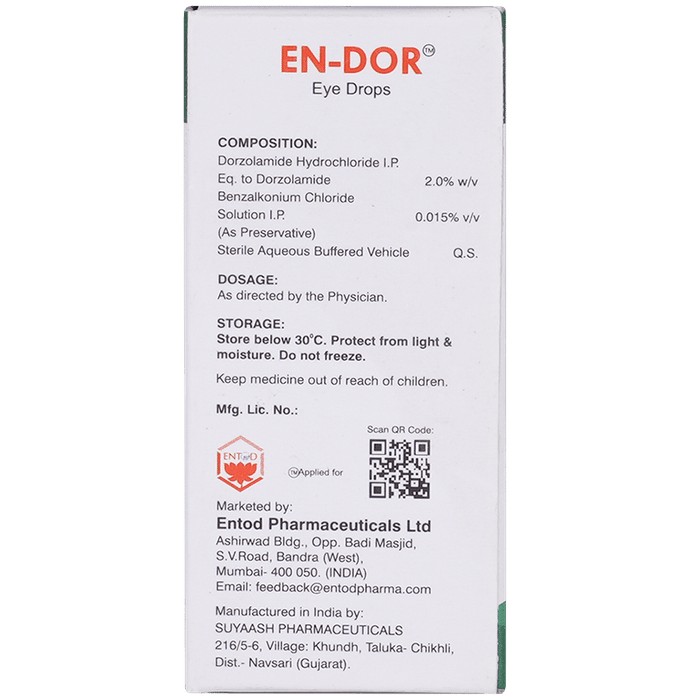
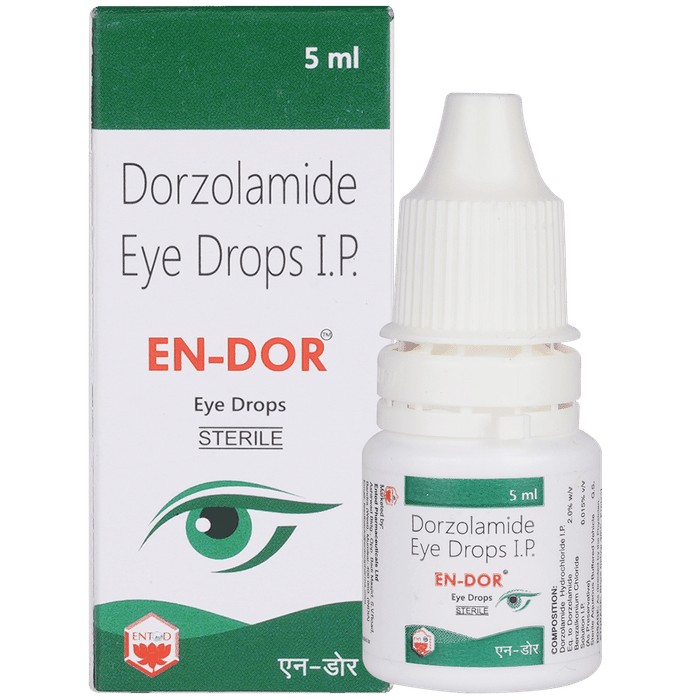
Endor Eye Drop

Marketer
Entod Pharmaceuticals Ltd
Salt Composition
Dorzolamide (2% w/v)
Overview Endor Eye Drop
Glaucoma, a condition causing elevated intraocular pressure, may be treated with Ocu-Mend eye drops. High eye pressure can impair vision. Ocu-Mend reduces intraocular fluid, thus lowering pressure. Discard the bottle if the seal is broken. Always wash your hands and shake the bottle vigorously before each application. Remove contact lenses fifteen minutes prior to administration and wait at least fifteen minutes before reinsertion. Discontinue use only under a physician's guidance; uncontrolled pressure may harm your vision. Common side effects include burning, stinging, blurred vision, eyelid swelling, and a bitter taste. Less frequent side effects include headache, nausea, fatigue, and general eye irritation. Avoid driving if vision is blurred. Consult your doctor before using Ocu-Mend if you have kidney disease, are allergic to sulfonamides, or have liver, dry eye, or corneal issues. Do not use other eye medications concurrently without consulting your physician.
Primary Ingredients of Endor Eye Drop
No text provided to rephrase.
Uses of Endor Eye Drop
Managing Glaucoma
Major Benefits of Endor Eye Drop:
Apply this medication solely to the outer skin surface. Administer it precisely as your physician directs, adhering to the prescribed dosage and timeframe. Always consult the product label for detailed application instructions prior to use. Position the dropper near the eye, avoiding contact, and delicately dispense the medication into the lower eyelid's conjunctival sac. Remove any excess solution.
Common Side effects of Endor Eye Drop:
- Bitter taste
- Blurred vision
- Stinging in the eyes
- Burning eyes
- Eyelid inflammation
How to use Endor Eye Drop:
Apply this medication externally only. Administer it precisely as your physician directs, respecting both dosage and treatment length. Consult the product label for application instructions prior to use. Position the dropper near the eye, avoiding contact, then carefully dispense the medication into the lower eyelid sac. Remove any excess solution.
How Endor Eye Drop works:
Endor Eye Drops contain a carbonic anhydrase inhibitor that reduces intraocular pressure by suppressing aqueous humor formation.
SAFETY ADVICE
 AlcoholNone
No known drug interactions.
 PregnancyCONSULT YOUR DOCTOR
Using Endor Eye Drops during pregnancy may pose risks. While human research is scarce, animal studies indicate potential harm to the unborn child. A physician will assess the advantages against possible dangers prior to prescribing. Seek medical advice.
 Breast feedingSAFE IF PRESCRIBED
Using Endor Eye Drops while breastfeeding is likely safe. Available human data indicates minimal risk to the infant. To minimize drug transfer to breast milk, apply pressure to the inner eye corner for at least one minute following application, subsequently blotting away any excess medication.
 DrivingCONSULT YOUR DOCTOR
Driving ability may be impaired by Endor Eye Drops; however, the extent of this impairment is unknown. Refrain from operating a vehicle if you experience symptoms impacting concentration or reaction time.
 KidneyNone
No drug interactions identified.
 LiverNone
No drug interactions identified.
What if you forget to take Endor Eye Drop :
Should you forget a dose of Endor Eye Drops, administer it at your earliest convenience. If, however, your next scheduled dose is imminent, omit the missed dose and resume your usual dosing regimen. Never take a double dose.
Facts to Know About Endor Eye Drop
| Label | Value |
|---|---|
| Chemical Type | Thiophene Derivatives |
| Developing Good Habits | No. |
| Treatment Category | Ophthalmology |
| Behavioral Class | Carbonic anhydrase blocker |
 3,018 People bought this recently