



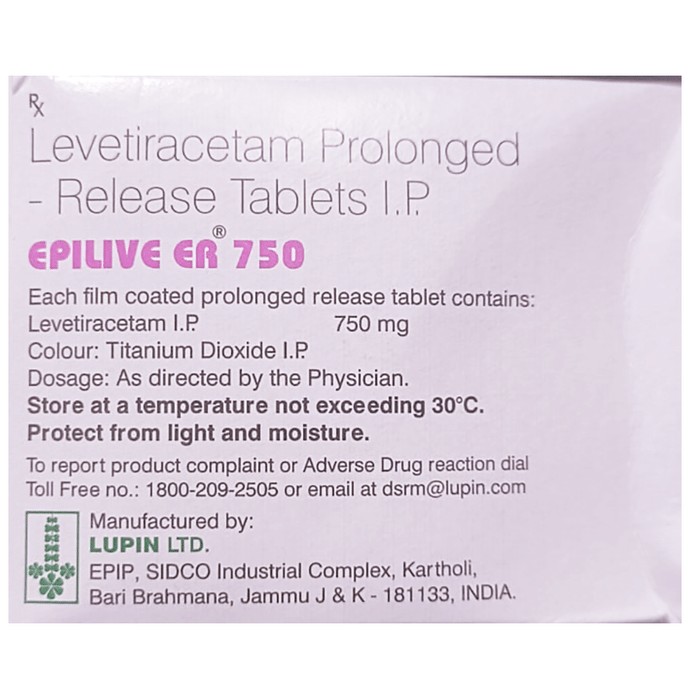
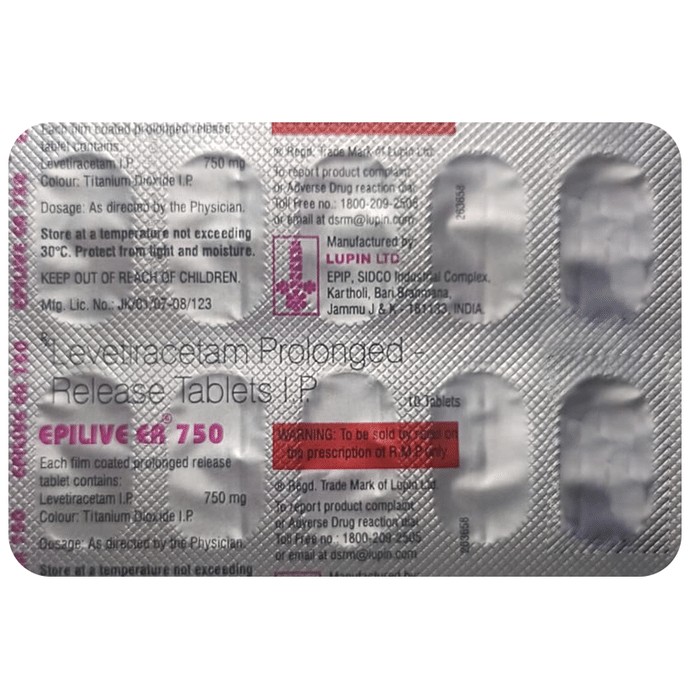

Epilive ER 750 Tablet

Marketer
Lupin Ltd
Salt Composition
Levetiracetam (750mg)
Overview Epilive ER 750 Tablet
Valproex Extended-Release 750 mg tablets are an anticonvulsant medication prescribed to manage epileptic seizures. This medication may be used as a standalone treatment or in conjunction with other therapies. Continued use is crucial for ongoing seizure prevention. The drug works by reducing abnormal brain electrical activity. Administration is flexible—with or without food—but consistent daily timing optimizes effectiveness. Dosage is individualized based on your health status and response, determined by your physician. It's typically prescribed for long-term management; discontinuation or missed doses risk increased seizure frequency. Common side effects, often subsiding after the initial weeks, include headache, irritability, drowsiness, altered behavior (including aggression), and reduced appetite. While most side effects are mild, some can be severe. Rarely, suicidal ideation has been reported; report any significant mood changes to your doctor immediately. Prior to commencing treatment, disclose any kidney disease, depression, suicidal tendencies, pregnancy, pregnancy plans, or breastfeeding to your doctor. Regular blood tests to monitor kidney function may be recommended during treatment.
Uses of Epilive ER 750 Tablet
Managing Epileptic Seizures
Major Benefits of Epilive ER 750 Tablet:
Follow your physician's instructions or consult the product information leaflet for guidance. Epilive ER 750 Tablets can be administered with or without food; however, consistent daily timing is recommended.
Common Side effects of Epilive ER 750 Tablet:
- Sleepiness
- Dizziness
- Fatigue
- Headache
- Decreased appetite
- Behavioral changes
- Aggressive behavior
- Irritation
- Agitation
- Nasal congestion (stuffy nose)
- Infection
- Convulsion
- Nasopharyngitis (inflammation of the throat and nasal passages)
- Nausea
- Tremors
- Vertigo
- Lethargy
How to use Epilive ER 750 Tablet:
Follow your doctor's instructions or consult the product label for usage guidelines. Epilive ER 750 Tablets can be administered with or without food; however, consistent daily timing is recommended.
How Epilive ER 750 Tablet works:
Extended-release Epilive 750 mg tablets are used to treat epilepsy. Their mechanism involves binding to SV2A receptors located on neuronal membranes. This action reduces excessive neuronal firing in the brain, thereby inhibiting the propagation of seizure-inducing electrical impulses.
SAFETY ADVICE
 AlcoholUNSAFE
Combining alcohol and Epilive ER 750 Tablets is inadvisable due to safety concerns.
 PregnancySAFE IF PRESCRIBED
Extended-release Epilive 750 mg tablets are considered safe for use during gestation. The preponderance of research indicates minimal or nonexistent hazard to the fetus.
 Breast feedingSAFE IF PRESCRIBED
Extended-release Epilive 750 mg tablets are likely safe for breastfeeding mothers. Available human data indicates minimal risk to the infant. Observe the infant for drowsiness and satisfactory weight increase.
 DrivingUNSAFE
Taking Epilive ER 750 Tablet may cause drowsiness, blurred vision, and dizziness, reducing alertness. Driving is discouraged if these effects are experienced.
 KidneyCAUTION
Patients with kidney impairment should use Epilive ER 750 Tablets cautiously, as dose modification may be necessary. Physician consultation is advised.
 LiverSAFE IF PRESCRIBED
The use of Epilive ER 750 Tablets in patients with liver impairment is likely safe. Available evidence indicates dose modification may be unnecessary for most; however, a physician's consultation is recommended. Individuals with advanced liver disease might benefit from a reduced dosage.
What if you forget to take Epilive ER 750 Tablet :
Should you forget a dose of Epilive ER 750 Tablet, administer it at your earliest convenience. Nevertheless, if your next scheduled dose is imminent, omit the missed dose and resume your usual medication timetable. Avoid taking a double dose.
Facts to Know About Epilive ER 750 Tablet
| Label | Value |
|---|---|
| Chemical Type | Pyrrolidinone-Acetamide Derivative |
| Developing Habits | No. |
| Treatment Category | Neuroscience of the Central Nervous System |
| Action Category | AED, a protein ligand, within synaptic vesicle 2 |
 3,018 People bought this recently