


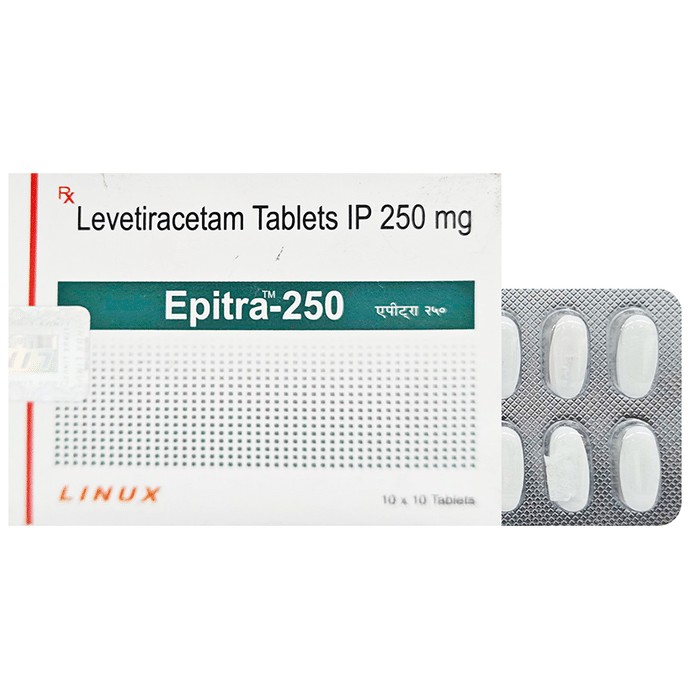
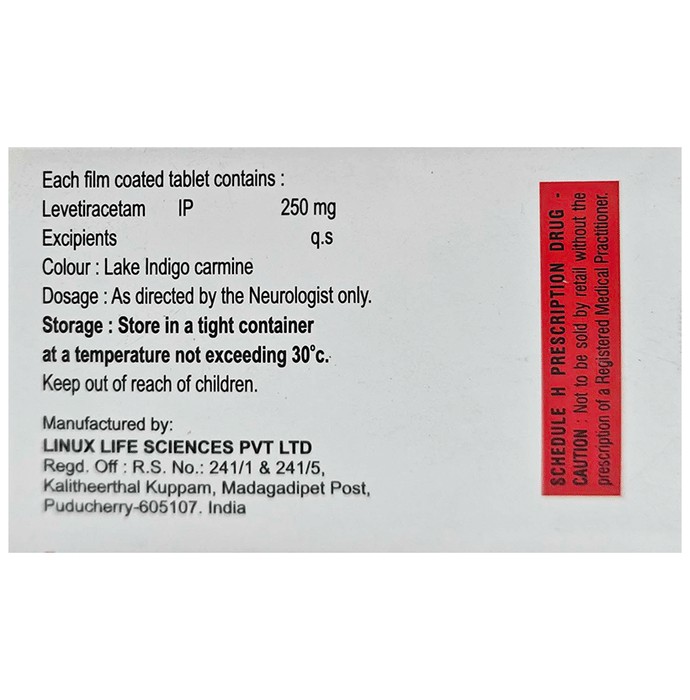
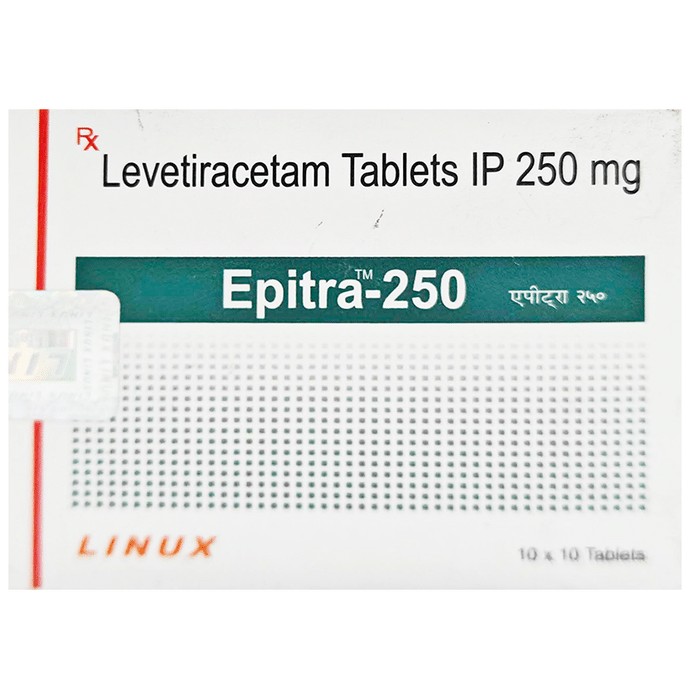
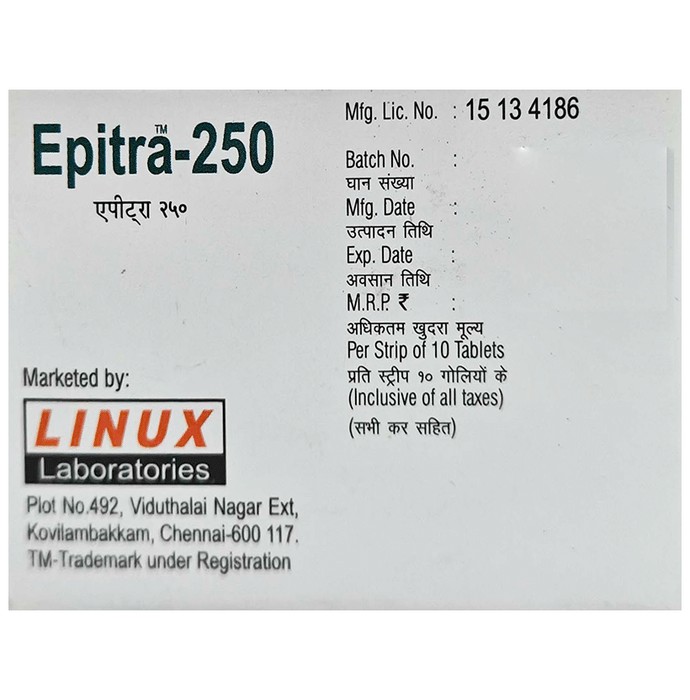
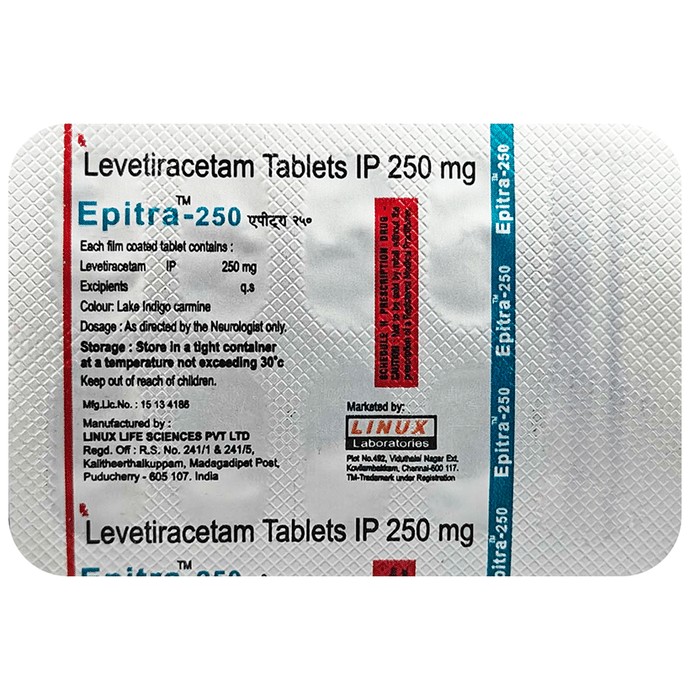

Epitra 250 Tablet

Marketer
Linux Laboratories
Salt Composition
Levetiracetam (250mg)
Overview Epitra 250 Tablet
Epilepsy medication, Epitra 250mg tablets, controls seizures by managing abnormal brain electrical activity. This anticonvulsant can be used independently or in conjunction with other medications. Consistent daily use is crucial for ongoing seizure prevention. Take it with or without food, aiming for the same time daily for optimal effectiveness. Dosage is personalized based on individual response and condition, determined by your physician. Generally prescribed for long-term management, continued use as directed, even during symptom-free periods, is vital; discontinuation or missed doses risk increased seizure activity. Common, often transient, side effects include drowsiness, headache, irritability, altered behavior (including aggression), and reduced appetite. While most are mild and resolve, some can be severe. Rarely, suicidal ideation has been reported; promptly notify your doctor of any worsening mood. Prior to starting Epitra 250mg, inform your doctor of any kidney issues, depressive symptoms, suicidal tendencies, or pregnancy/breastfeeding plans. Regular blood tests to monitor kidney function may be recommended during treatment.
Uses of Epitra 250 Tablet
Managing Epileptic Seizures
Major Benefits of Epitra 250 Tablet:
Follow your doctor's instructions precisely regarding dosage and treatment length for this medication. Ingest the tablet whole; avoid chewing, crushing, or breaking it. Epitra 250 Tablets can be administered with or without food, though consistent timing is recommended.
Common Side effects of Epitra 250 Tablet:
- Sleepiness
- Dizziness
- Fatigue
- Headache
- Decreased appetite
- Behavioral changes
- Aggressive behavior
- Irritation
- Agitation
- Nasal congestion (stuffy nose)
- Infection
- Convulsion
- Nasopharyngitis (inflammation of the throat and nasal passages)
- Nausea
- Tremors
- Vertigo
- Lethargy
How to use Epitra 250 Tablet:
Follow your doctor's instructions precisely regarding dosage and treatment length for this medication. Ingest the Epitra 250 Tablet whole; avoid chewing, crushing, or breaking it. Consumption with or without food is acceptable, although consistent timing is recommended.
How Epitra 250 Tablet works:
Epitra 250 Tablets contain an anticonvulsant drug that targets specific receptors (SV2A) located on neuronal membranes. This action reduces excessive neuronal firing in the brain, thus halting the propagation of seizure-inducing electrical impulses.
SAFETY ADVICE
 AlcoholUNSAFE
Consuming alcohol while taking Epitra 250 Tablets is inadvisable.
 PregnancySAFE IF PRESCRIBED
Use of Epitra 250 Tablet during pregnancy is considered safe. Research generally indicates minimal or no harm to the fetus.
 Breast feedingSAFE IF PRESCRIBED
Use of Epitra 250 Tablet while breastfeeding is likely safe. Available human data indicates minimal risk to the infant. Observe the infant for drowsiness and satisfactory weight increase.
 DrivingUNSAFE
Taking Epitra 250 Tablet might reduce alertness, impair vision, or cause drowsiness and dizziness. Driving should be avoided if these effects are experienced.
 KidneyCAUTION
Patients with kidney impairment should use Epitra 250 Tablets cautiously, as dosage modification may be necessary. Physician consultation is advised.
 LiverSAFE IF PRESCRIBED
Use of Epitra 250 Tablet in individuals with liver impairment is likely safe. Existing evidence indicates dose modification may be unnecessary; however, consultation with a physician is recommended. Patients exhibiting severe hepatic dysfunction may benefit from a reduced dosage.
What if you forget to take Epitra 250 Tablet :
Should you forget a dose of Epitra 250 Tablet, administer it immediately. Nevertheless, if your next dose is imminent, omit the missed dose and resume your usual dosing regimen. Avoid taking a double dose.
Facts to Know About Epitra 250 Tablet
| Label | Value |
|---|---|
| Chemical Type | Pyrrolidinone-Acetamide Derivative |
| Developing Habits | No. |
| Treatment Category | Neuroscience, Central Nervous System |
| Actions | AED: A protein ligand bound to synaptic vesicle 2 |
 3,018 People bought this recently