



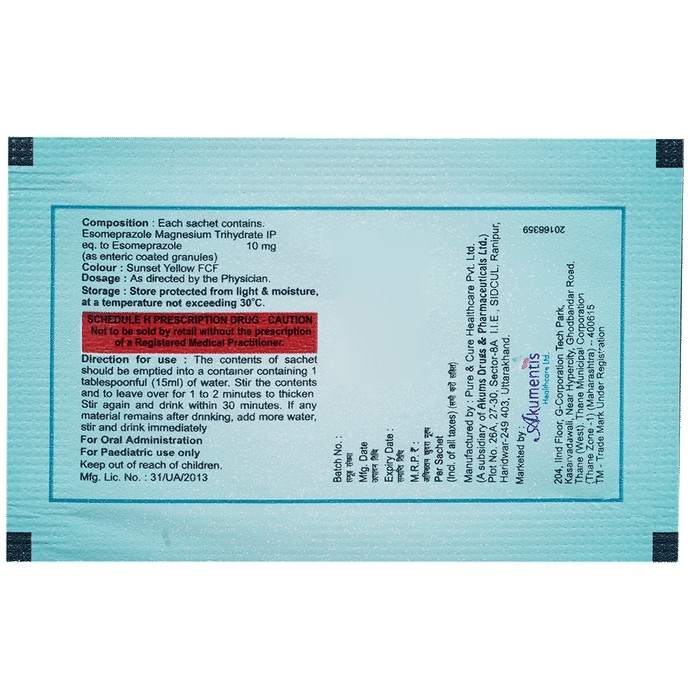


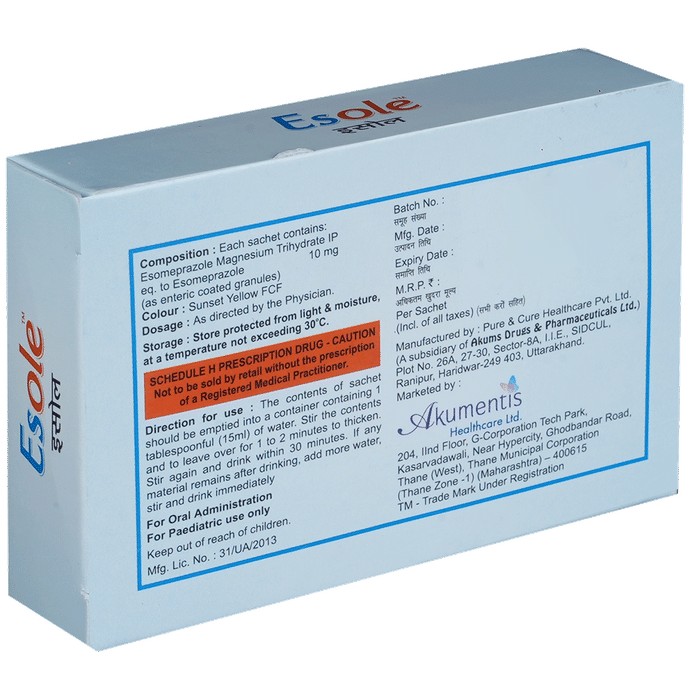
Esole Delayed Release Granules

Marketer
Delcure Life Sciences
Salt Composition
Esomeprazole (10mg)
Overview Esole Delayed Release Granules
Delayed-release Esomeprazole granules are indicated for conditions stemming from excessive gastric acid secretion, encompassing gastroesophageal reflux disease (GERD), peptic ulcers, and Zollinger-Ellison syndrome. This medication diminishes stomach acid production, alleviating symptoms and fostering healing. It's also employed for ulcer prophylaxis associated with certain drugs like NSAIDs. Always adhere to your physician's prescribed dosage, typically the minimal effective amount for the shortest duration necessary. Administer the granules on an empty stomach, ideally mornings or at least an hour pre-meal. Continue treatment even after symptom resolution, unless otherwise directed. Long-term use may necessitate regular magnesium level monitoring due to potential depletion. Common, generally mild, adverse effects include headache, bowel irregularities (constipation or diarrhea), abdominal discomfort, and nausea/vomiting. Report persistent or bothersome side effects. Prolonged use increases the risk of adverse events, including bone fractures. Dietary modification, limiting trigger foods (rich, spicy, fatty items) and reducing caffeine and alcohol intake, may prove beneficial. This medication isn't suitable for everyone. Consult your doctor before use if you have severe hepatic impairment, are on HIV medication, have prior allergic reactions to similar drugs, or suffer from osteoporosis. While alcohol doesn't directly impact Esomeprazole's efficacy, it increases gastric acid, counteracting the medication's effect. Drowsiness, dizziness, or visual disturbances may occur; avoid driving or operating machinery if affected. Use during pregnancy and breastfeeding is generally discouraged.
Uses of Esole Delayed Release Granules
Managing gastroesophageal reflux, peptic ulcers, and Zollinger-Ellison syndrome.
Major Benefits of Esole Delayed Release Granules:
Follow your doctor's instructions precisely regarding dosage and treatment length for this medication. Always read the product label carefully before administering. Dissolve the granules completely in water or milk, stir well, and drink the mixture without delay. Esole Delayed Release Granules should be taken on an empty stomach.
Common Side effects of Esole Delayed Release Granules:
- Headache
- Dryness in mouth
- Nausea
- Abdominal pain
- Constipation
- Flatulence
- Diarrhea
How to use Esole Delayed Release Granules:
Consume this medication precisely as your physician directs, adhering to both the prescribed dosage and treatment length. Always refer to the product label for complete instructions prior to administration. Dissolve the granules fully in water or milk, stir thoroughly, and ingest the mixture without delay. It's crucial to take Esole Delayed Release Granules on an empty stomach.
How Esole Delayed Release Granules works:
Esomeprazole delayed-release granules, a proton pump inhibitor, decrease stomach acid production, providing relief from heartburn and acid indigestion.
SAFETY ADVICE
 AlcoholCAUTION
Use caution when drinking alcohol while taking Esole Delayed Release Granules. Seek medical advice.
 PregnancyCONSULT YOUR DOCTOR
Data on the use of Esole Delayed Release Granules in pregnancy are lacking. Seek medical advice from your physician.
 Breast feedingCONSULT YOUR DOCTOR
Data on Esole Delayed Release Granules use while breastfeeding is lacking. A physician's advice is recommended. Breastfeeding mothers should be carefully monitored while taking Esole Delayed Release Granules.
 DrivingUNSAFE
Driving ability may be impaired by side effects of Esole Delayed Release Granules. Rarely, dizziness or blurred vision can occur; avoid operating vehicles or machinery if these symptoms develop.
 KidneySAFE IF PRESCRIBED
Esole Delayed-Release Granules are considered safe for use in individuals with kidney disease, and no dosage modification is advised. Nevertheless, given the absence of sufficient data, careful monitoring is recommended for patients experiencing severe kidney impairment.
 LiverCAUTION
For individuals with severe hepatic impairment, administering Esole Delayed Release Granules requires careful consideration and potential dose modification. Physician consultation is advised. No dosage alteration is necessary, however, for patients exhibiting mild or moderate liver dysfunction.
What if you forget to take Esole Delayed Release Granules :
Should you forget a dose of Esole Delayed Release Granules, administer it at your earliest convenience. Nevertheless, if your next scheduled dose is imminent, omit the missed dose and resume your usual dosing regimen. Avoid taking a double dose.
Facts to Know About Esole Delayed Release Granules
| Label | Value |
|---|---|
| Chemical Type | Benzimidazole Sulfoxide |
| Developing Habits | No. |
| Treatment Category | Gastrointestinal system |
| Action Category | Gastric acid suppressants |
 3,018 People bought this recently