


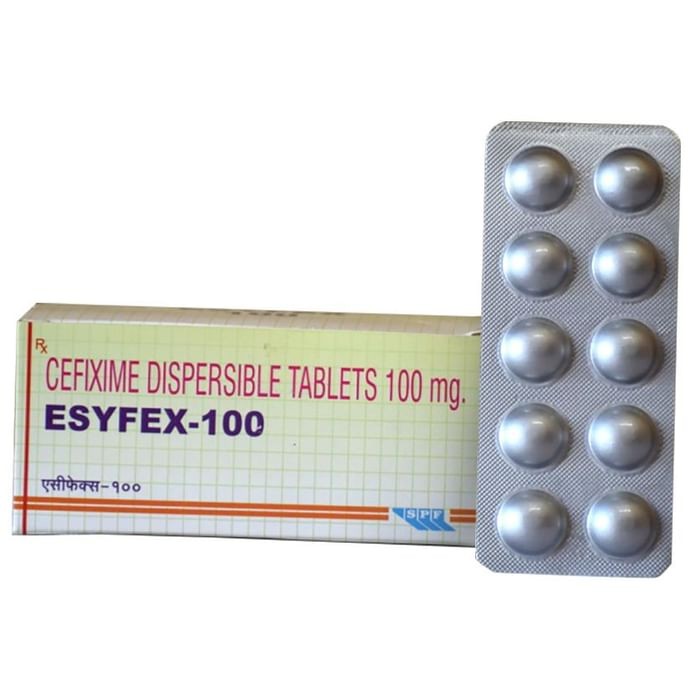
Esyfex 100 Tablet DT

Marketer
Espee Formulation Pvt Ltd
Salt Composition
Cefixime (100mg)
Overview Esyfex 100 Tablet DT
Cefixime 100mg tablets are a type of antibiotic medication used to combat various bacterial infections. They are effective against infections affecting the respiratory system (such as pneumonia), urinary tract, ears, sinuses, throat, and certain sexually transmitted infections. Always take Cefixime 100mg tablets under the guidance of a physician or healthcare professional. Adhere strictly to the prescribed dosage schedule, maintaining consistent intervals between doses. Taking it at the same time each day aids in remembering your medication. The dosage will be determined by your specific condition, however, it's crucial to complete the entire antibiotic course as directed by your doctor. Do not discontinue treatment prematurely, even if symptoms improve, as incomplete treatment can lead to the resurgence or worsening of the infection. This antibiotic is ineffective against viral infections like the flu or common cold. Unnecessary antibiotic use diminishes its future effectiveness. Common side effects may include nausea, abdominal pain, digestive upset, and diarrhea. While usually mild, report any persistent or bothersome side effects to your doctor. Inform your physician of any antibiotic allergies, kidney or liver issues before starting treatment. Disclose all other medications you are currently taking, as interactions may occur. Generally, this medication is considered safe during pregnancy and breastfeeding when used under medical supervision.
Primary Ingredients of Esyfex 100 Tablet DT
No information provided. Please provide the text you wish me to rephrase.
Uses of Esyfex 100 Tablet DT
Managing Bacterial Infections
Major Benefits of Esyfex 100 Tablet DT:
Follow your doctor's instructions precisely regarding dosage and treatment length for Esyfex 100 Tablet DT. Always dissolve the tablet in water before consumption. While it can be taken with or without food, consistent timing is recommended for optimal results.
Common Side effects of Esyfex 100 Tablet DT:
- Nausea
- Stomach pain
- Indigestion
- Diarrhea
How to use Esyfex 100 Tablet DT:
Follow your doctor's instructions precisely regarding dosage and treatment length for Esyfex 100 DT Tablets. Always dissolve the tablet in water before consumption. While you can take it with or without food, consistency is key—take it at the same time each day for best results.
How Esyfex 100 Tablet DT works:
Esyfex 100 DT tablets contain an antibiotic that eradicates bacteria by disrupting their cell wall synthesis, a crucial process for bacterial survival.
SAFETY ADVICE
 AlcoholCONSULT YOUR DOCTOR
The interaction of Esyfex 100 Tablet DT with alcohol is currently undetermined. Seek medical advice before combining them.
 PregnancyCONSULT YOUR DOCTOR
The use of Esyfex 100 Tablet DT during pregnancy might pose risks. While human research is scarce, animal studies indicate potential harm to a developing fetus. A physician will assess the advantages against possible risks prior to prescribing. Seek medical advice.
 Breast feedingCONSULT YOUR DOCTOR
The use of Esyfex 100 Tablet DT while breastfeeding is likely inadvisable. Scant human evidence indicates potential transfer to breast milk, posing a possible risk to the infant.
 DrivingSAFE
Driving ability is typically unaffected by Esyfex 100 DT tablets.
 KidneyCAUTION
Patients with kidney impairment should use Esyfex 100 Tablet DT cautiously; dosage modification may be necessary. Physician consultation is advised.
 LiverCAUTION
Patients with hepatic impairment should use Esyfex 100 DT tablets cautiously; dosage modification may be necessary. Physician consultation is advised.
What if you forget to take Esyfex 100 Tablet DT :
Should you forget to take your Esyfex 100 DT Tablet, ingest it immediately upon remembering. Nevertheless, if your next scheduled dose is imminent, omit the missed dose and resume your usual medication timetable. Avoid taking a double dose.
Facts to Know About Esyfex 100 Tablet DT
| Label | Value |
|---|---|
| Chemical Category | Third- and fourth-generation cephalosporins (broad-spectrum); Not habit-forming |
| Treatment Category | Antimicrobial Agents |
 3,018 People bought this recently