


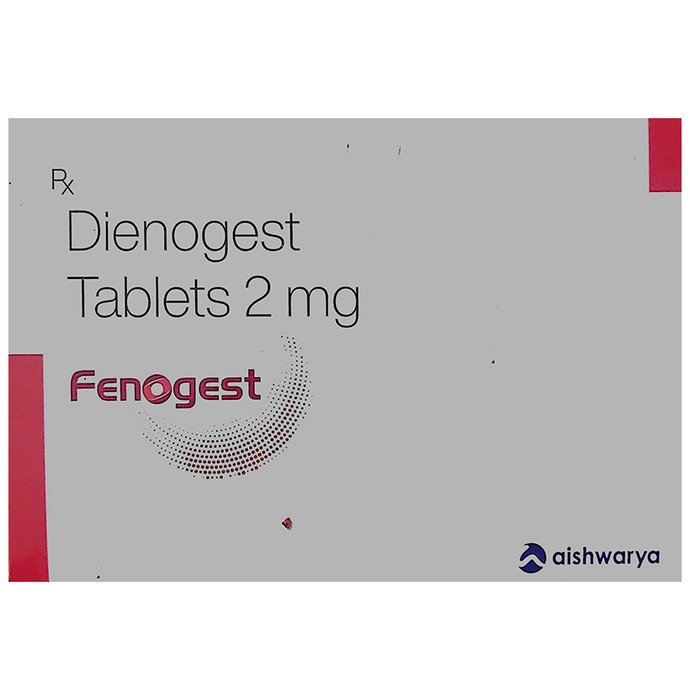
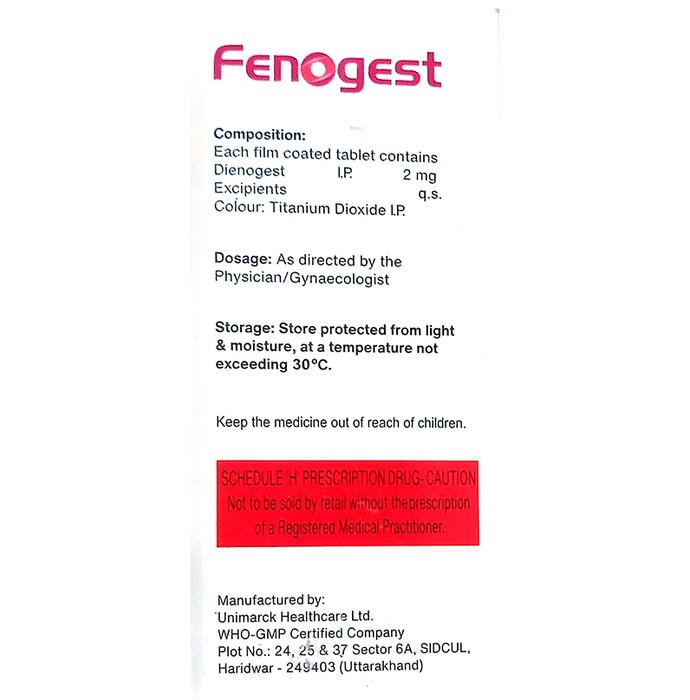

Fenogest Tablet

Marketer
Aishwarya Healthcare
Salt Composition
Dienogest (2mg)
Overview Fenogest Tablet
Endometriosis-related pelvic pain is addressed with Fenogest tablets, containing progestin—a hormone analogue. This medication functions by inhibiting hormone production responsible for endometriosis. Fenogest can be ingested with or without food, but consistent timing maximizes efficacy. Dosage and frequency are determined by your physician based on individual needs and symptom severity. Always follow your doctor's instructions. Swallow the tablets whole with water. Continue treatment as prescribed, including during menstruation. Common side effects include acne, headaches, mood changes, breast tenderness, nausea, and ovarian cysts. Report any concerning or persistent side effects to your doctor; management strategies may be available. Irregular cycles, spotting, or mid-cycle brown discharge are typical; however, persistent occurrences warrant medical consultation. Before commencing treatment, inform your doctor of any history of unexplained vaginal or uterine bleeding, circulatory disorders, and all other medications you are currently using, as interactions may impact Fenogest's effectiveness. Disclose any pregnancy, pregnancy plans, or breastfeeding.
Uses of Fenogest Tablet
Managing endometriosis-related pelvic discomfort
Major Benefits of Fenogest Tablet:
Consume this medication precisely as your physician directs, adhering to both the prescribed dosage and duration. Ingest the tablet whole; avoid chewing, crushing, or fracturing it. Fenogest Tablets can be taken with or without food, though consistent timing is recommended.
Common Side effects of Fenogest Tablet:
- Headache
- Acne
- Breast pain
- Abnormal menstrual bleeding
- Weight gain
- Sleep disorder
- Nervousness
- Loss of libido
- Migraine
- Gastrointestinal disturbance
- Hair loss
- Back pain
- Breast engorgement
- Ovarian cysts
- Hot flushes
- Vaginal bleeding
- Asthenic conditions
- Irritability
How to use Fenogest Tablet:
Follow your doctor's instructions precisely regarding dosage and treatment length for this medication. Ingest the tablet whole; avoid chewing, crushing, or breaking it. Fenogest Tablets can be taken with or without food, but consistent timing is recommended.
How Fenogest Tablet works:
Fenogest tablets contain a progestin, a type of female hormone. Their mechanism of action involves inhibiting estradiol production, thereby reducing endometrial overgrowth.
SAFETY ADVICE
 AlcoholCONSULT YOUR DOCTOR
Alcohol consumption alongside Fenogest Tablet lacks established safety data. Physician consultation is advised.
 PregnancyUNSAFE
Taking Fenogest tablets during pregnancy is strongly contraindicated. Pregnant individuals should consult their physician; research in both animal and human studies has revealed substantial risks to the fetus.
 Breast feedingCONSULT YOUR DOCTOR
Using Fenogest Tablet while breastfeeding is likely inadvisable. Available human data indicates potential transfer to breast milk, posing a possible risk to the infant.
 DrivingSAFE
Driving ability is typically unaffected by Fenogest Tablet.
 KidneyCONSULT YOUR DOCTOR
Insufficient data exists regarding Fenogest Tablet's use in individuals with renal impairment. Physician consultation is advised.
 LiverCAUTION
Patients with liver conditions should use Fenogest Tablet cautiously, potentially requiring a modified dosage. Medical advice is essential. Dienogest, however, is prohibited for individuals with severely compromised liver function.
What if you forget to take Fenogest Tablet :
NA
Facts to Know About Fenogest Tablet
| Label | Value |
|---|---|
| Type of Compound | Steroids derived from 19-nortestosterone |
| Addictive | None. |
| Medication Category | Women's health |
| Mechanism of Action | Third-generation progestogens |
 3,018 People bought this recently