


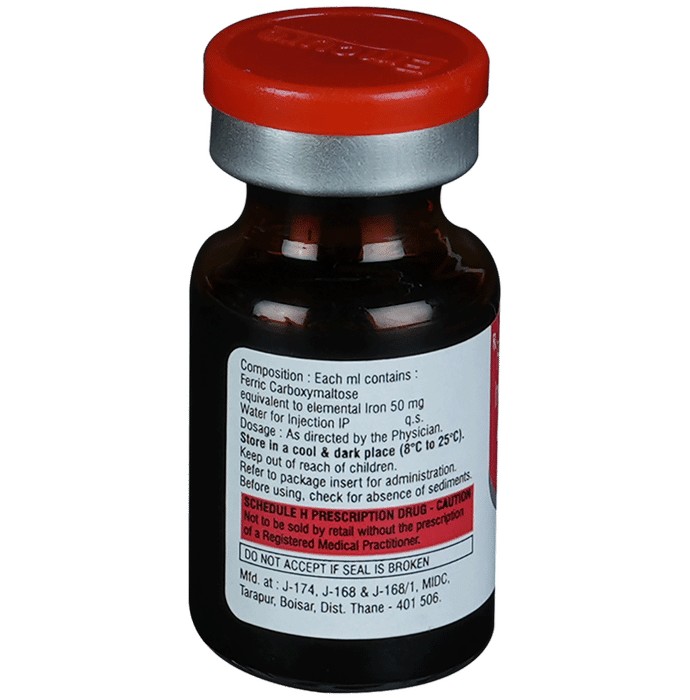
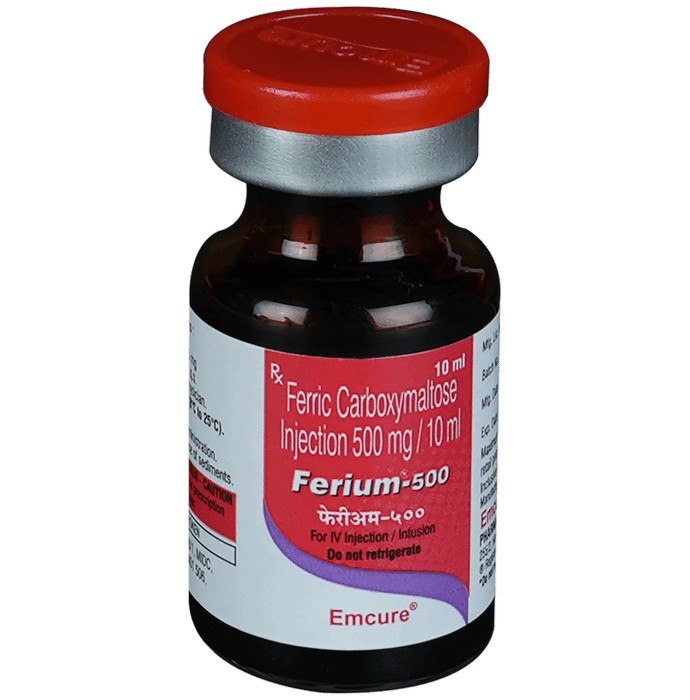
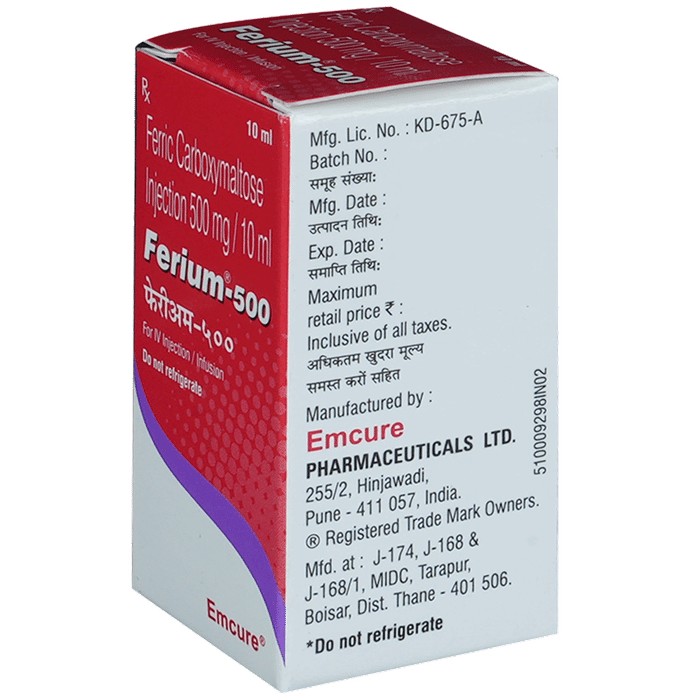
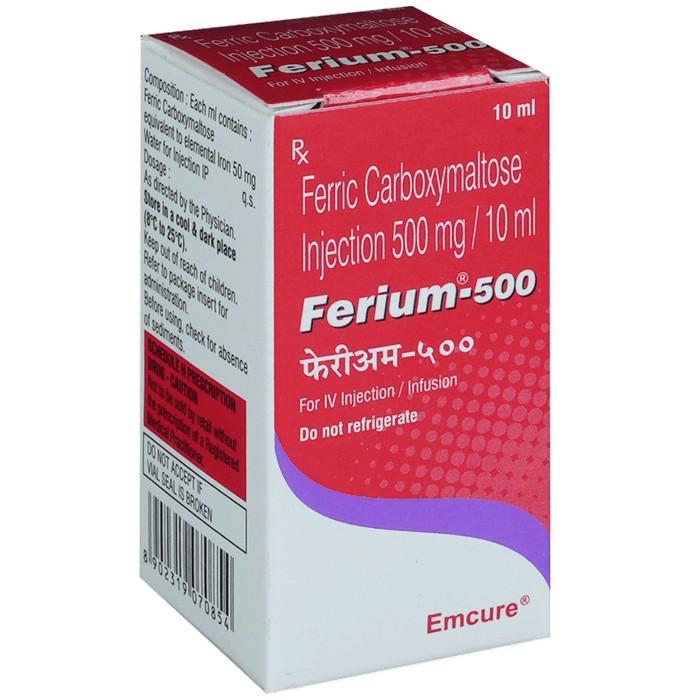
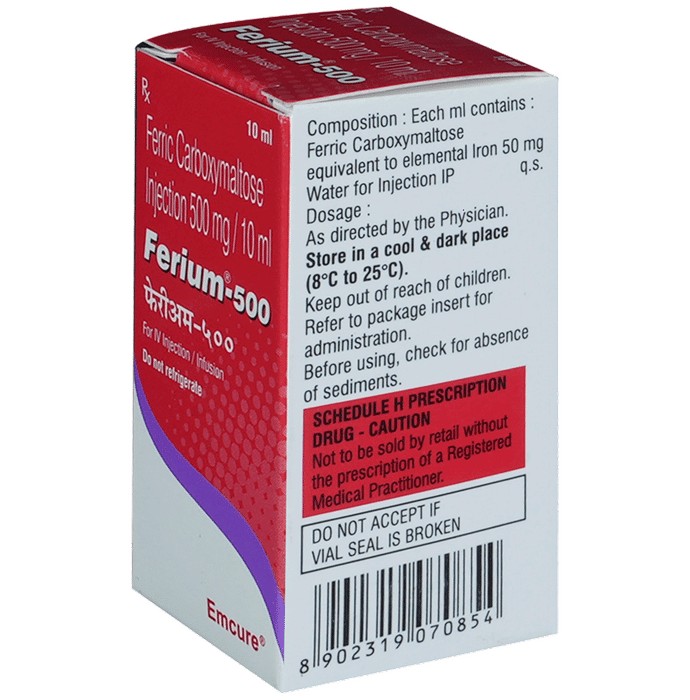
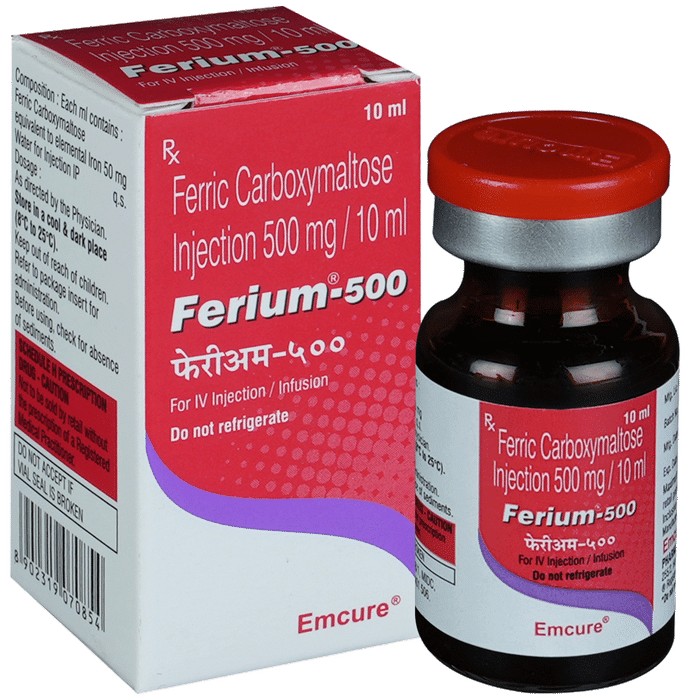
Ferium Injection

Marketer
Emcure Pharmaceuticals Ltd
Salt Composition
Ferric Carboxymaltose (50mg/ml)
Overview Ferium Injection
Ferrumject, an injectable iron supplement, addresses iron-deficiency anemia—a condition characterized by low red blood cell counts due to insufficient iron. Red blood cell production, crucial for oxygen transport, requires iron. Administered intravenously by a healthcare professional, Ferrumject is typically given in two doses, a week apart. Post-injection monitoring detects potential allergic reactions. Dosage frequency is determined individually by your physician to optimize anemia treatment. A balanced diet rich in iron, vitamins, and minerals (e.g., meat, eggs, raisins, broccoli, lentils) complements therapy. Common, usually transient, side effects include nausea, headache, vertigo, elevated blood pressure, and injection site discomfort. Persistent or severe reactions warrant medical attention. Ferrumject is contraindicated if anemia stems from causes other than iron deficiency. Prior to treatment, disclose conditions such as rheumatoid arthritis, asthma, allergies, hypertension, or liver disease. Pregnancy or breastfeeding necessitates physician consultation regarding Ferrumject's safety. Regular blood tests monitor iron levels, treatment efficacy, and side effects. Moderate alcohol consumption is recommended during therapy.
Uses of Ferium Injection
Managing iron-deficiency anemia
Major Benefits of Ferium Injection:
Administering this medication will be handled by your healthcare provider. Self-medication is strictly prohibited.
Common Side effects of Ferium Injection:
- Headache
- Dizziness
- High blood pressure
- Injection site reactions (pain, swelling, redness)
- Vomiting
- Nausea
- Dark colored stool
How to use Ferium Injection:
This medication will be administered by your physician or their qualified assistant; self-medication is strictly prohibited.
How Ferium Injection works:
Ferium Injection treats iron deficiency anemia. This medication restores your body's iron levels. Iron is crucial for producing red blood cells and hemoglobin, the oxygen-carrying component of these cells.
SAFETY ADVICE
 AlcoholCONSULT YOUR DOCTOR
Alcohol consumption alongside Ferium Injection may pose safety risks; seek medical advice before combining them.
 PregnancyCONSULT YOUR DOCTOR
Administering Ferium Injection during pregnancy may pose risks. While human data is scarce, animal studies indicate potential harm to the fetus. A physician will assess the benefits against possible risks prior to prescribing. Physician consultation is advised.
 Breast feedingSAFE IF PRESCRIBED
Lactation and Ferium Injection are compatible. Research in humans indicates minimal drug transfer to breast milk, posing no identified risk to the infant.
 DrivingSAFE
Driving ability is typically unaffected by Ferium Injection.
 KidneySAFE IF PRESCRIBED
The use of Ferium Injection in patients with kidney impairment appears to be well-tolerated. Existing evidence indicates dose modification may be unnecessary; however, medical advice is recommended.
 LiverCAUTION
Patients with liver impairment should receive Ferium Injection only with careful monitoring. Dosage modification for Ferium Injection may be necessary; physician consultation is advised.
What if you forget to take Ferium Injection :
Omit a Ferium Injection dose? Seek your physician's advice.
Facts to Know About Ferium Injection
| Label | Value |
|---|---|
| Chemical Type | Iron-Carbohydrate Compound |
| Developing Habits | No. |
| Type of Therapy | Obstetrics and Gynecology |
 3,018 People bought this recently