


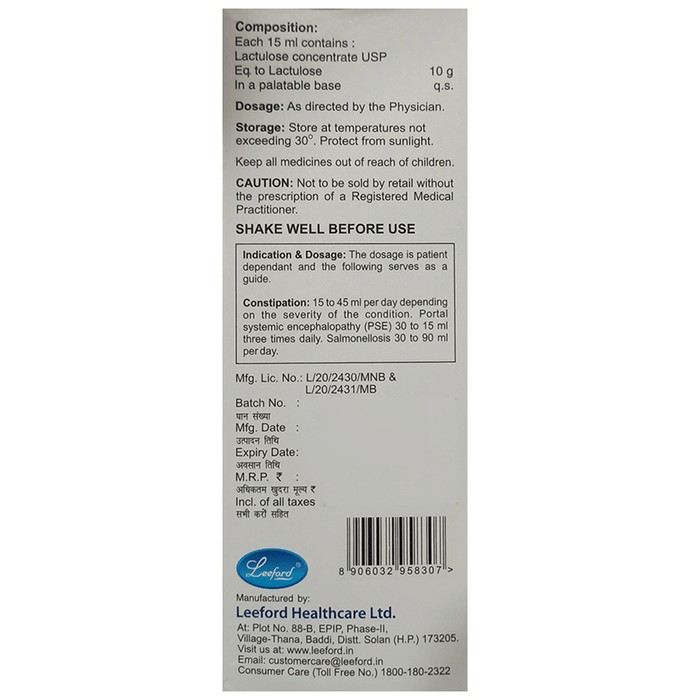
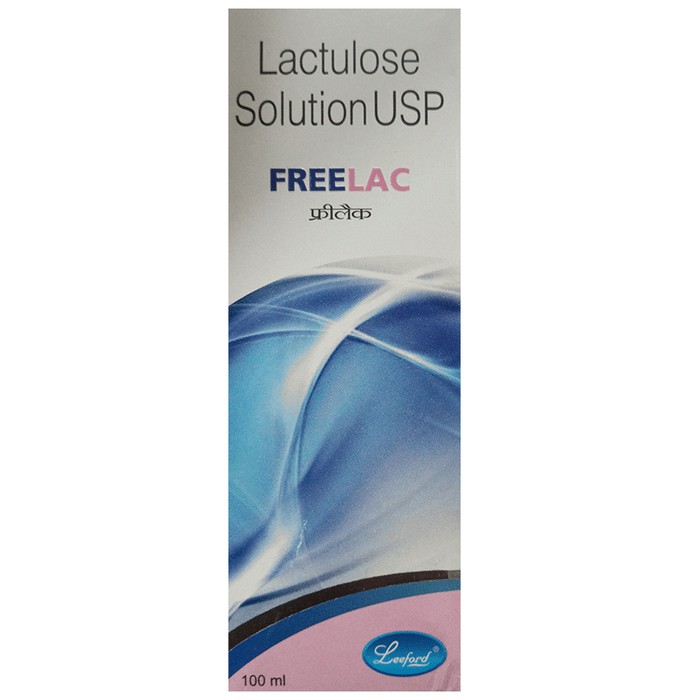

Freelac Oral Solution

Marketer
Leeford Healthcare Ltd
Salt Composition
Lactulose (10gm)
Overview Freelac Oral Solution
Lactulose Oral Solution, a sugar-based laxative, effectively treats constipation by increasing bowel water content, facilitating easier stool passage. It's also indicated for hepatic encephalopathy, a liver disorder characterized by cognitive impairment, tremors, and reduced consciousness. Lactulose can be administered with or without food, always as directed by your physician. Consistent daily use at the same time(s) maximizes efficacy; dosage adjustments may occur based on response. Never exceed the prescribed amount; missed doses should not be doubled. Onset of action is typically within 48 hours. Consult your doctor if constipation persists beyond three days. Common, generally mild and transient, side effects include nausea and vomiting. Serious adverse events such as severe diarrhea and electrolyte imbalances warrant immediate medical attention. Prior to commencing treatment, inform your doctor of any pre-existing diabetes or lactose intolerance. Prolonged use may necessitate periodic blood tests to monitor electrolyte levels (e.g., potassium and sodium). Avoid concurrent use with other laxatives. Pregnant or breastfeeding individuals should seek medical advice before using this medication.
Primary Ingredients of Freelac Oral Solution
No text was provided to rephrase. Please provide the text you wish to be rewritten.
Uses of Freelac Oral Solution
Managing constipation and hepatic encephalopathy.
Major Benefits of Freelac Oral Solution:
Follow your doctor's instructions precisely regarding dosage and treatment length for this medication. Always consult the product label prior to administration. Use a measuring cup for accurate dosing and ingest orally. Ensure thorough shaking before each use. Freelac Oral Solution can be consumed with or without food; however, consistent timing is recommended.
Common Side effects of Freelac Oral Solution:
- Abdominal pain
- Nausea
- Vomiting
- Diarrhea
How to use Freelac Oral Solution:
Administer this medication precisely as your physician directs, adhering to the prescribed dosage and timeframe. Consult the product label for detailed instructions prior to consumption. Use a measuring cup for accurate oral administration. Ensure thorough shaking before each dose. Freelac Oral Solution can be ingested with or without food; however, consistent timing is recommended.
How Freelac Oral Solution works:
Freelac Oral Solution softens stool by osmotically drawing fluid into the bowel, facilitating easier elimination.
SAFETY ADVICE
 AlcoholSAFE
There are no adverse reactions reported from concurrent use of Freelac Oral Solution and alcohol.
 PregnancySAFE IF PRESCRIBED
The oral formulation of Freelac is typically deemed safe for use in pregnancy. Preclinical trials in animals revealed minimal or no harmful consequences for fetal development; clinical data in humans, however, remain scarce.
 Breast feedingSAFE IF PRESCRIBED
Lactation and Freelac Oral Solution appear compatible. Available human data indicates minimal infant risk associated with its use during breastfeeding.
 DrivingSAFE
Driving ability is typically unaffected by Freelac Oral Solution.
 KidneySAFE IF PRESCRIBED
Patients with kidney disease can likely use Freelac Oral Solution without safety concerns. Existing evidence indicates dose modification may be unnecessary, however, physician consultation is recommended.
 LiverSAFE IF PRESCRIBED
Freelac Oral Solution appears safe for use in individuals with hepatic impairment. Current evidence indicates dose modification may not be necessary. Physician consultation is recommended.
What if you forget to take Freelac Oral Solution :
Omit any missed dose of Freelac Oral Solution and resume your regular dosing regimen. Avoid taking a double dose.
Facts to Know About Freelac Oral Solution
| Label | Value |
|---|---|
| Chemical Category | Artificial Disaccharide |
| Developing Habits | No. |
| Treatment Category | Gastrointestinal System |
| Action Class | Osmotic laxatives |
 3,018 People bought this recently