


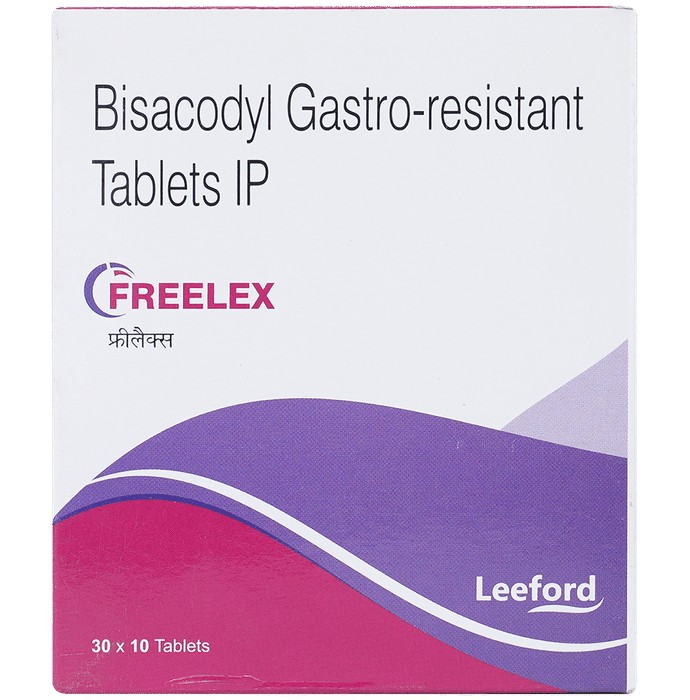
Freelex Tablet

Marketer
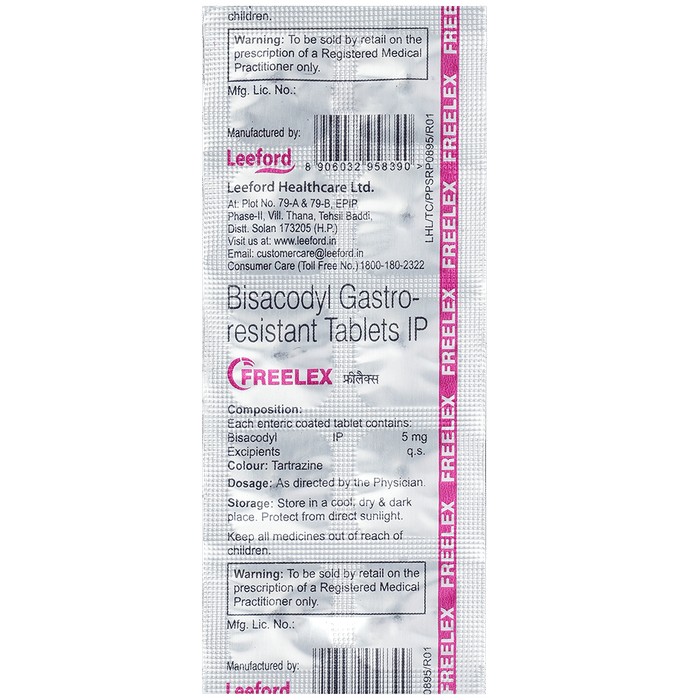
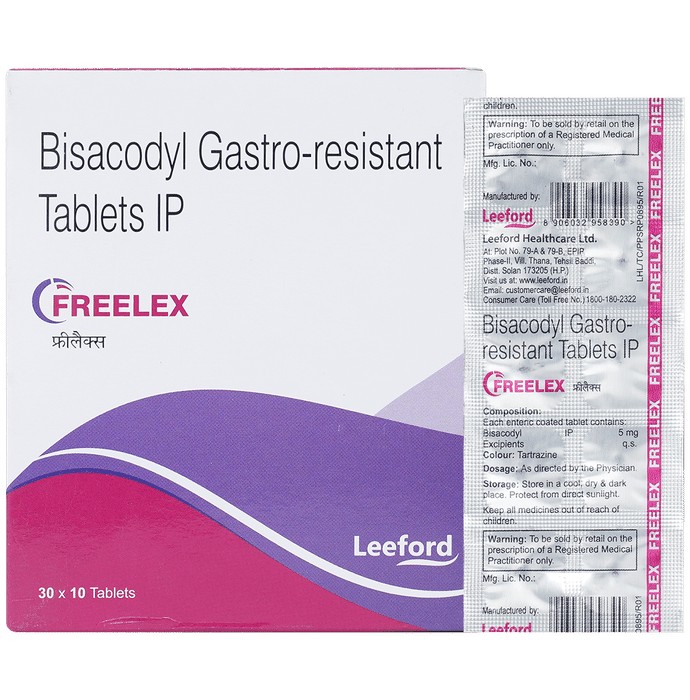
Leeford Healthcare Ltd
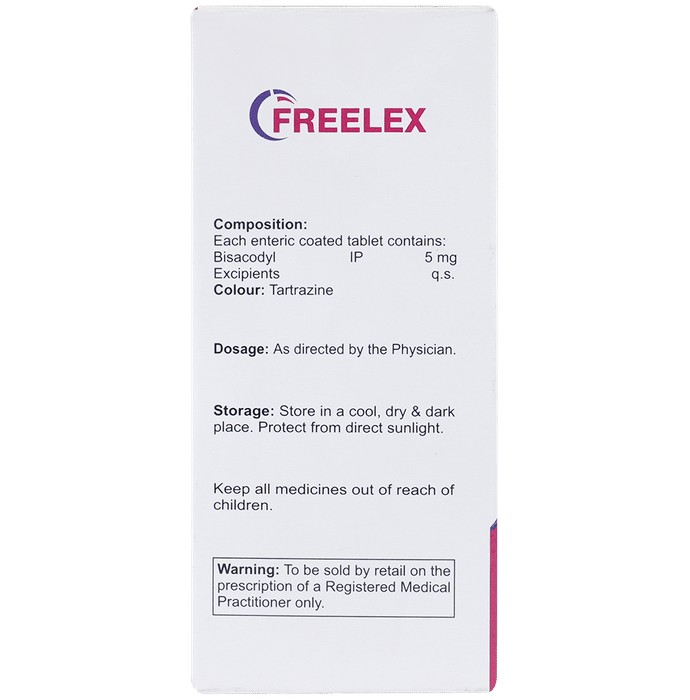
Salt Composition
Bisacodyl (5mg)
Overview Freelex Tablet
ConstiRelief tablets effectively alleviate constipation. This laxative facilitates bowel evacuation, often employed pre-operatively or before certain internal procedures. Its mechanism involves stimulating intestinal motility. For constipation relief, ConstiRelief is ideally taken at bedtime, swallowed whole—never chewed, crushed, or broken. Begin with the minimum dose, gradually increasing only if necessary, but never exceeding the maximum daily amount. Prolonged use (beyond the recommended duration) requires physician approval. Dietary modifications, such as increased fluid intake, regular exercise, and a fiber-rich diet (fruits, vegetables, and grains), can also aid constipation management. Common, typically transient side effects include nausea, vomiting, and abdominal discomfort. Persistent symptoms warrant medical consultation for potential mitigation strategies. Prior to use, inform your doctor of any bowel obstructions, persistent digestive upset, or unusually altered bowel habits lasting over two weeks. Potential drug and food interactions exist; discuss these with your physician to ensure safe usage. Concurrent use with other constipation remedies or dairy products is generally discouraged. ConstiRelief is not typically recommended for pregnant or breastfeeding individuals.
Primary Ingredients of Freelex Tablet
The provided text is "undefined," which lacks any content to rephrase. Therefore, no rewritten text can be provided.
Uses of Freelex Tablet
Managing Bowel Irregularity
Major Benefits of Freelex Tablet:
Consume this medication precisely as your physician directs, adhering to both the prescribed dosage and duration. Ingest the tablet whole; avoid chewing, crushing, or fracturing it. Administer Freelex Tablet on an empty stomach.
Common Side effects of Freelex Tablet:
- Vomiting
- Bloating
- Nausea
- Stomach cramp
How to use Freelex Tablet:
Administer this medication precisely as your physician directs, adhering to the prescribed dosage and treatment period. Ingest the tablet whole; avoid chewing, crushing, or fracturing it. Consume Freelex Tablet on an empty stomach.
How Freelex Tablet works:
Freelex tablets stimulate bowel movements. Their mechanism of action involves enhancing intestinal motility, promoting easier defecation.
SAFETY ADVICE
 AlcoholCONSULT YOUR DOCTOR
Alcohol consumption alongside Freelex Tablet may pose unknown safety risks. Seek medical advice before combining them.
 PregnancyCONSULT YOUR DOCTOR
Using Freelex Tablet during pregnancy may pose risks. While human research is scarce, animal studies indicate potential harm to the unborn child. A physician will assess the advantages against possible dangers prior to prescription. Seek medical advice.
 Breast feedingSAFE IF PRESCRIBED
Lactation and Freelex Tablet use appear compatible. Available human data indicate minimal infant risk associated with the medication.
 DrivingUNSAFE
Driving ability may be impaired by Freelex Tablet side effects. Dizziness and fainting can occur due to a vasovagal reaction (such as from abdominal cramping). Patients experiencing abdominal cramps should refrain from driving.
 KidneyCONSULT YOUR DOCTOR
Insufficient data exists regarding Freelex Tablet's use in individuals with renal impairment. Physician consultation is recommended. Freelex Tablet administration is typically discouraged in the presence of emesis, due to the potential for dehydration to adversely affect kidney health.
 LiverCONSULT YOUR DOCTOR
Data regarding Freelex Tablet use in individuals with hepatic impairment is scarce. Physician consultation is recommended.
What if you forget to take Freelex Tablet :
Omit any missed Freelex Tablet dose and resume your usual medication regimen. Avoid taking a double dose.
Facts to Know About Freelex Tablet
| Label | Value |
|---|---|
| Chemical Type | Diphenylmethane-based compound |
| Developing Habits | No. |
| Type of Therapy | Gastrointestinal system |
| Actions | Stimulant-based laxatives |
 3,018 People bought this recently