



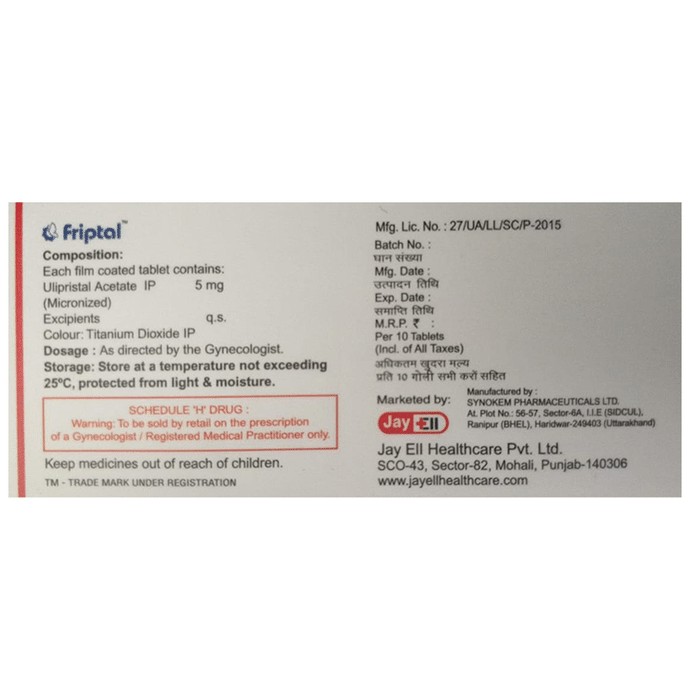
Friptal Tablet

Marketer
Jay Ell Healthcare Pvt. Ltd
Salt Composition
Ulipristal acetate (5mg)
Overview Friptal Tablet
Uterine fibroids, benign uterine growths, in premenopausal women unsuitable for or unresponsive to surgery, are treated with the medication, FibroCare tablets. FibroCare alleviates symptoms such as heavy menstrual bleeding, prolonged periods, and lower back pain. Administration is flexible, with or without food, but consistent timing maximizes efficacy. Adhere strictly to your physician's prescribed dosage and duration. Crucially, this medication diminishes birth control effectiveness; therefore, reliable contraception is essential to prevent pregnancy. Common side effects include amenorrhea (cessation of menstruation), headache, dizziness, tiredness, and nausea. Report any bothersome or severe side effects to your doctor; management strategies may be available. Menstrual bleeding typically ceases within 10 days, but persistent heavy bleeding warrants immediate medical attention. While this medication may temporarily halt menstruation, periods usually resume within four weeks post-treatment. Prior to commencing treatment, disclose any history of liver disease or severe asthma to your doctor. Regular blood tests to monitor liver function may be conducted during FibroCare treatment. Complete transparency regarding all other medications is vital, as interactions can compromise efficacy or alter drug action. Notify your doctor if you are pregnant or breastfeeding.
Primary Ingredients of Friptal Tablet
No text provided. Please provide the text you wish me to rewrite.
Uses of Friptal Tablet
Benign uterine tumors
Major Benefits of Friptal Tablet:
Administer this medication precisely as directed by your physician, adhering to both the prescribed dosage and treatment period. Ingest the tablet whole; avoid chewing, crushing, or fracturing it. Friptal Tablets can be consumed with or without food, although consistent timing is recommended.
Common Side effects of Friptal Tablet:
- Absence of menstrual periods
- Headache
- Endometrial hyperplasia
- Fatigue
- Dizziness
- Nausea
How to use Friptal Tablet:
Administer this medication precisely as your physician directs, adhering to both the prescribed dosage and treatment duration. Ingest the tablet whole; avoid chewing, crushing, or fracturing it. Friptal Tablets can be consumed with or without food, though consistent timing is recommended.
How Friptal Tablet works:
Selective progesterone receptor modulator Friptal Tablet alters progesterone activity, a key female hormone. Prescribed pre-fibroid surgery or for cyclical fibroid management, it shrinks fibroids, regulates bleeding, and elevates red blood cell levels.
SAFETY ADVICE
 AlcoholCONSULT YOUR DOCTOR
Alcohol consumption alongside Friptal Tablet lacks established safety data. Physician consultation is advised.
 PregnancyUNSAFE
Using Friptal Tablet during pregnancy poses a substantial risk. Pregnant women should consult their physician; research in animals and pregnant individuals reveals considerable harm to the fetus.
 Breast feedingCONSULT YOUR DOCTOR
The use of Friptal Tablets while breastfeeding is likely inadvisable. Available human data indicates a potential for the medication to transfer to breast milk, posing a possible risk to the infant.
 DrivingUNSAFE
Driving ability may be impaired by side effects associated with Friptal Tablet.
 KidneyCONSULT YOUR DOCTOR
Insufficient data exists regarding Friptal Tablet's use in individuals with renal impairment. Physician consultation is recommended.
 LiverCONSULT YOUR DOCTOR
Insufficient data exists regarding Friptal Tablet use in individuals with hepatic impairment. Physician consultation is advised.
What if you forget to take Friptal Tablet :
Should you forget a Friptal Tablet dose, take it immediately. If, however, your next dose is imminent, omit the missed dose and resume your usual dosing regimen. Never take a double dose.
Facts to Know About Friptal Tablet
| Label | Value |
|---|---|
| Chemical Type | Estradiol-based compound |
| Developing Habits | No. |
| Type of Treatment | Obstetrics and Gynecology |
 3,018 People bought this recently