


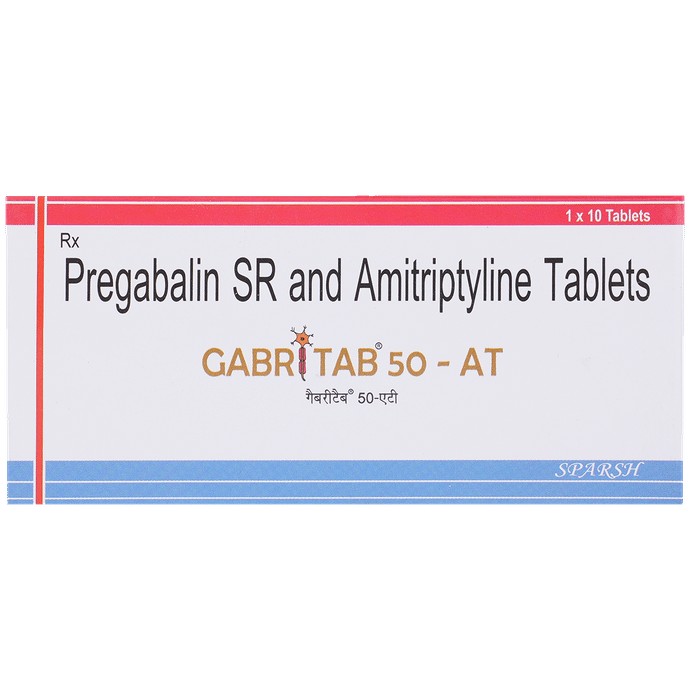
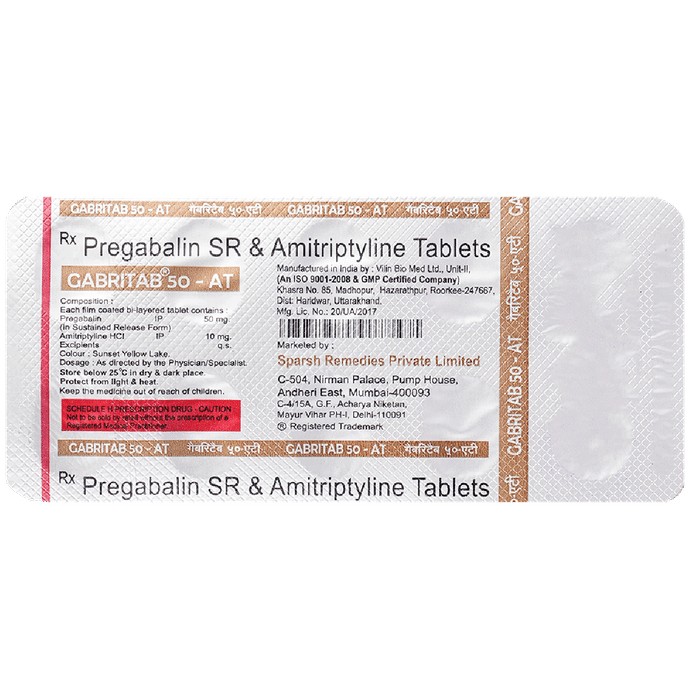
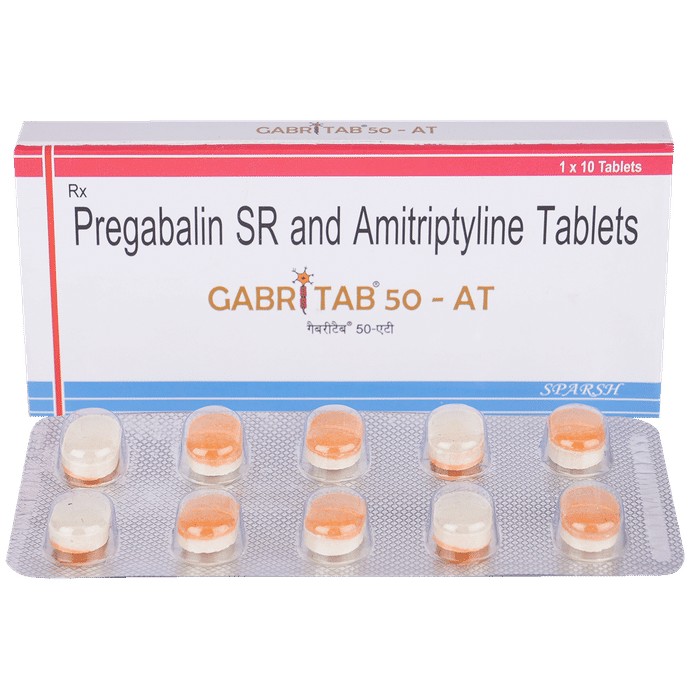
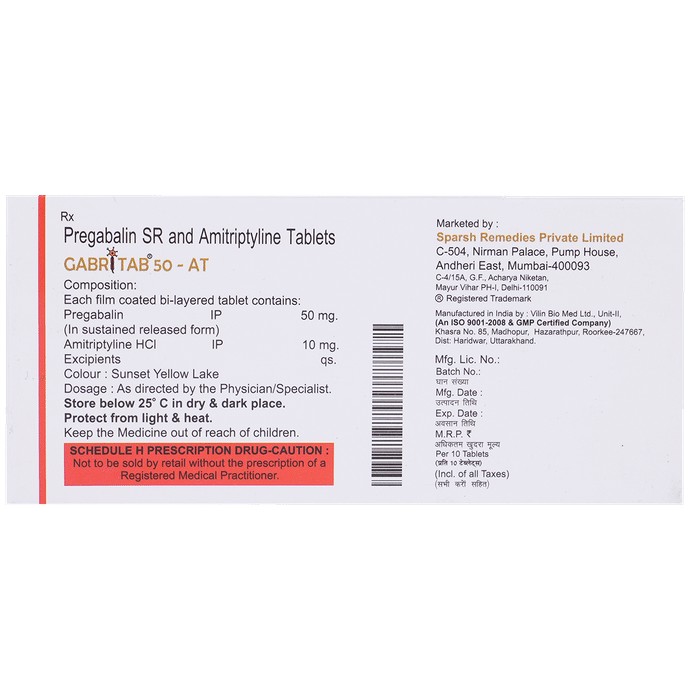
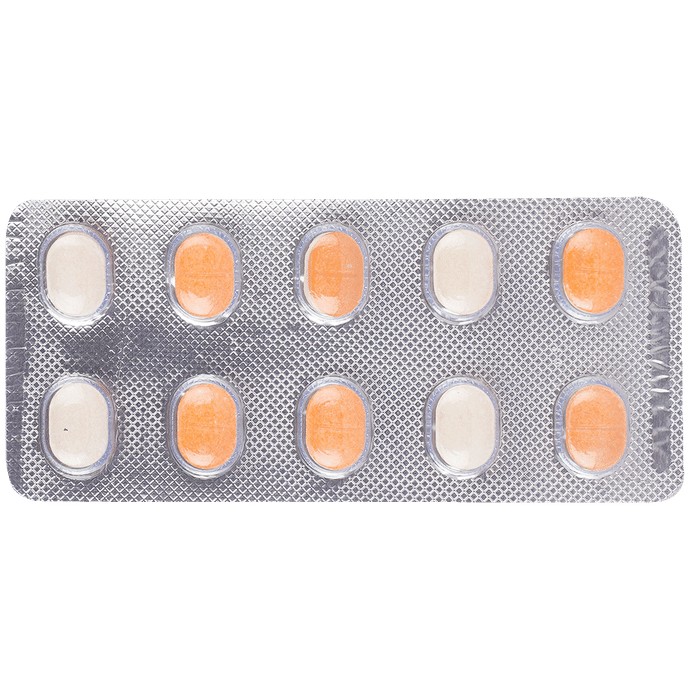
Gabritab 50-AT Tablet

Marketer
Sparsh Remedies Pvt Ltd
Salt Composition
Amitriptyline (10mg) + Pregabalin (50mg)
Overview Gabritab 50-AT Tablet
Ativaban 50-AT tablets are a prescription medication for managing neuropathic pain. Their mechanism involves boosting neurotransmitter levels in the brain, thereby improving mood regulation and blocking pain signal transmission to the brain. Ativaban 50-AT tablets are administered orally, with or without food, but consistent daily dosing is recommended for stable blood levels. If a dose is missed, take it immediately upon recollection. Avoid skipped doses and complete the prescribed course, even if symptoms improve. Abrupt cessation should be avoided without consulting a physician, as this could exacerbate symptoms. Common side effects may include constipation, weight gain, drowsiness, dry mouth, and tachycardia. Initial postural hypotension is possible; rise slowly from sitting or lying positions. Drowsiness and dizziness may occur, so avoid driving or activities requiring alertness until the drug's effects are known. Weight gain is possible; regular exercise and a balanced diet can help manage this. Report any unusual mood changes, as suicidal ideation may occur. Disclose all other medications to your doctor, as interactions can affect efficacy or drug action. Inform your physician of pregnancy, pregnancy plans, or breastfeeding.
Uses of Gabritab 50-AT Tablet
Nerve-related pain
Major Benefits of Gabritab 50-AT Tablet:
Follow your doctor's instructions precisely regarding dosage and treatment length for this medication. Ingest the Gabritab 50-AT Tablet whole; avoid crushing, chewing, or breaking it. This medication can be taken with or without food, but consistency in timing is recommended.
Common Side effects of Gabritab 50-AT Tablet:
- Constipation
- Weight gain
- Sleepiness
- Dizziness
- Tiredness
- Blurred vision
- Dryness in mouth
- Increased heart rate
- Orthostatic hypotension (sudden lowering of blood pressure on standing)
- Difficulty in urination
- Uncoordinated body movements
How to use Gabritab 50-AT Tablet:
Follow your doctor's instructions precisely regarding dosage and treatment length for this medication. Ingest the Gabritab 50-AT Tablet whole; avoid chewing, crushing, or breaking it. While it can be taken with or without food, consistent timing is recommended for optimal results.
How Gabritab 50-AT Tablet works:
Gabritab 50-AT tablets contain Amitriptyline and Pregabalin, working synergistically to alleviate neuropathic pain. Amitriptyline, a tricyclic antidepressant, boosts serotonin and noradrenaline, neurotransmitters that inhibit pain signal transmission to the brain. Pregabalin, acting as an alpha-2-delta ligand, reduces pain perception by regulating nerve cell calcium channel function.
SAFETY ADVICE
 AlcoholUNSAFE
Combining Gabritab 50-AT Tablet and alcohol is inadvisable.
 PregnancyCONSULT YOUR DOCTOR
Using Gabritab 50-AT tablets during pregnancy may pose risks. While human research is scarce, animal studies indicate potential harm to a developing fetus. A physician will assess the advantages against potential dangers prior to prescription. Seek medical advice.
 Breast feedingCONSULT YOUR DOCTOR
The use of Gabritab 50-AT Tablet while breastfeeding is likely inadvisable. Available human data indicates potential transfer to breast milk, posing a possible risk to the infant.
 DrivingUNSAFE
Driving ability may be compromised by Gabritab 50-AT Tablet side effects, including reduced alertness.
 KidneySAFE IF PRESCRIBED
Gabritab 50-AT Tablets appear to pose minimal risk for individuals with kidney impairment. Preliminary evidence indicates dose modification may be unnecessary; however, physician consultation is recommended.
 LiverSAFE IF PRESCRIBED
Use of Gabritab 50-AT Tablet in patients with liver disease appears to present minimal risk. Current evidence indicates dose modification may be unnecessary, however, physician consultation is recommended.
What if you forget to take Gabritab 50-AT Tablet :
NA
Facts to Know About Gabritab 50-AT Tablet
| Label | Value |
|---|---|
| Developing Habits | No. |
| Treatment Category | Neuroscience and Central Nervous System |
 3,018 People bought this recently