Search Icon

AUM Pharmacy

Hi there!

Hello, Login
All Categories
VisaVisaVisa
slide-0
slide-1
slide-2
slide-3
slide-4

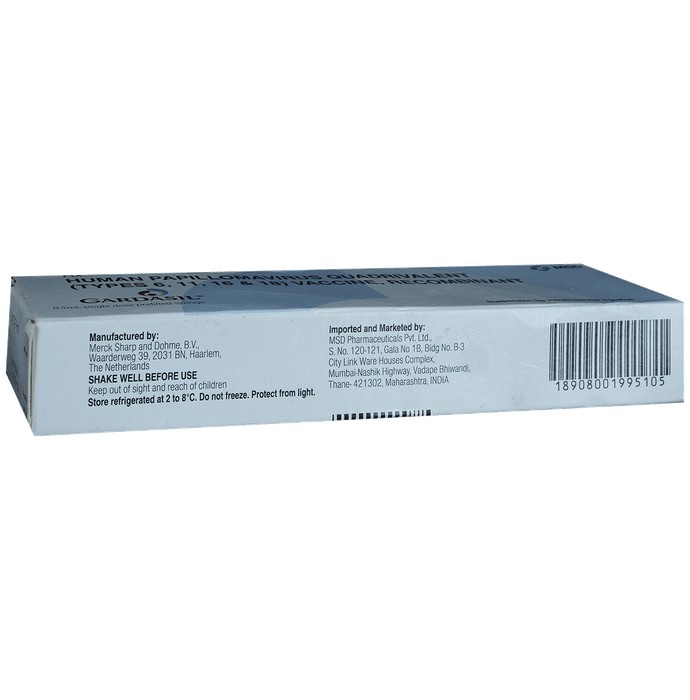
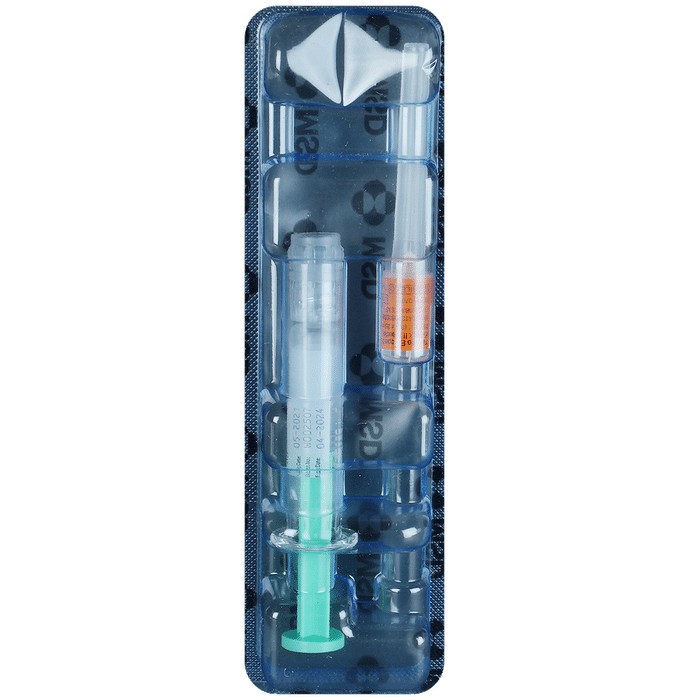
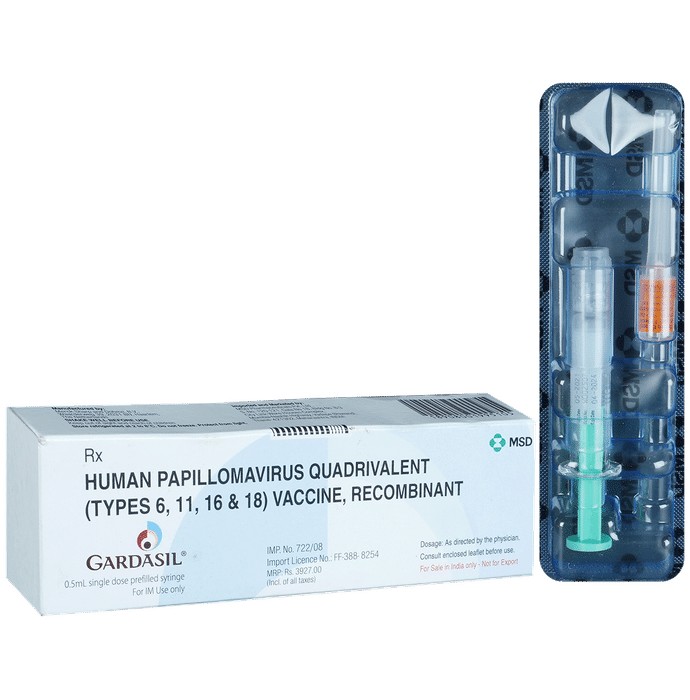
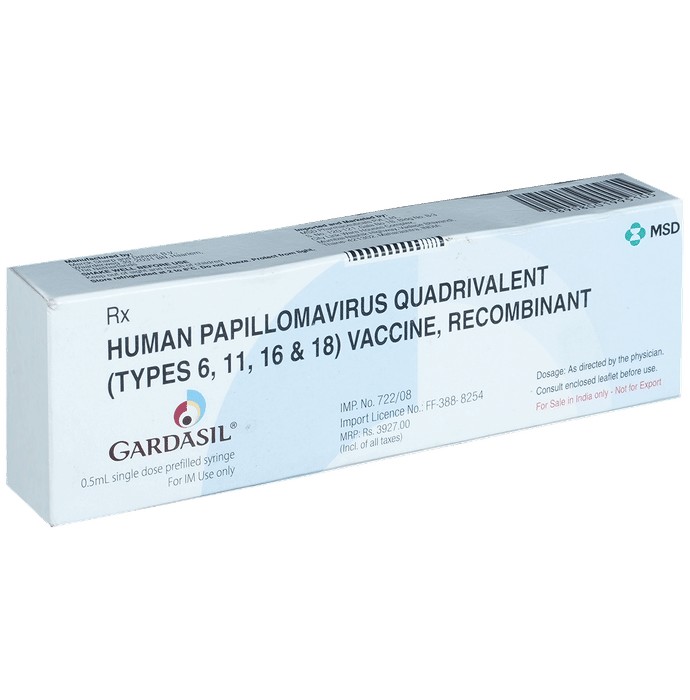
Gardasil Vaccine

Prescription Icon
Prescription Required

Marketer

MSD Pharmaceuticals Pvt Ltd

Salt Composition

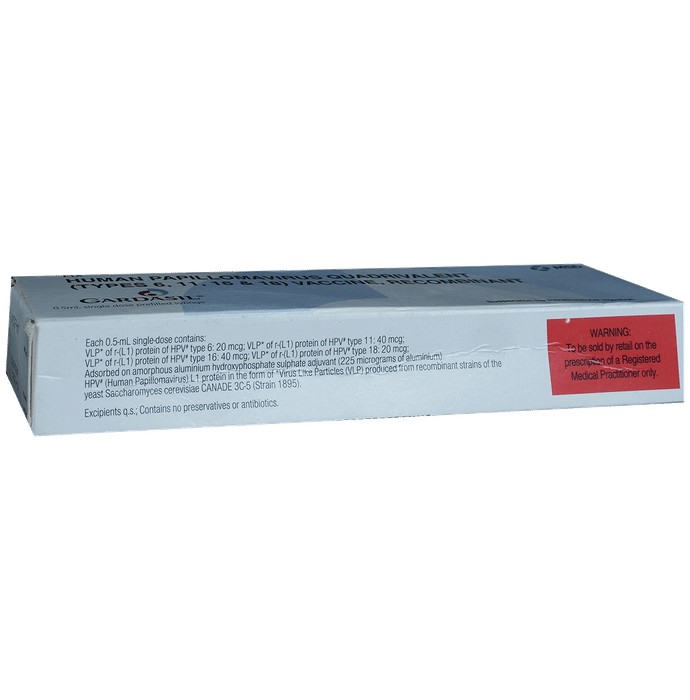
Human Papillomavirus Quadrivalent (Types 6, 11, 16, and 18) Vaccine, Recombinant (NA)

Overview Gardasil Vaccine

The HPV vaccine, Gardasil, protects against cervical, vulvar, and vaginal cancers linked to human papillomavirus (HPV) in females. Its mechanism involves triggering a low-level immune response, prompting antibody production for future HPV protection. Administered via injection to individuals aged 9–45, the vaccine requires two or three doses spaced months apart, given by a healthcare professional to ensure correct dosage. Incomplete vaccination compromises HPV protection; therefore, attendance at all scheduled appointments is crucial. Common, generally mild, and self-limiting side effects include headache, fever, nausea, dizziness, and injection-site pain or swelling. Consult your doctor if these persist or are bothersome. Prior to vaccination, inform your doctor of any history of fainting after injections or immune deficiencies. Discuss vaccination safety with your doctor if pregnant or breastfeeding. Importantly, this vaccine does not replace regular cervical cancer screenings; continue attending all scheduled appointments.

Uses of Gardasil Vaccine

Avoiding genital warts (raised skin growths in the genital or anal region) and HPV-related cancers.

Major Benefits of Gardasil Vaccine:

This medication will be administered by your healthcare provider. Self-medication is strictly prohibited.

Common Side effects of Gardasil Vaccine:

  • Headache
  • Fever
  • Dizziness
  • Nausea
  • Injection site reactions (pain, swelling, redness)

How to use Gardasil Vaccine:

This medication will be administered by your healthcare provider. Self-medication is strictly prohibited.

How Gardasil Vaccine works:

The Gardasil vaccine triggers the body's immune response by prompting a harmless, subclinical infection. This process generates protective antibodies without causing disease, thereby providing immunity against future infections.

SAFETY ADVICE

AlcoholAlcoholCONSULT YOUR DOCTOR

Alcohol consumption alongside the Gardasil vaccine lacks established safety data. Seek medical advice before combining them.

PregnancyPregnancyCONSULT YOUR DOCTOR

Data on Gardasil vaccination in pregnant individuals is currently lacking. Seek medical advice from your physician.

Breast feedingBreast feedingCONSULT YOUR DOCTOR

Data on Gardasil vaccine use while breastfeeding is currently unavailable. Seek medical advice from your physician.

DrivingDrivingCONSULT YOUR DOCTOR

The impact of the Gardasil vaccine on driving ability is undetermined. Refrain from driving if you exhibit any symptoms impairing concentration or reaction time.

KidneyKidneySAFE IF PRESCRIBED

The use of Gardasil vaccine in individuals with kidney disease appears to be safe. Preliminary evidence indicates that altering the vaccine dosage for these patients may be unnecessary. Physician consultation is recommended.

LiverLiverSAFE IF PRESCRIBED

The use of Gardasil vaccine in individuals with liver conditions is likely safe. Existing evidence indicates dose modification may not be necessary for this population. Physician consultation is recommended.

What if you forget to take Gardasil Vaccine :

Should you have omitted a scheduled Gardasil vaccination, seek advice from your physician.

Facts to Know About Gardasil Vaccine

LabelValue
Chemical Type Immunizations
Developing Habits No.
Treatment Category Immunizations

FAQs on Gardasil Vaccine

The Gardasil vaccine protects females against cervical, vulvar, and vaginal cancers, as well as precancerous lesions, genital warts, and HPV infections, all caused by the Human Papillomavirus.
The Gardasil vaccine is ideally administered to girls between ages 11 and 12. Teenagers and adults up to age 45 who haven't been vaccinated should also consider it. In some cases, children as young as 9 may receive the vaccine under a doctor's guidance. Dosage and scheduling vary by age; consult your doctor for personalized advice.
HPV vaccination is possible regardless of sexual activity. Since there are over 100 HPV types, vaccination offers protection against strains you haven't yet contracted, even if you've already been exposed to one.
No, resume where you stopped. However, it's advisable to check with your doctor before receiving another Gardasil vaccination.
Yes, cervical cancer screening remains necessary for vaccinated women, as the vaccine's protection isn't comprehensive against all cancer-causing HPV types.
The Gardasil vaccine is highly effective for the vast majority. Clinical trials demonstrate near-complete protection against cervical and vaginal cancers, genital warts, and HPV infections caused by the targeted HPV types.
Gardasil is generally well-tolerated, with minor side effects being most common. These typically include injection site soreness, swelling, or redness. Dizziness or fainting can sometimes occur; resting for 15 minutes post-injection helps minimize this risk. Other possible side effects are headache, nausea, vomiting, fatigue, or weakness. Seek medical advice if any symptoms persist or are bothersome.
Condoms, while helpful, don't guarantee complete protection against HPV. Even with consistent condom use, you can still contract HPV from an infected partner because the virus can be transmitted through various sexual contacts, including intercourse, oral sex, and genital-to-genital contact.
Gardasil can be administered with other vaccines—live or inactivated—simultaneously, before, or after, but always using separate syringes and injection sites. Studies confirm this concurrent administration doesn't compromise Gardasil's effectiveness or antibody response. Nevertheless, consult your doctor before receiving any other vaccinations.
Gardasil is not a live vaccine. It uses virus-like particles, created via recombinant DNA technology, derived from the protein coats of HPV viruses. These particles contain no viral DNA and cannot cause infection or cancer.
Studies indicate long-lasting effectiveness of the Gardasil vaccine, with no demonstrated decline in protection over time. Twelve years of protection have been observed in some studies, and research continues to define the full duration of immunity.
HPV and Pap tests aren't needed to determine vaccine eligibility. Cervical cancer screenings remain important for all women, regardless of Gardasil vaccination, as the vaccine doesn't protect against all cervical cancers.
Gardasil effectively prevents infection by the targeted HPV types, thus protecting against most associated health issues. However, its effectiveness is reduced in young women with pre-existing HPV exposure, as the vaccine is preventative, not curative.
The Gardasil vaccine boasts a strong safety profile and is generally well-tolerated. Extensive testing precedes licensing, and ongoing safety monitoring continues. Common side effects are mild to moderate, typically involving injection site pain, swelling, redness, and headache.
For optimal effectiveness and immune response, the vaccine is recommended for girls aged 9–13 before sexual activity begins. It remains available for women up to age 45.
A quadrivalent HPV vaccine protects against four HPV types: 6, 11, 16, and 18. This vaccine prevents, but does not treat, diseases caused by these types, including genital warts, precancerous anal and genital lesions, and cervical and anal cancers.
Gardasil Vaccine
3,384
MRP 3,927
13% off
