


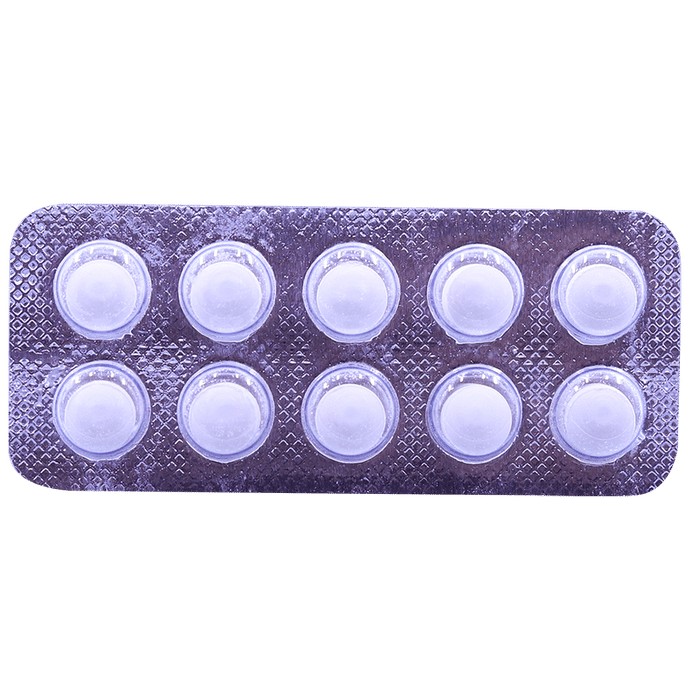
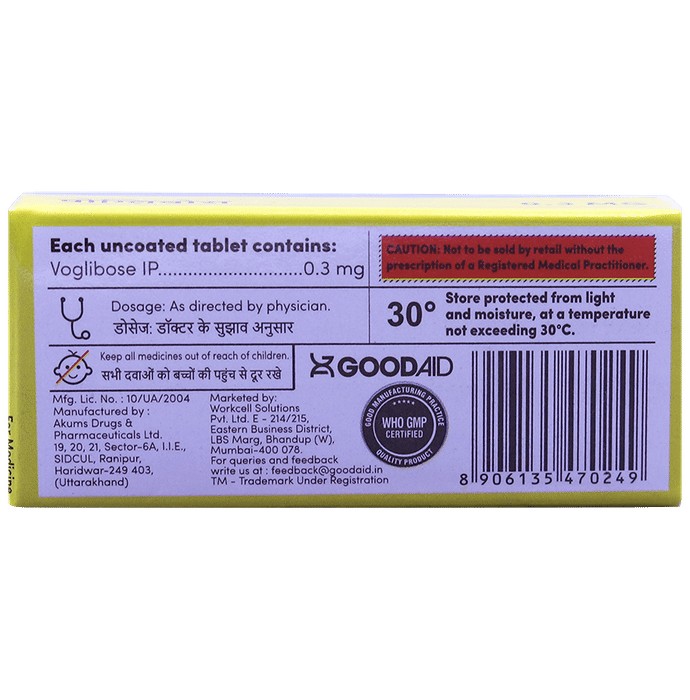
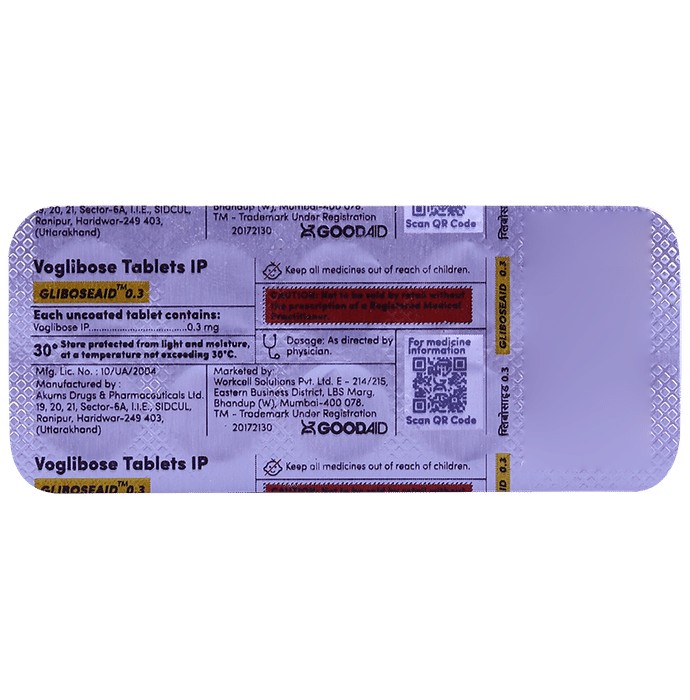
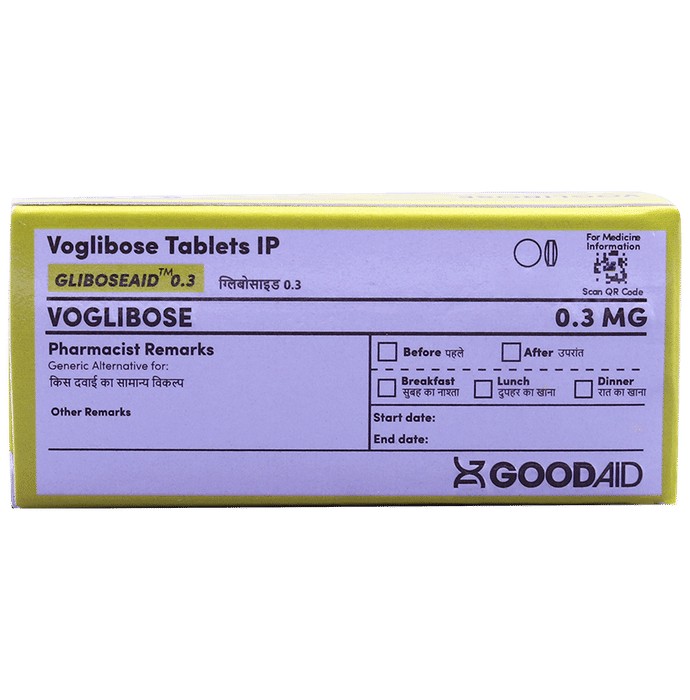
Gliboseaid 0.3 Tablet

Marketer
Workcell Solutions Private Limited
Salt Composition
Voglibose (0.3mg)
Overview Gliboseaid 0.3 Tablet
Diabetol 0.3mg tablets manage type 2 diabetes by regulating post-prandial blood glucose. Prescribed when diet and other therapies prove insufficient to control elevated blood sugar, Diabetol 0.3mg should be administered immediately before meals. Dosage frequency is determined individually by your physician to optimize blood glucose control. Abrupt cessation is discouraged; discontinuing treatment without medical supervision risks hyperglycemia and serious complications such as renal impairment and vision loss. This medication forms part of a comprehensive diabetes management plan incorporating a balanced diet, regular physical activity, and weight management as directed by your doctor. Regular blood glucose monitoring is essential. Commonly reported side effects include abdominal discomfort (gas, pain), appetite changes, bowel irregularities (constipation, diarrhea). Consult your physician if side effects persist or are troublesome. While Diabetol 0.3mg alone doesn't induce hypoglycemia, concomitant use with other antidiabetic agents (particularly insulin or sulfonylureas) may increase this risk. Treat hypoglycemic episodes with pure glucose; sucrose is ineffective in this context. Prior to commencing treatment, disclose any liver or kidney conditions. Avoid use if you have inflammatory bowel disease (e.g., ulcerative colitis, Crohn's disease). Pregnant or lactating individuals should seek medical advice before use. Always inform your physician of all concurrent medications to ensure safety. Limit alcohol consumption as it may heighten hypoglycemia risk.
Primary Ingredients of Gliboseaid 0.3 Tablet
No text provided to rephrase.
Uses of Gliboseaid 0.3 Tablet
Managing Type 2 Diabetes
Major Benefits of Gliboseaid 0.3 Tablet:
Administer this medication precisely as prescribed by your physician, adhering to both dosage and treatment duration. Ingest the entire tablet; avoid chewing, crushing, or fracturing it. Consume Gliboseaid 0.3 Tablet on an empty stomach.
Common Side effects of Gliboseaid 0.3 Tablet:
- Skin rash
- Flatulence
- Abdominal pain
- Diarrhea
How to use Gliboseaid 0.3 Tablet:
Follow your physician's instructions precisely regarding dosage and treatment length for Gliboseaid 0.3 Tablet. Ingest the tablet whole; avoid crushing, chewing, or breaking it. Administer on an empty stomach.
How Gliboseaid 0.3 Tablet works:
GlucoBalance 0.3mg tablets are an antihyperglycemic medication. They function by suppressing intestinal enzymes that digest complex carbohydrates into simple sugars like glucose, thereby moderating postprandial blood sugar spikes.
SAFETY ADVICE
 AlcoholUNSAFE
Alcohol consumption alongside Gliboseaid 0.3 Tablet is contraindicated.
 PregnancySAFE IF PRESCRIBED
Using Gliboseaid 0.3 Tablet during pregnancy is typically deemed safe. Preclinical trials in animals revealed minimal or no negative consequences for fetal development; nevertheless, data from human trials are scarce.
 Breast feedingSAFE IF PRESCRIBED
The use of Gliboseaid 0.3 Tablet while breastfeeding appears to be safe. Available human data indicates minimal risk to the infant.
 DrivingSAFE
Driving ability is typically unaffected by Gliboseaid 0.3 Tablet.
 KidneyCAUTION
For individuals with advanced kidney impairment, administering Gliboseaid 0.3 Tablet requires careful consideration. Dosage modification of Gliboseaid 0.3 Tablet might be necessary. Physician consultation is advised.
 LiverCAUTION
Patients with severe hepatic impairment should use Gliboseaid 0.3 Tablets cautiously; dosage modification may be necessary. Physician consultation is advised.
What if you forget to take Gliboseaid 0.3 Tablet :
Omit any missed Gliboseaid 0.3 Tablet dose and resume your usual medication regimen. Avoid taking a double dose.
Facts to Know About Gliboseaid 0.3 Tablet
| Label | Value |
|---|---|
| Chemical Type | Valiolamine analog |
| Developing Habits | No. |
| Treatment Category | Diabetes Management |
| Active Class | Alpha-glucosidase inhibitors |
 3,018 People bought this recently