


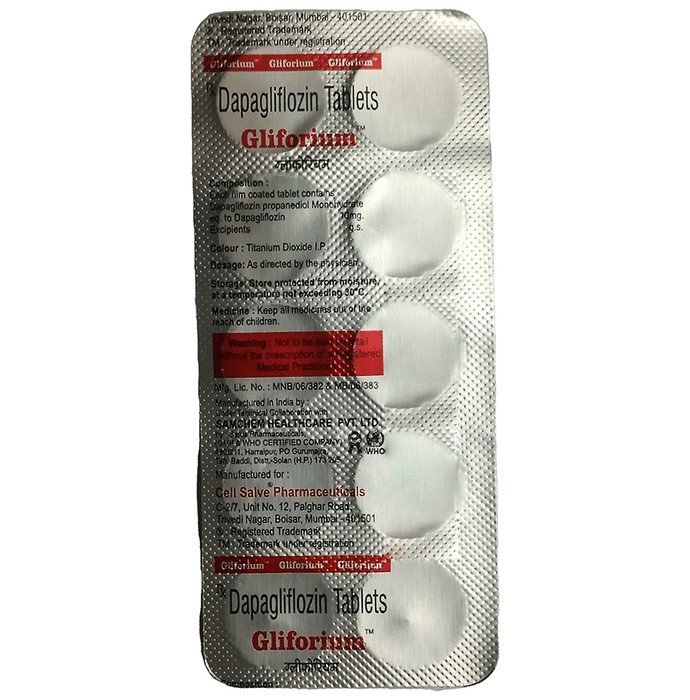

Gliforium Tablet

Marketer
Cell Salve Pharmaceuticals
Salt Composition
Dapagliflozin (10mg)
Overview Gliforium Tablet
Diabexe tablets are prescribed for type 2 diabetes management, either independently or alongside other medications. Their purpose is to regulate elevated blood glucose, thereby mitigating the risk of severe diabetic complications, including heart disease. Diabexe can be administered with or without food, but consistent daily timing is recommended; dosage is determined by your physician. Discontinuation requires medical consultation; otherwise, blood sugar levels may surge, potentially leading to serious complications such as kidney failure and vision loss. This medication forms part of a comprehensive treatment plan encompassing a balanced diet, regular physical activity, and weight management as directed by your doctor. Common side effects include vaginal yeast infections, upper respiratory tract inflammation (nasopharyngitis), and urinary tract infections. It may induce dehydration; adequate hydration is crucial. Practicing good hygiene can minimize the risk of genital fungal infections. Prior to commencing treatment, disclose any pre-existing kidney or liver conditions, urinary tract infections, or diuretic use to your doctor. Pregnant or lactating individuals should seek medical advice before use. Limit alcohol consumption, as it can exacerbate side effects. Regular blood glucose monitoring is essential during treatment.
Uses of Gliforium Tablet
Managing type 2 diabetes
Major Benefits of Gliforium Tablet:
Follow your doctor's instructions precisely regarding dosage and treatment length for this medication. Ingest the tablet whole; avoid chewing, crushing, or fracturing it. Gliforium Tablets can be administered with or without food, although consistent timing is recommended.
Common Side effects of Gliforium Tablet:
- Polyuria
- Nausea
- Vomiting
- Dyslipidemia
- Genital fungal infection
- Nasopharyngitis (inflammation of the throat and nasal passages)
- Urinary tract infection
How to use Gliforium Tablet:
Follow your doctor's instructions precisely regarding dosage and treatment length for this medication. Ingest the tablet whole; do not chew, crush, or divide it. Gliforium Tablets can be taken with or without food, however, consistent timing is recommended.
How Gliforium Tablet works:
Glyforium tablets manage blood sugar levels. They achieve this by facilitating the excretion of surplus glucose via the kidneys.
SAFETY ADVICE
 AlcoholUNSAFE
Alcohol consumption alongside Gliforium Tablet is contraindicated.
 PregnancyCONSULT YOUR DOCTOR
The use of Gliforium Tablets during pregnancy may pose risks. While human research is scarce, animal studies indicate potential harm to a developing fetus. A physician will assess the potential benefits against any risks prior to prescribing. Physician consultation is advised.
 Breast feedingCONSULT YOUR DOCTOR
The use of Gliforium Tablets while breastfeeding is likely inadvisable. Available human data indicates potential transfer of the medication into breast milk, posing a possible risk to the infant.
 DrivingCAUTION
Driving ability can be impaired by both hypoglycemia and hyperglycemia. Refrain from driving if you experience these conditions.
 KidneyUNSAFE
The use of Gliforium Tablets is likely inadvisable for individuals with kidney impairment and should be forgone. Seek medical advice from your physician.
 LiverSAFE IF PRESCRIBED
Patients with hepatic impairment can safely use Gliforium tablets without requiring any alteration to the prescribed dosage.
What if you forget to take Gliforium Tablet :
Should you forget a Gliforium Tablet dose, take it immediately. If, however, your next dose is imminent, omit the missed dose and resume your usual dosing regimen. Never take a double dose.
Facts to Know About Gliforium Tablet
| Label | Value |
|---|---|
| Chemical Type | Phenolic Glycoside Derivative |
| Developing Habits | No. |
| Type of Therapy | Diabetes Medication |
| Action Class | Sodium-glucose cotransporter 2 (SGLT2) inhibitors |
 3,018 People bought this recently