



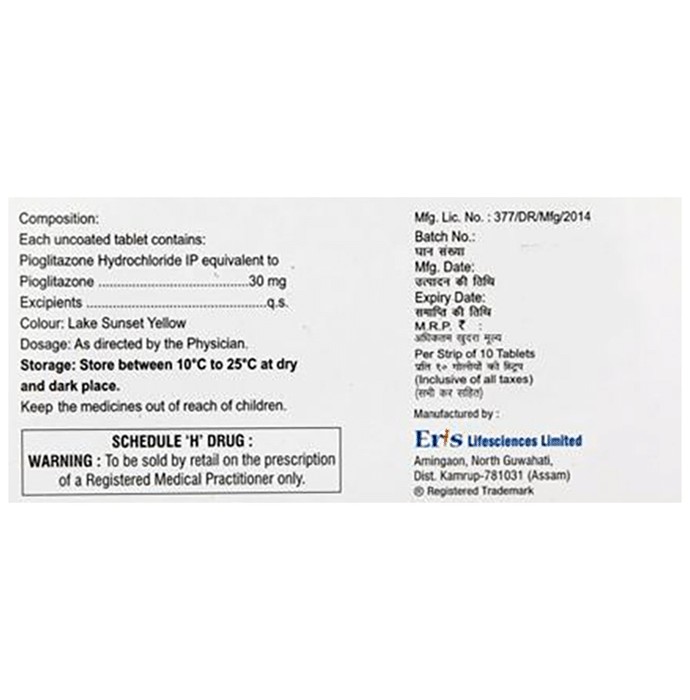
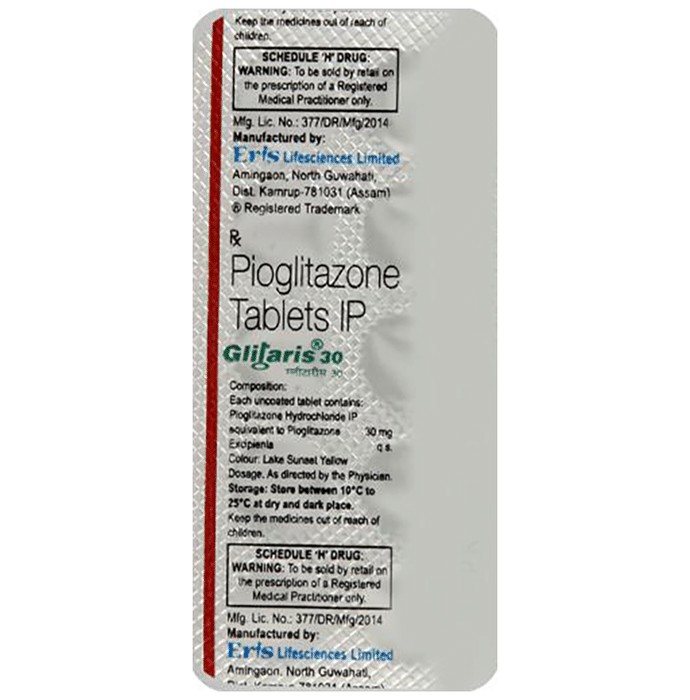

Glitaris 30 Tablet

Marketer
Eris Lifesciences Ltd
Salt Composition
Pioglitazone (30mg)
Overview Glitaris 30 Tablet
Diabex 30mg tablets manage type 2 diabetes in adult patients by regulating blood glucose. This helps mitigate severe diabetic complications such as vision impairment and kidney disease. Diabex 30mg may be prescribed alone or in conjunction with other medications, with or without food, consistently at the same time daily for optimal efficacy. Dosage adjustments, determined by your physician, may be necessary. Continued use, even with controlled blood sugar and good health, is vital; discontinuation without medical consultation risks elevated blood glucose, potentially leading to kidney damage, vision loss, neuropathy, and limb amputation. Remember, it's one component of a comprehensive diabetes management plan encompassing a balanced diet, exercise, and weight management, as directed by your doctor. Lifestyle significantly impacts diabetes control. Common side effects include headache, sinus infection, myalgia, and sore throat. Persistent or bothersome side effects warrant medical attention. Contraindications include type 1 diabetes, diabetic ketoacidosis, and severe hepatic or renal impairment. Prior heart, thyroid, or endocrine disorders should be disclosed to your physician before commencing treatment, as it may be unsuitable. Pregnant or lactating individuals must consult their doctor. Regular blood glucose monitoring, along with potential blood tests for complete blood count and liver function, will be necessary as directed by your physician.
Uses of Glitaris 30 Tablet
Managing type 2 diabetes
Major Benefits of Glitaris 30 Tablet:
Follow your doctor's instructions precisely regarding dosage and treatment length for this medication. Ingest the Glitaris 30 Tablet whole; avoid chewing, crushing, or breaking it. This medication can be administered with or without food, but consistent timing is recommended.
Common Side effects of Glitaris 30 Tablet:
- Headache
- Sore throat
- Sinus inflammation
- Muscle pain
How to use Glitaris 30 Tablet:
Follow your doctor's instructions precisely regarding the dosage and treatment length for this medication. Ingest the Glitaris 30 Tablet whole; avoid chewing, crushing, or breaking it. This medication can be taken with or without food, though consistent timing is recommended.
How Glitaris 30 Tablet works:
Glycemia Control 30mg tablets are used to manage diabetes. Their mechanism of action involves enhancing the body's responsiveness to insulin, thus regulating blood glucose.
SAFETY ADVICE
 AlcoholUNSAFE
Consuming alcohol alongside Glitaris 30 Tablet is inadvisable.
 PregnancyCONSULT YOUR DOCTOR
The use of Glitaris 30 Tablet during pregnancy may pose risks. While human research is scarce, animal studies indicate potential harm to a developing fetus. A physician will assess the advantages against possible hazards before prescribing. Seek medical advice.
 Breast feedingCAUTION
Use of Glitaris 30 Tablet during lactation requires careful consideration. Breastfeeding should be temporarily discontinued until maternal treatment concludes and the medication is fully cleared from the mother's system. Closely observe the infant's blood glucose levels while the mother is taking Glitaris 30 Tablet.
 DrivingSAFE
Driving ability is typically unaffected by Glitaris 30 Tablet.
 KidneySAFE IF PRESCRIBED
For patients with kidney impairment, Glitaris 30 Tablet is considered safe and requires no dosage modification.
 LiverCAUTION
Individuals with liver impairment should use Glitaris 30 Tablet cautiously, potentially requiring a modified dosage. Physician consultation is advised. Glitaris 30 Tablet is contraindicated for patients exhibiting severe hepatic dysfunction.
What if you forget to take Glitaris 30 Tablet :
Omit any missed dose of Glitaris 30 Tablet and resume your usual medication regimen. Avoid taking a double dose.
Facts to Know About Glitaris 30 Tablet
| Label | Value |
|---|---|
| Chemical Type | Thiazolidinedione-based compound |
| Developing Habits | No. |
| Treatment Category | Diabetes Management |
| Active Class | PPARγ agonist (thiazolidinedione) |
 3,018 People bought this recently