


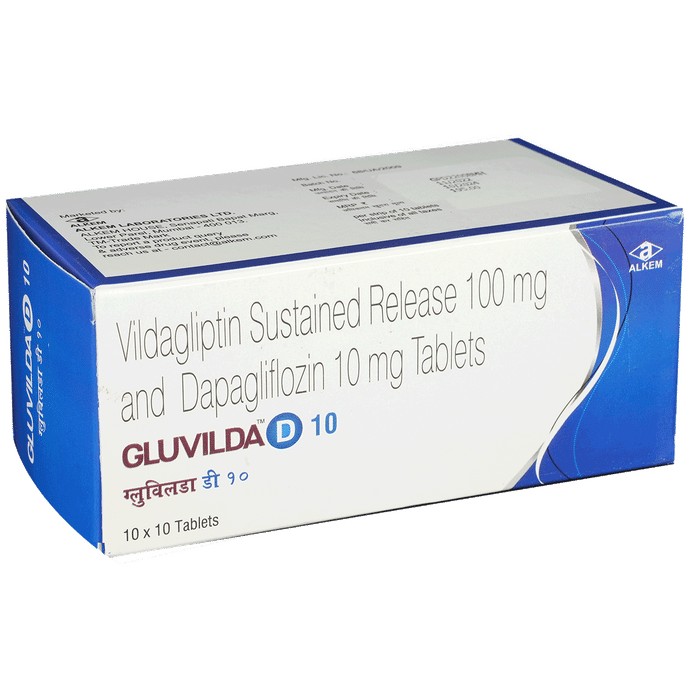
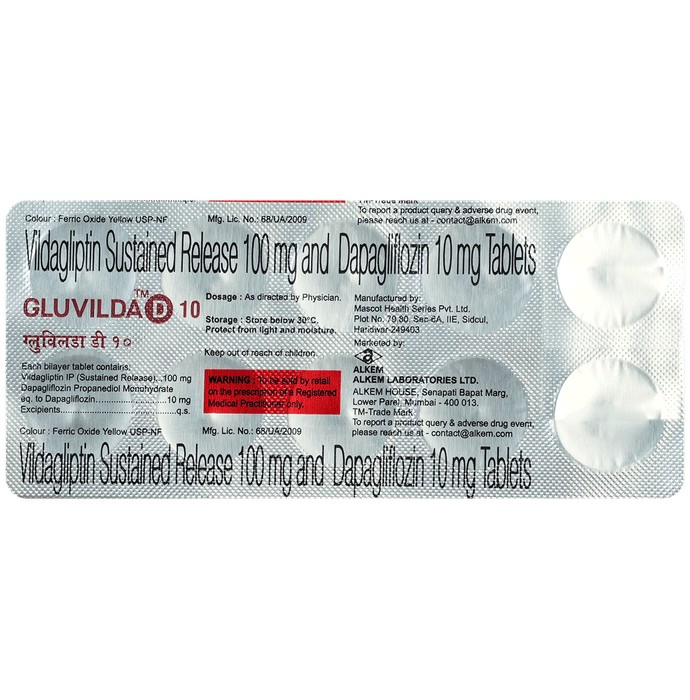
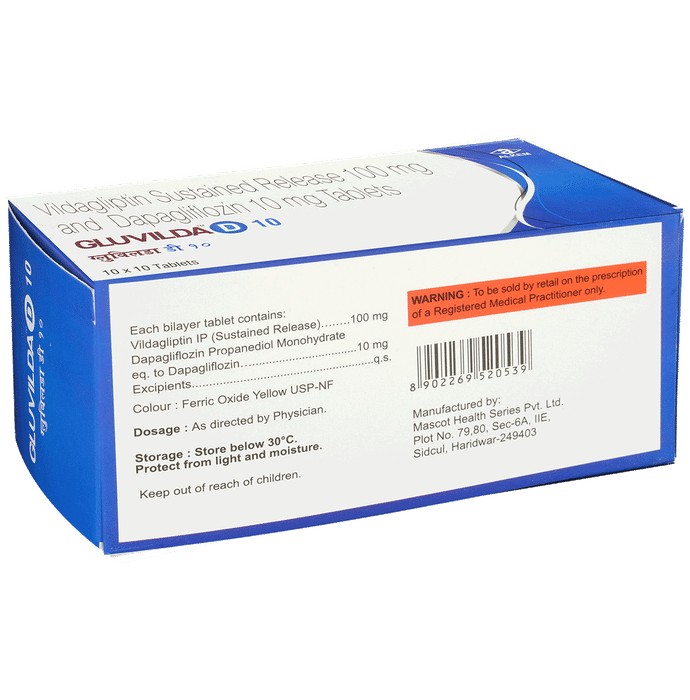
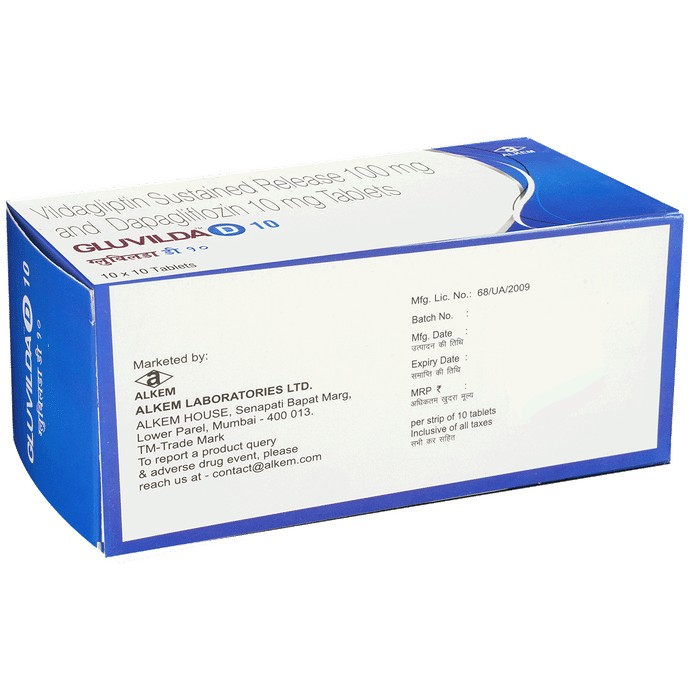
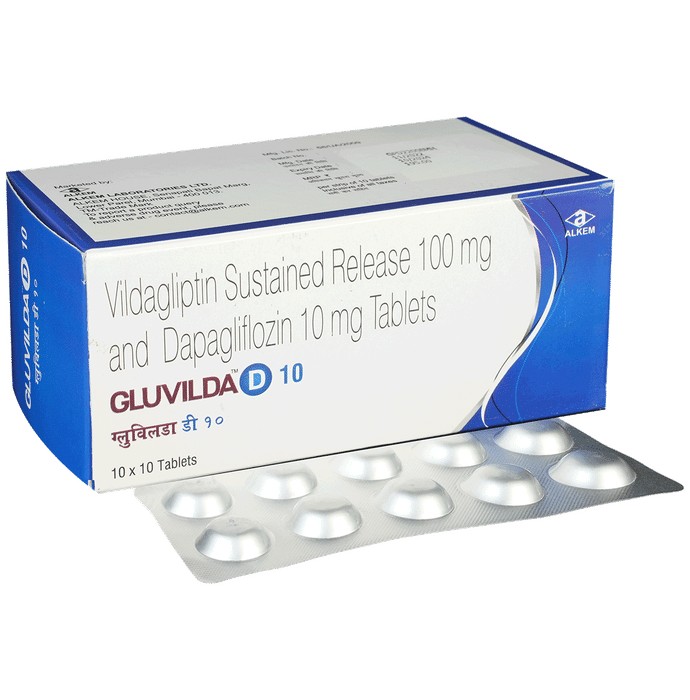
Gluvilda D 10mg/100mg Tablet

Marketer
Alkem Laboratories Ltd
Salt Composition
Dapagliflozin (10mg) + Vildagliptin (100mg)
Overview Gluvilda D 10mg/100mg Tablet
DiabetaComb 10mg/100mg tablets offer dual-action blood glucose management. Combined with diet and exercise, this medication improves glycemic control in adults with type 2 diabetes. It enhances insulin effectiveness, resulting in lower blood sugar. DiabetaComb 10mg/100mg can be administered with or without food, but consistent daily timing is recommended. Dosage is determined by your physician; discontinuation requires their approval to avoid potentially dangerous rises in blood sugar, including risks like kidney impairment and vision loss. This medication complements a comprehensive treatment plan incorporating a balanced diet, physical activity, and weight management, as directed by your doctor. Commonly reported side effects include low blood sugar, yeast infections, urinary tract infections, lightheadedness, shakiness, and headaches. Hydration is crucial to prevent dehydration. Genital fungal infections are possible; maintaining good hygiene can minimize this risk. Prior to commencing treatment, disclose any kidney or liver issues, urinary tract infections, or diuretic use to your doctor. Pregnant or lactating individuals should seek medical counsel. Limit alcohol consumption to mitigate potential side effects. Regular blood glucose monitoring is essential during treatment.
Primary Ingredients of Gluvilda D 10mg/100mg Tablet
No text provided to rephrase.
Uses of Gluvilda D 10mg/100mg Tablet
Managing type 2 diabetes
Major Benefits of Gluvilda D 10mg/100mg Tablet:
Follow your doctor's instructions precisely regarding the dosage and treatment length for Gluvilda D 10mg/100mg Tablets. Ingest the tablets whole; avoid chewing, crushing, or breaking them. These tablets can be administered with or without food, however, consistent daily timing is recommended.
Common Side effects of Gluvilda D 10mg/100mg Tablet:
- Headache
- Vaginal inflammation
- Balanitis
- Urinary tract infection
- Hypoglycemia (low blood glucose level)
- Dizziness
- Tremors
- Fatigue
- Nausea
- Rash
- Back pain
- Polyuria
- Increased hematocrit
- Decreased creatinine clearance
- Dyslipidemia
- Nasopharyngitis (inflammation of the throat and nasal passages)
How to use Gluvilda D 10mg/100mg Tablet:
Administer this medication precisely as your physician directs, adhering to both the prescribed dosage and treatment length. Ingest the Gluvilda D 10mg/100mg Tablet whole; avoid chewing, crushing, or breaking it. Consumption with or without food is acceptable; however, consistent daily timing is recommended.
How Gluvilda D 10mg/100mg Tablet works:
Gluvilda D 10mg/100mg tablets combine two antidiabetic agents. Dapagliflozin elevates urinary glucose expulsion, consequently lowering blood sugar. Vildagliptin diminishes hepatic glucose production through augmented insulin and suppressed glucagon—the hormone stimulating blood glucose elevation.
SAFETY ADVICE
 AlcoholCONSULT YOUR DOCTOR
Alcohol consumption alongside Gluvilda D 10mg/100mg tablets may be unsafe; seek medical advice before combining them.
 PregnancyCONSULT YOUR DOCTOR
Data on Gluvilda D 10mg/100mg Tablet use in pregnancy is lacking. Seek medical advice from your physician.
 Breast feedingCONSULT YOUR DOCTOR
Data on Gluvilda D 10mg/100mg Tablet use while breastfeeding is absent. Seek medical advice from your physician.
 DrivingCONSULT YOUR DOCTOR
The effect of Gluvilda D 10mg/100mg Tablet on driving ability is undetermined. Refrain from driving if you encounter symptoms impairing concentration or reaction time.
 KidneyCONSULT YOUR DOCTOR
Insufficient data exists regarding Gluvilda D 10mg/100mg Tablet use in individuals with renal impairment. Seek medical advice.
 LiverCONSULT YOUR DOCTOR
Insufficient data exists regarding Gluvilda D 10mg/100mg Tablet use in individuals with hepatic impairment. Physician consultation is recommended.
What if you forget to take Gluvilda D 10mg/100mg Tablet :
Should you forget a Gluvilda D 10mg/100mg Tablet dose, administer it promptly. Nevertheless, if your next scheduled dose is imminent, omit the missed dose and resume your usual dosing regimen. Avoid taking a double dose.
Facts to Know About Gluvilda D 10mg/100mg Tablet
| Label | Value |
|---|---|
| Developing Habits | No. |
| Treatment Category | Diabetes Treatment |
 3,018 People bought this recently