


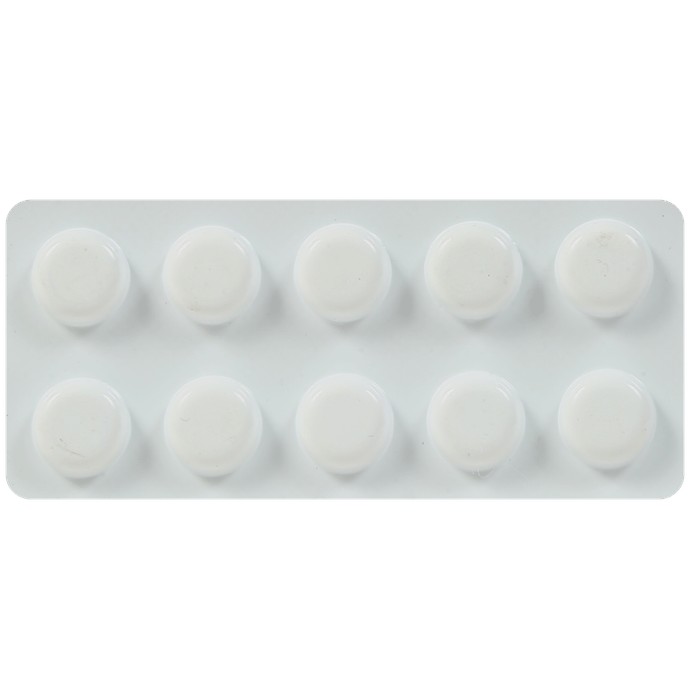
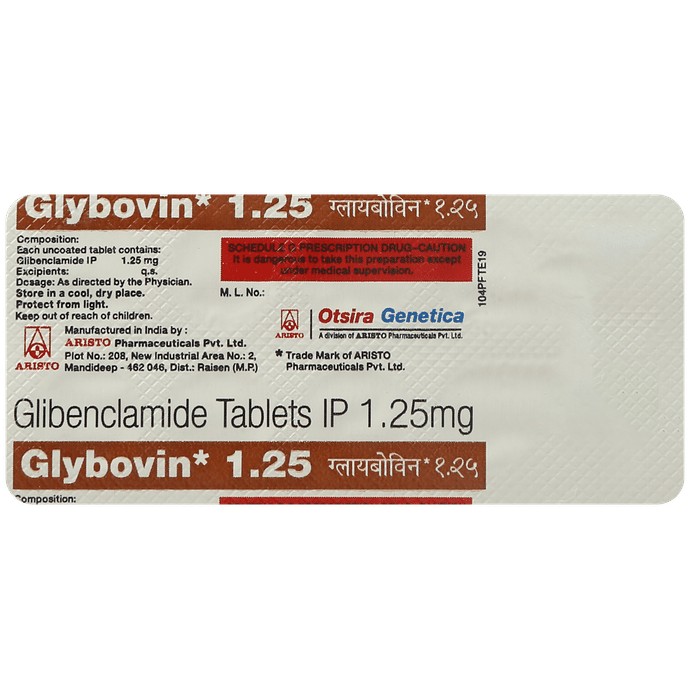
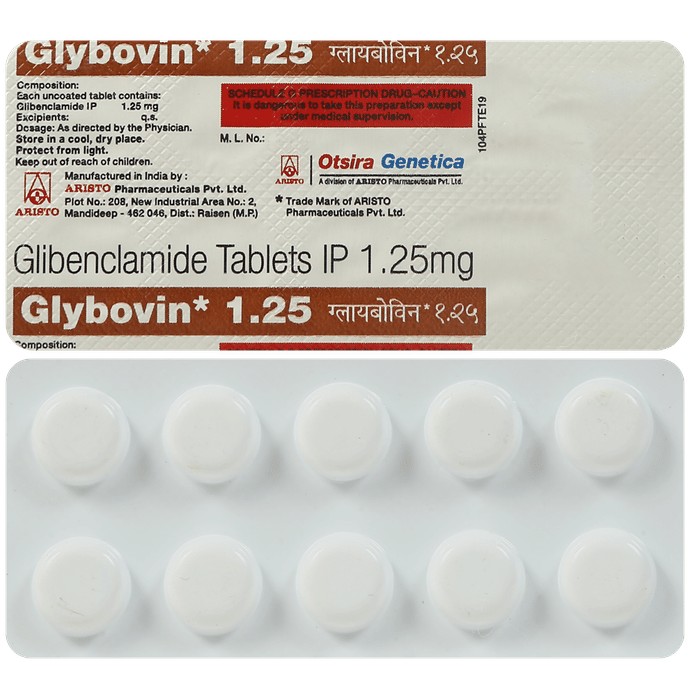
Glybovin 1.25mg Tablet

Marketer
Aristo Pharmaceuticals Pvt Ltd
Salt Composition
Glibenclamide (1.25mg)
Overview Glybovin 1.25mg Tablet
Diabetol 1.25mg tablets are indicated for managing type 2 diabetes in adults. A sulfonylurea, Diabetol helps regulate blood glucose, mitigating diabetes-related complications such as visual impairment and renal dysfunction. This medication can be prescribed alone or in conjunction with other therapies and should be taken with food, consistently at the same time daily for optimal efficacy. Dosage is determined individually by your physician and may be adjusted. Continuous use is crucial, even with seemingly controlled blood sugar, as abrupt cessation can lead to elevated glucose levels and increase the risk of nerve damage, vision loss, kidney failure, and limb complications. Diabetol is part of a comprehensive treatment plan incorporating a balanced diet, regular physical activity, and weight management, as directed by your doctor. Lifestyle modifications are essential for diabetes control. Common side effects include nausea, headache, and vertigo. Hypoglycemia (low blood sugar) is also possible; recognize its symptoms (sweating, dizziness, headache, trembling) and know how to counteract it with rapid-acting glucose sources (e.g., fruit juice, candy). Alcohol consumption should be limited due to its potential to exacerbate hypoglycemia. Weight gain may occur. This medication is contraindicated in type 1 diabetes, diabetic ketoacidosis, and severe hepatic or renal impairment. Prior heart, thyroid, or hormonal disorders should be disclosed to your physician before initiating treatment. Pregnant or lactating individuals should consult their doctor. Regular blood glucose monitoring is necessary, along with potential blood tests to evaluate blood cell counts and liver function.
Uses of Glybovin 1.25mg Tablet
Managing type 2 diabetes
Major Benefits of Glybovin 1.25mg Tablet:
Consume this medication precisely as prescribed by your physician, adhering to both dosage and treatment length. Ingest the entire tablet; avoid chewing, crushing, or fracturing it. It is recommended to take Glybovin 1.25mg Tablet with a meal.
Common Side effects of Glybovin 1.25mg Tablet:
- Hypoglycemia (low blood glucose level)
- Nausea
- Headache
- Dizziness
How to use Glybovin 1.25mg Tablet:
Consume this medication precisely as prescribed by your physician, adhering to both the dosage and treatment length. Ingest the entire tablet; avoid chewing, crushing, or fracturing it. It's recommended to take the Glybovin 1.25mg Tablet with a meal.
How Glybovin 1.25mg Tablet works:
Diabetic patients may use the antihyperglycemic agent, Glybovin 1.25mg tablets, which stimulate pancreatic insulin secretion to reduce blood sugar levels.
SAFETY ADVICE
 AlcoholUNSAFE
Consuming alcohol while taking Glybovin 1.25mg tablets is inadvisable.
 PregnancySAFE IF PRESCRIBED
The use of Glybovin 1.25mg tablets during pregnancy is typically deemed safe. Preclinical trials in animals revealed minimal or no harmful effects on fetal development; however, data from human clinical trials are scarce.
 Breast feedingSAFE IF PRESCRIBED
Using Glybovin 1.25mg tablets while breastfeeding is likely safe. Available human data indicates minimal risk to the infant. However, it's recommended to track the nursing infant's blood glucose levels while the mother takes Glybovin 1.25mg tablets.
 DrivingCAUTION
Driving ability can be impaired by both hypoglycemia and hyperglycemia. Refrain from driving if you experience these blood sugar imbalances.
 KidneyUNSAFE
Patients with kidney disease should likely avoid Glybovin 1.25mg Tablets due to potential safety concerns. Medical advice is recommended.
 LiverCAUTION
Patients with liver impairment should exercise caution when using Glybovin 1.25mg tablets, as dose modification may be necessary. Individuals with severe hepatic dysfunction should avoid Glybovin 1.25mg tablets due to the risk of severe hypoglycemia. Medical advice is recommended.
What if you forget to take Glybovin 1.25mg Tablet :
Omit a Glybovin 1.25mg Tablet if a meal is missed; conversely, administer an additional dose if an unplanned meal is consumed.
Facts to Know About Glybovin 1.25mg Tablet
| Label | Value |
|---|---|
| Type of Compound | Improved sulfonylurea medication |
| Potential for Dependence | None. |
| Type of Treatment | Medication for diabetes |
| Mechanism of Action | Sulfonylurea agents (insulin stimulators) |
 3,018 People bought this recently