


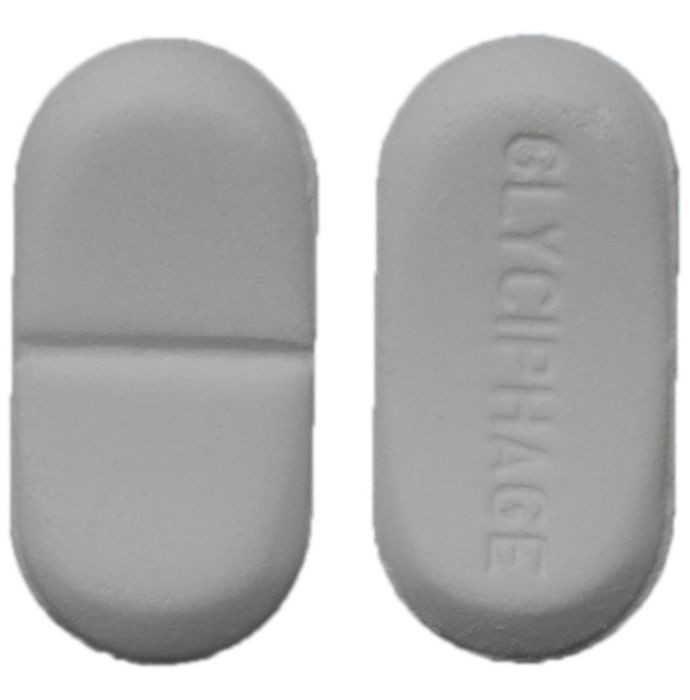


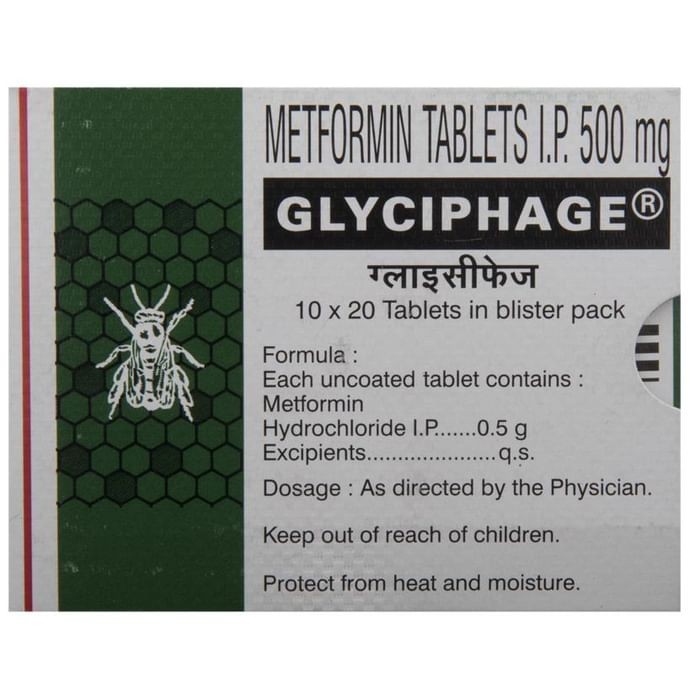
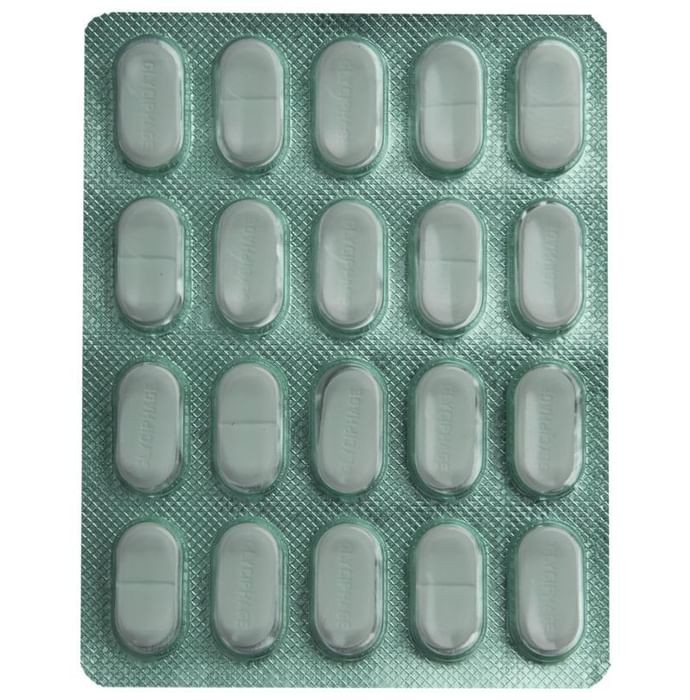
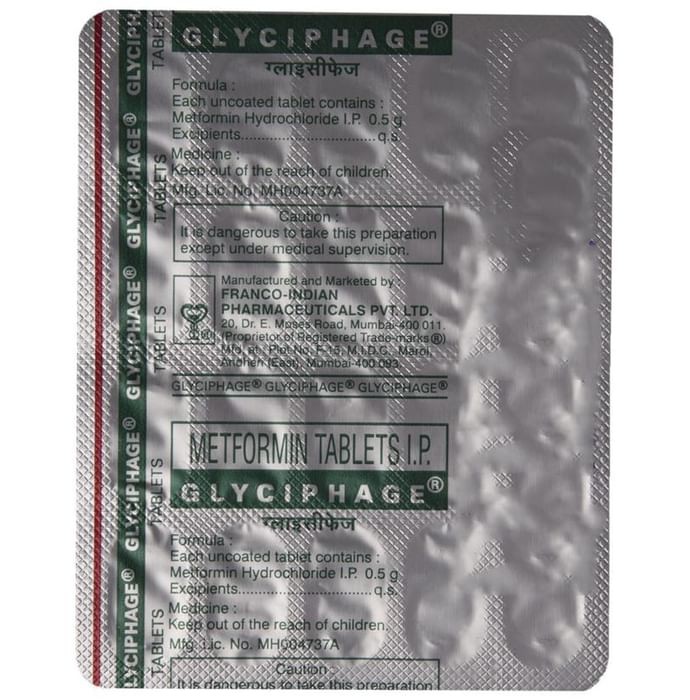
Glyciphage Tablet

Marketer
Franco-Indian Pharmaceuticals Pvt Ltd
Salt Composition
Metformin (500mg)
Overview Glyciphage Tablet
Metformin tablets are prescribed for managing type 2 diabetes. This medication regulates blood glucose, mitigating the risk of severe diabetic complications. It's also indicated in women for the management of polycystic ovary syndrome (PCOS). To minimize gastrointestinal upset, Metformin tablets are best consumed with food. Consistent daily dosing at the same time maximizes therapeutic effects. Discontinuation should only occur under a physician's guidance. Lifestyle modifications are crucial for diabetes control; adhering to your doctor's dietary and exercise plan is essential alongside medication. Commonly reported side effects include diarrhea, nausea, vomiting, gas, fatigue, indigestion, stomach discomfort, headache, and reduced appetite. Concurrent use with other diabetes medications, alcohol, or missed meals may lead to hypoglycemia (low blood sugar). Regular blood glucose monitoring is recommended. Prior to commencing treatment, disclose any kidney, liver, or heart conditions to your doctor. Pregnant or lactating individuals require medical consultation before use. Kidney function will be assessed before treatment initiation. Limit alcohol consumption as it may heighten the incidence of adverse effects.
Uses of Glyciphage Tablet
Management of type 2 diabetes and polycystic ovary syndrome
Major Benefits of Glyciphage Tablet:
Consume this medication precisely as your physician directs, adhering to both the prescribed dosage and treatment length. Ingest the tablet whole; avoid chewing, crushing, or fracturing it. Glyciphage Tablets should be administered with a meal.
Common Side effects of Glyciphage Tablet:
- Diarrhea
- Headache
- Vomiting
- Nausea
- Flatulence
- Abdominal discomfort
- Weakness
How to use Glyciphage Tablet:
Follow your doctor's instructions precisely regarding dosage and treatment length for this medication. Ingest the tablet whole; do not crush, chew, or divide it. Glyciphage tablets should be administered with a meal.
How Glyciphage Tablet works:
Metformin tablets, a biguanide class antidiabetic drug, reduce hepatic glucose output, decelerate intestinal glucose uptake, and enhance insulin responsiveness.
SAFETY ADVICE
 AlcoholUNSAFE
Combining Glyciphage Tablet with alcohol is inadvisable.
 PregnancySAFE IF PRESCRIBED
The use of Glyciphage Tablets during pregnancy is typically deemed safe. Preclinical trials in animals revealed minimal or no negative impacts on fetal development; nevertheless, data from human studies remain scarce.
 Breast feedingCAUTION
Mothers who are breastfeeding should exercise caution when taking Glyciphage Tablets. Lactation should be temporarily discontinued throughout the mother's treatment and until the medication is fully cleared from her system.
 DrivingCAUTION
Driving may be impaired by excessively low or high blood glucose levels. Refrain from driving if such symptoms arise.
 KidneyCAUTION
Individuals with kidney impairment should use Glyciphage Tablets cautiously, potentially requiring dosage modification. A physician's consultation is advised. Glyciphage Tablets are contraindicated for patients exhibiting severe kidney dysfunction.
 LiverUNSAFE
Metformin tablets may pose significant risks for individuals with hepatic impairment and are best avoided. Physician consultation is recommended.
What if you forget to take Glyciphage Tablet :
Should you forget a Glyciphage Tablet dose, administer it promptly. Nevertheless, if your next scheduled dose is imminent, omit the missed dose and resume your usual dosing regimen. Avoid taking a double dose.
Facts to Know About Glyciphage Tablet
| Label | Value |
|---|---|
| Chemical Type | Biguanide Analog |
| Developing Habits | No. |
| Treatment Category | Diabetes Management |
 3,018 People bought this recently