


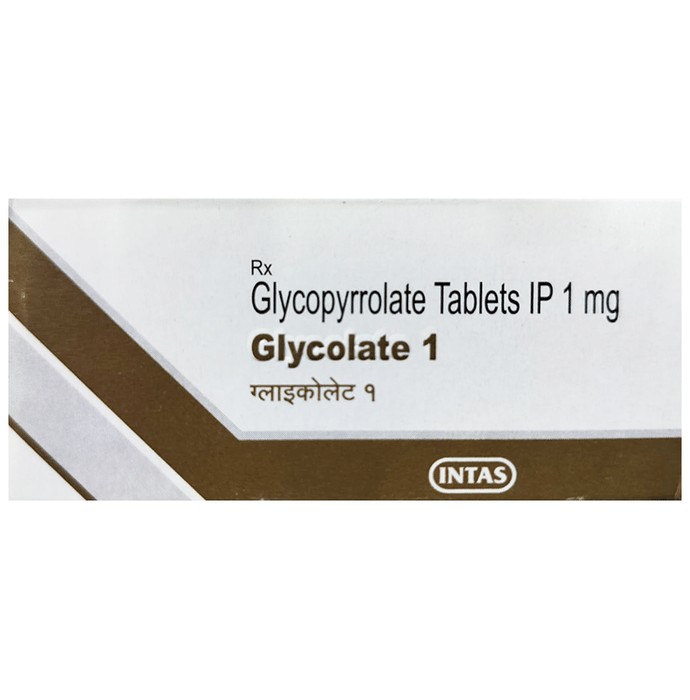
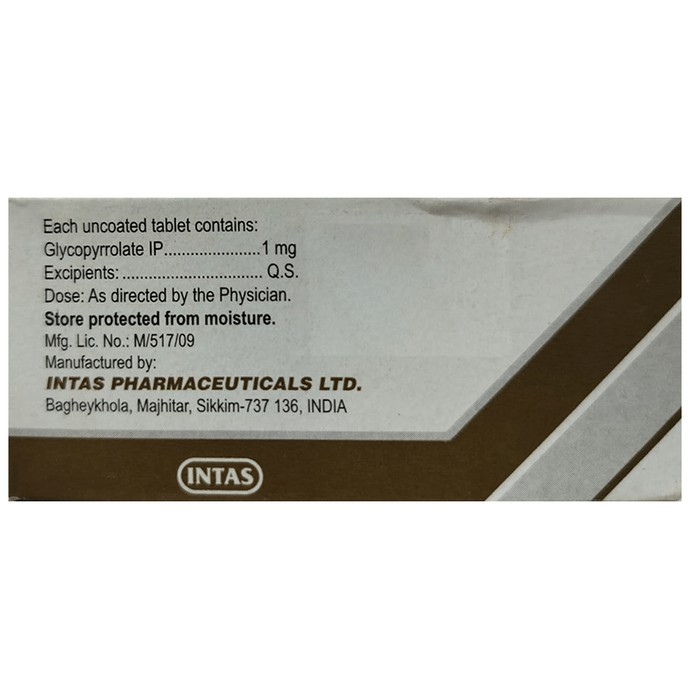
Glycolate 1 Tablet

Marketer
Intas Pharmaceuticals Ltd
Salt Composition
Glycopyrrolate (1mg)
Overview Glycolate 1 Tablet
One tablet of Glycol is a prescription medication employed singularly or concurrently with other drugs to manage peptic ulcers. Its anti-secretory action mitigates excessive perspiration and saliva production. Pre-surgical administration may also reduce bodily secretions. Glycol can be ingested with or without food, following the physician's prescribed dosage and duration. Discontinuing treatment prematurely could lead to symptom recurrence and disease exacerbation. Common adverse reactions include xerostomia, emesis, flushing, tachycardia, urinary retention, and somnolence. Constipation is also possible; increased fiber and hydration are recommended. Dizziness and blurred vision are potential side effects, necessitating caution when driving or performing tasks requiring concentration. Prior to commencing Glycol, disclose all current medications and pre-existing health issues to your doctor, as interactions may occur. Consult your physician before use if pregnant or breastfeeding.
Primary Ingredients of Glycolate 1 Tablet
No text was provided to rewrite. Please provide the text you wish to have rephrased.
Uses of Glycolate 1 Tablet
Managing peptic ulcers
Major Benefits of Glycolate 1 Tablet:
Follow your doctor's instructions precisely regarding dosage and treatment length for this medication. Ingest the tablet whole; avoid chewing, crushing, or breaking it. Glycolate 1 Tablet can be administered with or without food, although consistent timing is recommended.
Common Side effects of Glycolate 1 Tablet:
- Dryness in mouth
- Flushing (sense of warmth in the face, ears, neck and trunk)
- Vomiting
- Constipation
- Blurred vision
- Drowsiness
- Increased heart rate
- Urinary retention
How to use Glycolate 1 Tablet:
Follow your doctor's instructions precisely regarding the dosage and treatment length for this medication. Ingest the tablet whole; avoid chewing, crushing, or breaking it. Glycolate 1 Tablet can be administered with or without food, however, consistent timing is recommended.
How Glycolate 1 Tablet works:
Glycopyrrolate belongs to the anticholinergic drug class. Its mechanism involves reducing stomach acid and saliva secretion by inhibiting acetylcholine, a neurotransmitter crucial for stimulating these secretions.
SAFETY ADVICE
 AlcoholCONSULT YOUR DOCTOR
Alcohol consumption alongside Glycolate 1 Tablet is not considered safe without medical guidance. Seek professional medical advice.
 PregnancySAFE IF PRESCRIBED
The use of one Glycolate tablet is typically deemed safe during gestation. Preclinical trials in animals revealed minimal or absent negative impacts on fetal development; nevertheless, data from human trials are scarce.
 Breast feedingSAFE IF PRESCRIBED
Taking one Glycolate tablet while breastfeeding is likely safe. Available human data indicates minimal infant risk. However, prolonged Glycolate tablet use may decrease breast milk supply.
 DrivingUNSAFE
Taking a Glycolate 1 Tablet might impair driving skills due to potential side effects. These effects may include vision and coordination problems, thereby impacting safe operation of a vehicle.
 KidneyCAUTION
Patients with impaired kidney function should exercise caution when using Glycolate 1 Tablet. Dosage modification may be necessary. Physician consultation is advised.
 LiverCONSULT YOUR DOCTOR
Insufficient data exists regarding Glycolate 1 Tablet's use in individuals with hepatic impairment. Physician consultation is advised.
What if you forget to take Glycolate 1 Tablet :
Should you forget a Glycolate 1 Tablet dose, take it immediately. Nevertheless, if your next dose is imminent, omit the missed dose and resume your usual dosing regimen. Never take a double dose.
Facts to Know About Glycolate 1 Tablet
| Label | Value |
|---|---|
| Chemical Category | Quaternary Ammonium Compounds (synthetic) |
| Developing Habits | No. |
| Treatment Category | Gastrointestinal system |
| Actions | Anesthesia and Anticholinergic Drugs |
 3,018 People bought this recently