


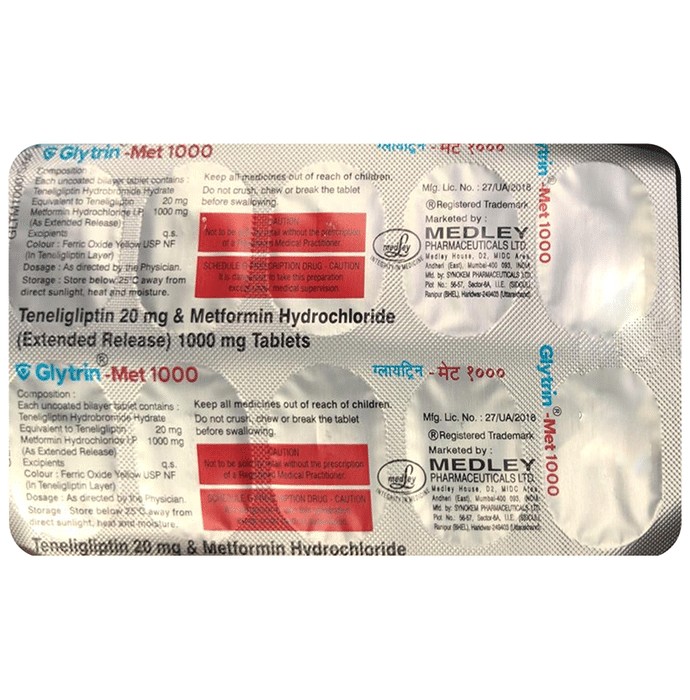
Glytrin-Met 1000 Tablet

Marketer
Medley Pharmaceuticals
Salt Composition
Metformin (1000mg) + Teneligliptin (20mg)
Overview Glytrin-Met 1000 Tablet
Metformin/Glyburide 1000mg tablets combine two medications to manage elevated blood glucose in type 2 diabetes. This dual action helps mitigate serious diabetic complications like nephropathy and retinopathy, potentially lowering heart attack and stroke risk. This medication may be prescribed alone or alongside other diabetes treatments. Optimal efficacy requires adherence to a healthy diet and regular physical activity. Dosage is personalized based on individual health status, glucose levels, and other medications. Consuming it with food minimizes gastrointestinal distress. Consistent daily dosing, at the same time, maximizes benefits; discontinuation should only occur under physician guidance. Effective blood sugar control helps prevent future complications. Maintaining the prescribed diet and exercise regimen is crucial. Lifestyle choices significantly impact diabetes management. Common side effects include nausea, vomiting, diarrhea, stomach upset, and headache. Hypoglycemia is a potential risk, particularly when combined with insulin or sulfonylureas; learn hypoglycemia recognition and management. This medication is not universally suitable. Individuals with kidney, liver, or heart disease, pancreatic issues, or significant alcohol consumption should inform their physician before starting treatment. Pregnant or breastfeeding individuals require medical consultation. Interaction with other medications is possible; disclose all medications to your doctor for safety. Alcohol should be limited due to its hypoglycemic effect. Your doctor will monitor kidney function and blood sugar levels throughout treatment.
Uses of Glytrin-Met 1000 Tablet
Managing Type 2 diabetes
Major Benefits of Glytrin-Met 1000 Tablet:
Follow your doctor's instructions precisely regarding dosage and treatment length for this medication. Ingest the Glytrin-Met 1000 Tablet whole; avoid chewing, crushing, or breaking it. Administer this medication with a meal.
Common Side effects of Glytrin-Met 1000 Tablet:
- Nausea
- Vomiting
- Headache
- Hypoglycemia (low blood glucose level)
- Diarrhea
How to use Glytrin-Met 1000 Tablet:
Consume this medication precisely as directed by your physician, adhering to the prescribed dosage and timeframe. Ingest the tablet whole; avoid chewing, crushing, or fracturing it. It's recommended to take Glytrin-Met 1000 Tablet with a meal.
How Glytrin-Met 1000 Tablet works:
Metformin and Glyburide 1000 mg tablets offer dual-action diabetes management.
SAFETY ADVICE
 AlcoholUNSAFE
Consuming alcohol while taking Glytrin-Met 1000 Tablets is inadvisable.
 PregnancyCONSULT YOUR DOCTOR
Using Glytrin-Met 1000 Tablets during pregnancy might pose risks. While human research is scarce, animal studies indicate potential harm to the fetus. A physician will assess the advantages against possible dangers prior to prescribing. Seek medical advice.
 Breast feedingCONSULT YOUR DOCTOR
Use of Glytrin-Met 1000 tablets while breastfeeding is likely inadvisable. Available human data indicates a potential for the medication to transfer to breast milk, posing a risk to the infant.
 DrivingCONSULT YOUR DOCTOR
Driving ability while taking Glytrin-Met 1000 Tablet is undetermined. Refrain from driving if experiencing symptoms impairing concentration or reaction time.
 KidneyCAUTION
Patients with kidney impairment should use Glytrin-Met 1000 Tablets cautiously, potentially requiring dosage modification. Severe kidney disease contraindicates Glytrin-Met 1000 Tablet use. Physician consultation is essential. Regular kidney function monitoring is recommended during treatment.
 LiverUNSAFE
Patients with liver conditions should likely refrain from using Glytrin-Met 1000 Tablets due to potential safety concerns. Medical advice is recommended.
What if you forget to take Glytrin-Met 1000 Tablet :
Should you forget a Glytrin-Met 1000 Tablet dose, administer it promptly. Nevertheless, if your next scheduled dose is imminent, omit the missed dose and resume your usual dosing pattern. Avoid taking a double dose.
Facts to Know About Glytrin-Met 1000 Tablet
| Label | Value |
|---|---|
| Developing Good Habits | No. |
| Treatment Category | Diabetes Management |
 3,018 People bought this recently