


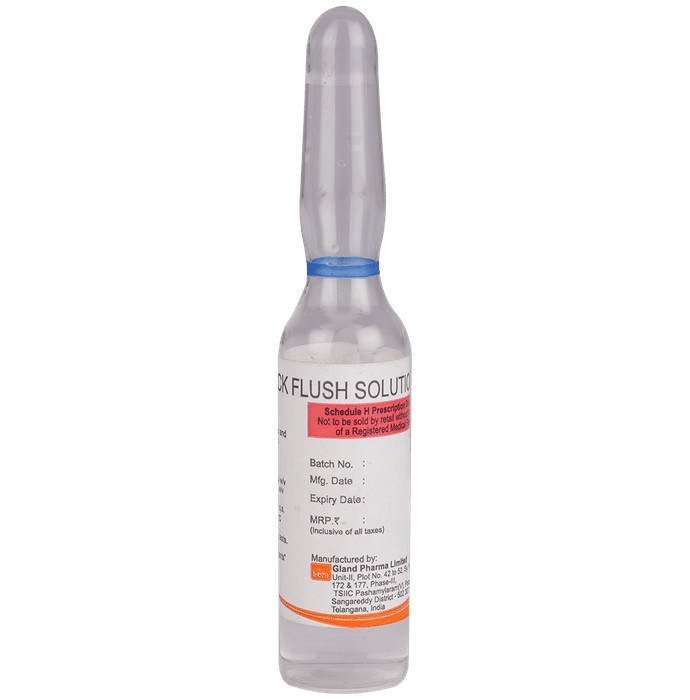
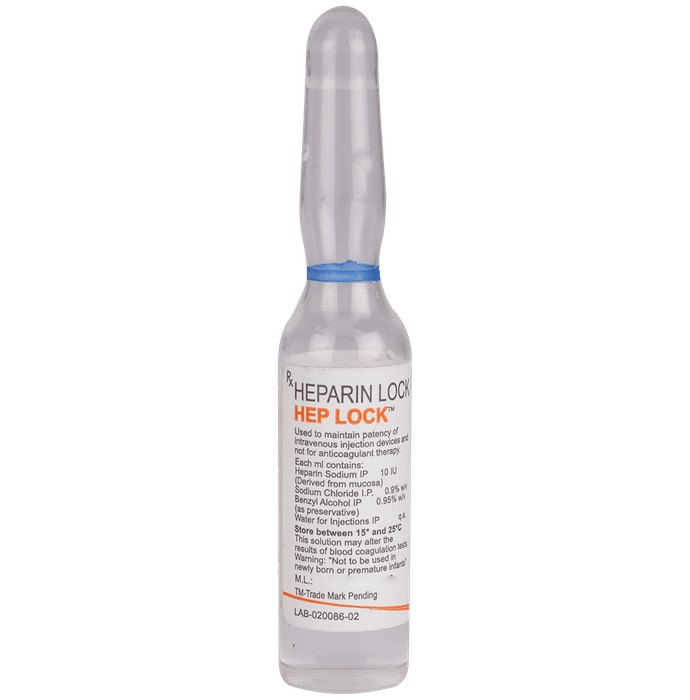
Hep Lock Solution

Marketer
Gland Pharma Limited
Salt Composition
Heparin (10IU)
Overview Hep Lock Solution
HepLock is an anticoagulant medication designed to inhibit inappropriate blood coagulation. It actively prevents the development and enlargement of dangerous clots in vital organs such as the heart, lungs, and legs. Administration of HepLock requires strict medical oversight; dosage frequency is determined and adjusted by your physician based on individual response. Consistent use is crucial for optimal efficacy, even in the absence of symptoms, as its primary function is preventative. Regular blood tests, including potassium and platelet level monitoring, may be conducted by your doctor to assess treatment effectiveness. Increased bleeding risk is a potential side effect. Report any signs of unusual bleeding, such as petechiae or blood in bodily fluids (urine, vomit, stool), immediately to your physician. Exercise caution with activities involving sharp objects (e.g., shaving, nail trimming) and contact sports. Prior to commencing HepLock therapy, disclose all existing health conditions and medications to your doctor. Pregnant individuals should seek medical counsel regarding the medication's safety.
Uses of Hep Lock Solution
Thrombosis prophylaxis
Major Benefits of Hep Lock Solution:
This medication will be administered by your physician or registered nurse; self-medication is strictly prohibited.
Common Side effects of Hep Lock Solution:
- Bleeding
- Erythema (skin redness)
How to use Hep Lock Solution:
This medication will be administered by your physician or registered nurse; self-medication is strictly prohibited.
How Hep Lock Solution works:
Heparin lock flush solution acts as a blood thinner, inhibiting the development of dangerous blood clots. While it doesn't break down pre-existing clots, it effectively stops their expansion, thereby averting vascular obstructions.
SAFETY ADVICE
 AlcoholUNSAFE
Alcohol consumption alongside Hep Lock Solution is inadvisable.
 PregnancyCONSULT YOUR DOCTOR
The use of Hep Lock Solution during pregnancy may pose risks. While human data is scarce, animal research indicates potential harm to the fetus. A physician will assess the advantages against possible risks prior to prescribing. Seek medical advice.
 Breast feedingSAFE IF PRESCRIBED
Hep Lock Solution poses minimal risk during lactation. Research in humans indicates negligible transfer into breast milk, presenting no known danger to the infant. The small quantities detected in breast milk result in insignificant exposure for the baby, precluding any anticipated adverse reactions.
 DrivingSAFE
Driving ability is typically unaffected by Hep Lock Solution.
 KidneySAFE IF PRESCRIBED
HepLock Solution poses no known risk to patients with renal impairment and requires no dosage modification. Nevertheless, disclosure of pre-existing kidney conditions to your physician is advisable.
 LiverCONSULT YOUR DOCTOR
Data regarding Hep Lock Solution use in individuals with hepatic impairment is scarce. Physician consultation is advised.
What if you forget to take Hep Lock Solution :
Should you forget a dose of Hep Lock Solution, seek advice from your physician.
Facts to Know About Hep Lock Solution
| Label | Value |
|---|---|
| Chemical Type | Glycosaminoglycan Sulfate |
| Developing Habits | No. |
| Treatment Category | KINSHIP |
| Actions | Unfractionated Heparin |
 3,018 People bought this recently