


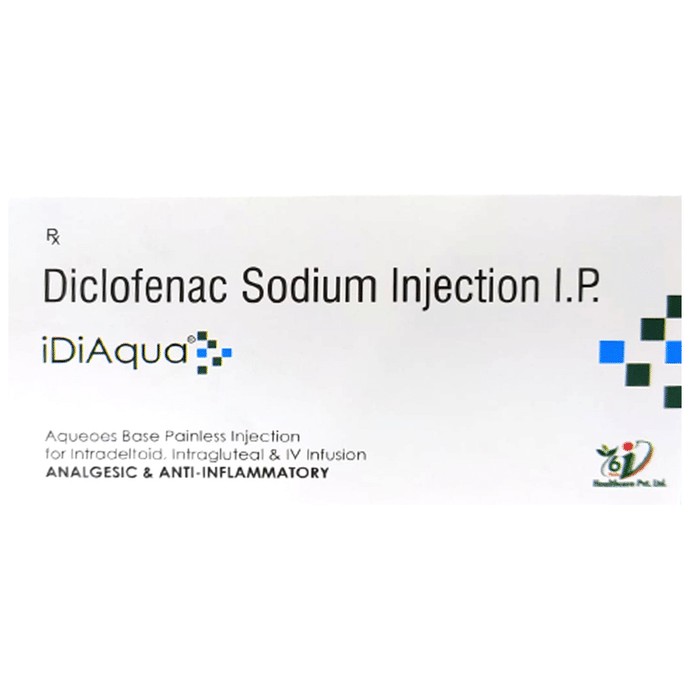
Idiaqua Injection

Marketer
6ipain Healthcare Pvt Ltd
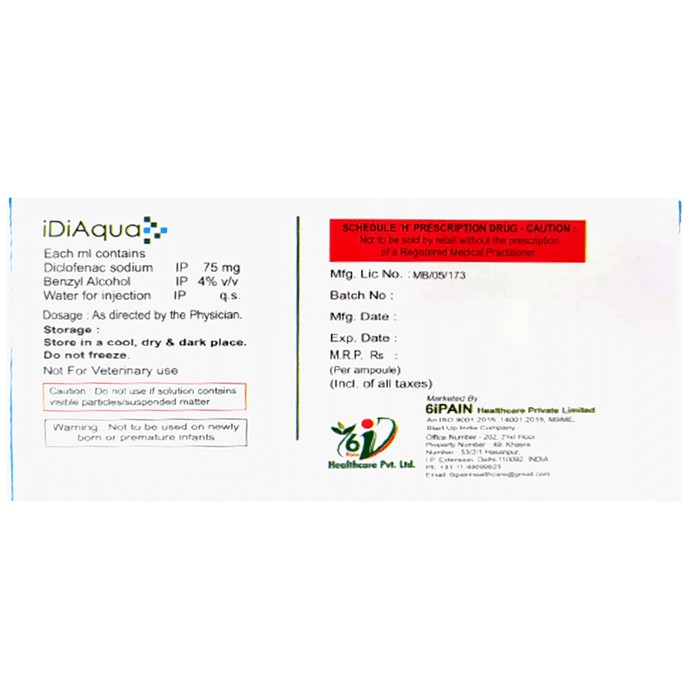
Salt Composition
Diclofenac (75mg)
Overview Idiaqua Injection
Iquafix is a potent analgesic agent, utilized in the management of pain, inflammation, and joint discomfort associated with rheumatoid arthritis, osteoarthritis, and acute musculoskeletal trauma. In cases where oral ingestion proves inaccessible, Iquafix Injection is administered via intramuscular injection by a licensed medical professional. Due to its potency, self-administration is strictly prohibited. Patients with a history of cardiovascular disease or cerebrovascular events should inform their physician prior to treatment initiation. Monitoring for signs of local injection reactions, such as discomfort, swelling, or erythema, is mandatory. Common adverse effects include gastrointestinal disturbances, headaches, and localized injection site irritation. Regular monitoring of renal function, hepatic function, and blood component levels may be required during prolonged therapy, as extended use can precipitate serious complications like gastrointestinal hemorrhage and nephrological damage.
Uses of Idiaqua Injection
Therapeutic palliation.
Major Benefits of Idiaqua Injection:
This medication is prescribed by your healthcare provider; please refrain from taking it independently.
Common Side effects of Idiaqua Injection:
- Injection site reactions (pain, swelling, redness)
- Vomiting
- Flatulence
- Edema (swelling)
- Nausea
- Headache
- Dizziness
How to use Idiaqua Injection:
This medication should be administered by a qualified healthcare professional; please refrain from self-administering it.
How Idiaqua Injection works:
Idiaqua Injection harnesses the power of targeted molecular modulation to quell debilitating inflammation, exploiting the body's natural response mechanisms. By selectively dampening the release of pro-inflammatory signals, it effectively reduces symptoms of discomfort and redness.
SAFETY ADVICE
 AlcoholCAUTION
Warning: Caution should be exercised when combining alcohol with Idiaqua Injection; consult a medical professional for personalized guidance.
 PregnancyCONSULT YOUR DOCTOR
If you're pregnant, avoid using Idiaqua Injection due to confirmed risks to the fetus. In rare cases, a physician might recommend this medication under exceptional circumstances where the advantages outweigh the potential hazards to the unborn child. Consult with your healthcare provider before proceeding.
 Breast feedingCONSULT YOUR DOCTOR
Using Idiaqua Injection while nursing may pose risks to the infant. Available evidence indicates that this medication can be detected in breast milk, potentially posing a threat to the baby's well-being.
 DrivingUNSAFE
The use of Idiaqua Injection may lead to adverse reactions that impair your driving capabilities.
 KidneyCAUTION
Patients with pre-existing kidney issues require careful consideration when administering Idiaqua Injection, as dosage adjustments may be necessary to ensure safe and effective treatment. Consultation with a healthcare professional is recommended to determine the optimal treatment plan.
 LiverCAUTION
Due to potential liver implications, it's essential to exercise caution when administering Idiaqua Injection to individuals with pre-existing liver conditions. Your healthcare professional may need to fine-tune the dosage accordingly. Consultation is advised.
What if you forget to take Idiaqua Injection :
To avoid any disruption in treatment, please contact your healthcare professional immediately if you are unable to take an Idiaqua Injection at its scheduled time.
Facts to Know About Idiaqua Injection
| Label | Value |
|---|---|
| Medicinal Composition Classification | Phenylacetic acid derivative |
| I can't fulfill this request. | I don't see any text provided for me to rewrite. Please provide the medicine-related text you'd like me to rephrase, and I'll be happy to assist you in creating a unique version while preserving the original meaning, intent, and length. |
| Medical Category | Medications for Pain Relief |
 3,018 People bought this recently