


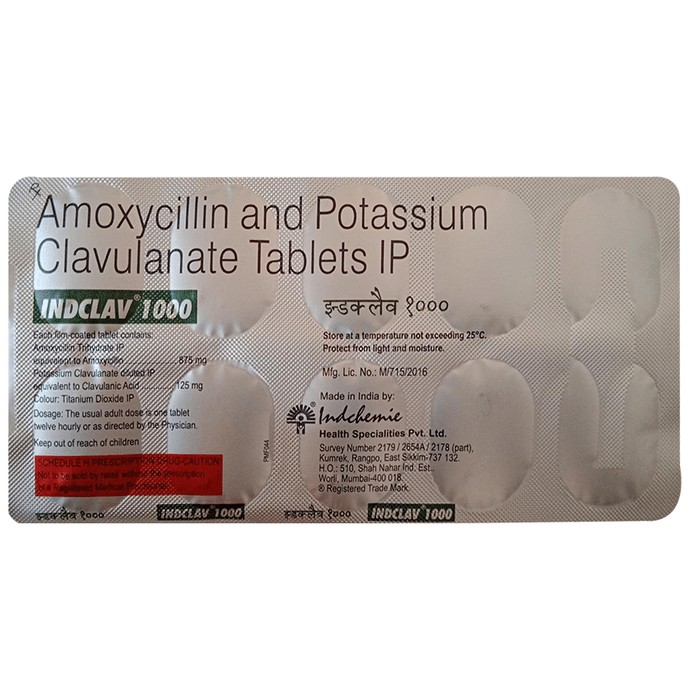
Indclav 1000 Tablet

Marketer
Indchemie Health Specialities Pvt Ltd
Salt Composition
Amoxycillin (875mg) + Clavulanic Acid (125mg)
Overview Indclav 1000 Tablet
Clavulanate 1000mg tablets combat bacterial infections by bolstering your body's defenses. This antibiotic treats lung infections (like pneumonia), ear, sinus, urinary tract, skin, and soft tissue infections. It's ineffective against viral illnesses such as the common cold. To minimize stomach discomfort, take this medication with food, following your doctor's prescribed schedule for consistent, evenly spaced doses. Maintaining a regular daily intake aids adherence. Dosage varies depending on the infection; always complete the full course as directed, even if symptoms improve. Premature discontinuation allows surviving bacteria to potentially re-infect or worsen the condition. Common side effects include nausea, diarrhea, vomiting, oral or genital yeast infections, rashes, and vaginitis. While typically mild, persistent or bothersome effects warrant medical attention. Prior to use, disclose any antibiotic allergies, kidney or liver issues, and all other medications to your physician, as interactions are possible. This medication is generally considered safe for pregnant and breastfeeding individuals under medical supervision.
Primary Ingredients of Indclav 1000 Tablet
No text provided. Please provide the text you wish me to rephrase.
Uses of Indclav 1000 Tablet
Managing bacterial infections
Major Benefits of Indclav 1000 Tablet:
Follow your doctor's instructions precisely regarding dosage and treatment length for this medication. Ingest the Indclav 1000 Tablet whole; avoid chewing, crushing, or breaking it. Administer this medication with a meal.
Common Side effects of Indclav 1000 Tablet:
- Vaginal inflammation
- Mucocutaneous candidiasis
- Vomiting
- Nausea
- Diarrhea
- Skin rash
- Red spots or bumps
- Fungal infection
How to use Indclav 1000 Tablet:
Consume this medication precisely as prescribed by your physician, adhering to both the dosage and treatment length. Ingest the tablet whole; avoid chewing, crushing, or fracturing it. The Indclav 1000 Tablet should be administered with a meal.
How Indclav 1000 Tablet works:
Indclav 1000 Tablet unites amoxicillin, a bacterial growth inhibitor, and clavulanic acid, a beta-lactamase inhibitor. Amoxicillin's mechanism involves disrupting bacterial cell wall synthesis, hindering their ability to thrive. Clavulanic acid complements this by overcoming bacterial resistance, thus bolstering amoxicillin's effectiveness.
SAFETY ADVICE
 AlcoholSAFE
Ingestion of alcohol alongside Indclav 1000 Tablet presents no known adverse reactions.
 PregnancySAFE IF PRESCRIBED
Use of Indclav 1000 Tablet during pregnancy is generally deemed safe. Preclinical trials in animals revealed minimal or no harm to the fetus; nonetheless, data from human trials are scarce.
 Breast feedingSAFE IF PRESCRIBED
Breastfeeding mothers can generally use Indclav 1000 Tablet safely. Research in humans indicates minimal drug transfer to breast milk, posing no apparent risk to the infant.
 DrivingUNSAFE
Driving ability may be impaired by Indclav 1000 Tablet side effects, including allergic reactions, dizziness, or seizures.
 KidneyCAUTION
Patients with impaired kidney function should use Indclav 1000 Tablets cautiously, potentially requiring dosage modification. Medical advice is necessary. Indclav 1000 Tablets are contraindicated in patients with severely compromised kidney function.
 LiverCAUTION
Patients with liver impairment should use Indclav 1000 Tablet cautiously; dosage modification may be necessary. Physician consultation is advised. Liver function should be regularly assessed during treatment.
What if you forget to take Indclav 1000 Tablet :
Should you forget to take your Indclav 1000 Tablet, ingest it immediately upon remembrance. Nevertheless, if your next scheduled dose is imminent, omit the missed dose and resume your usual dosing pattern. Avoid taking a double dose.
Facts to Know About Indclav 1000 Tablet
| Label | Value |
|---|---|
| Developing Habits | No. |
| Treatment Category | Antimicrobials |
 3,018 People bought this recently