Search Icon

AUM Pharmacy

Hi there!

Hello, Login
All Categories
VisaVisaVisa
slide-0

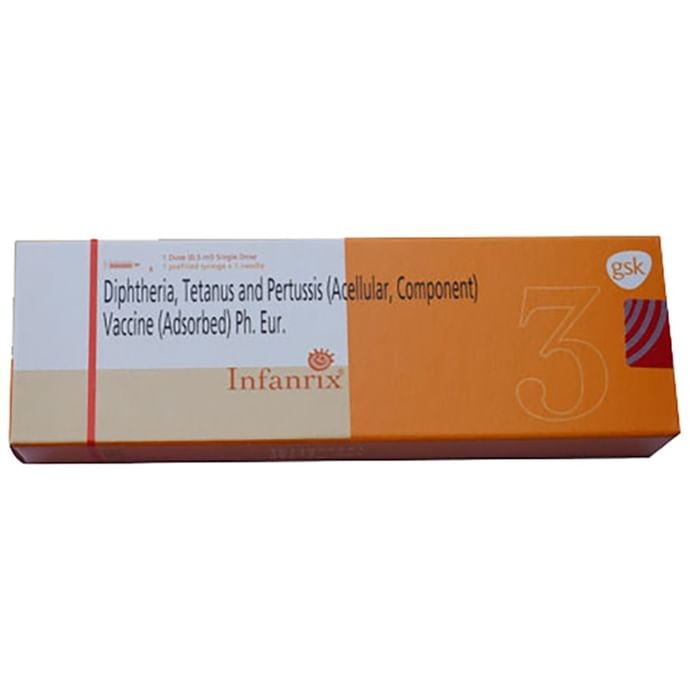
Infanrix Vaccine

Prescription Icon
Prescription Required

Marketer

Glaxo SmithKline Pharmaceuticals Ltd

Salt Composition

Diphtheria Toxoid (30IU) + Tetanus Toxoid (40IU) + Pertussis Toxoid (25mcg)

Overview Infanrix Vaccine

The Infanrix vaccine combines three preventative agents against diphtheria, tetanus, and pertussis (whooping cough). This immunization triggers an immune response to protect against these diseases. Administration must be performed by a qualified healthcare provider. Minor injection site reactions, such as redness, soreness, and swelling, are possible but typically resolve spontaneously. Complete the vaccination schedule as directed by your physician for optimal protection. Commonly reported mild reactions include fatigue, localized redness, pain, swelling at the injection site, and headache. If any adverse effects persist or are concerning, consult your doctor for management strategies. Before receiving the vaccine, inform your physician of any existing health issues and all medications you are currently using. While generally safe during pregnancy and breastfeeding, individual suitability should always be confirmed with your doctor.

Primary Ingredients of Infanrix Vaccine

No text provided. Please provide the text you want me to rephrase.

Uses of Infanrix Vaccine

Tetanus, whooping cough, and diphtheria

Major Benefits of Infanrix Vaccine:

This medication will be administered by your healthcare provider. Self-medication is strongly discouraged.

Common Side effects of Infanrix Vaccine:

  • Headache
  • Injection site redness
  • Pain
  • Swelling
  • Weakness
  • Gastrointesinal symptoms

How to use Infanrix Vaccine:

Administering this medication requires the assistance of your doctor or nurse; self-medication is strongly discouraged.

How Infanrix Vaccine works:

Infanrix Vaccine combines three vaccines in a single dose. It triggers the immune system by inducing a harmless, subclinical infection. This process prompts antibody production, providing future protection against targeted diseases without causing illness.

SAFETY ADVICE

AlcoholAlcoholCONSULT YOUR DOCTOR

Alcohol consumption alongside Infanrix vaccination lacks established safety data. Seek medical advice before combining them.

PregnancyPregnancySAFE IF PRESCRIBED

The Infanrix vaccine is widely regarded as safe for use during gestation. Preclinical trials in animals revealed minimal or no negative consequences for fetal development; however, clinical data from human trials are currently scarce.

Breast feedingBreast feedingSAFE IF PRESCRIBED

Breastfeeding mothers can likely use the Infanrix vaccine without harm. Available evidence from human studies indicates minimal risk to the infant.

DrivingDrivingCONSULT YOUR DOCTOR

Infanrix Vaccine's impact on driving ability is undetermined. Refrain from driving if you develop symptoms impairing concentration or reaction time.

KidneyKidneySAFE IF PRESCRIBED

The Infanrix vaccine is likely safe for individuals with kidney conditions. Available evidence indicates dose modification may not be necessary. Physician consultation is recommended.

LiverLiverSAFE IF PRESCRIBED

The use of Infanrix vaccine in individuals with liver conditions appears to be safe. Preliminary evidence indicates dose modification may not be necessary. Physician consultation is recommended.

What if you forget to take Infanrix Vaccine :

Omission of a scheduled Infanrix vaccination requires immediate physician consultation.

Facts to Know About Infanrix Vaccine

LabelValue
Developing Habits No.
Treatment Category Immunizations

FAQs on Infanrix Vaccine

Infanrix protects against diphtheria, tetanus, and pertussis—three serious, preventable diseases. Diphtheria causes a potentially fatal throat infection; pertussis is whooping cough; and tetanus leads to painful muscle spasms and paralysis. Vaccination offers crucial protection against these life-threatening illnesses.
A booster shot, also called a booster dose or booster vaccine, is an extra vaccine dose given periodically (typically every few years) following the initial vaccination series. This strengthens immunity, ensuring ongoing protection against specific diseases.
Infanrix provides protection against diphtheria, tetanus, and pertussis (whooping cough) by stimulating the body to produce antibodies against these three life-threatening bacterial infections.
Do not administer Infanrix if you've had an allergic reaction (e.g., rash, breathing difficulty, facial or tongue swelling) to it or its components. Seek immediate medical attention for any allergic reaction. Consult your doctor about vaccination if you have a severe infection (high fever, ≥40°C). Minor infections (like a cold) usually aren't a contraindication, but discuss this with your doctor. Avoid Infanrix if you experienced brain inflammation or nervous system problems within seven days of a previous pertussis vaccine. This vaccine is also contraindicated if you've had low platelet counts, brain, or nerve problems after a prior diphtheria and/or tetanus vaccine. Do not use Infanrix if expired or the packaging is damaged. Always consult your doctor if you are unsure about Infanrix administration.
Administered only by doctors or trained healthcare professionals, the Infanrix vaccine is given intramuscularly, usually in the upper arm. Self-administration is strictly prohibited. Apply firm, non-rubbing pressure to the injection site for at least two minutes. Caution is advised for patients with bleeding disorders or low platelet counts, who may experience post-injection bleeding; subcutaneous administration may be necessary in such cases. Intravenous administration is contraindicated.
Infanrix provides single-dose protection against diphtheria, tetanus, and pertussis. Booster shots are recommended at intervals specified by official guidelines (typically every 10 years).
Missed a scheduled Infanrix booster? Contact your doctor to reschedule.
Infanrix Vaccine may cause headache, injection site redness, pain, swelling, or weakness. Gastrointestinal issues like appetite loss, nausea, vomiting, constipation, or diarrhea are also possible. These side effects aren't universal. Consult your doctor if you experience any concerning or persistent side effects.
Vaccination, particularly in adolescents, may trigger fainting (syncope), sometimes even before the injection, due to a psychogenic reaction to the needle. This can involve neurological symptoms like temporary vision changes, tingling sensations, and jerking limbs during recovery. Safety measures must be implemented to prevent injuries associated with fainting.
Generally, the Infanrix vaccine is safe during pregnancy and breastfeeding. However, if you're pregnant, breastfeeding, or planning a pregnancy, consult your doctor before vaccination to determine the optimal timing.
Protecting both mother and baby, the Infanrix vaccine administered during pregnancy transfers antibodies, reducing the risk of maternal-infant infection transmission. This offers pre- and postnatal immunity (lasting roughly a year), bridging the gap until the infant's own vaccination schedule (starting at six weeks) protects against diseases like pertussis, which newborns are otherwise vulnerable to.
Extensive research confirms Infanrix's safety and effectiveness, leading to worldwide approval and recommendation by medical professionals. This vaccine significantly benefits global health by preventing serious diseases such as diphtheria, pertussis, and tetanus. Furthermore, Infanrix is generally well-tolerated, with any side effects typically mild and transient.
Infanrix Vaccine
1,541
MRP 1,699
9% off
