


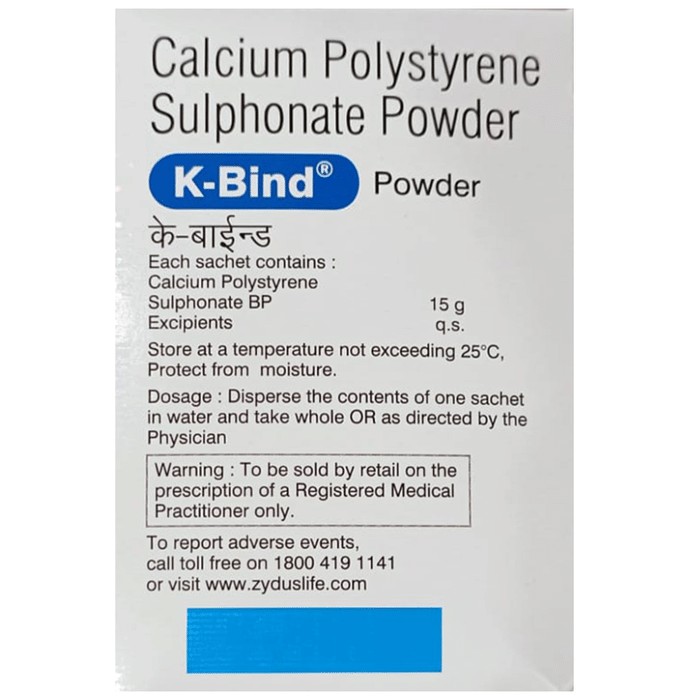
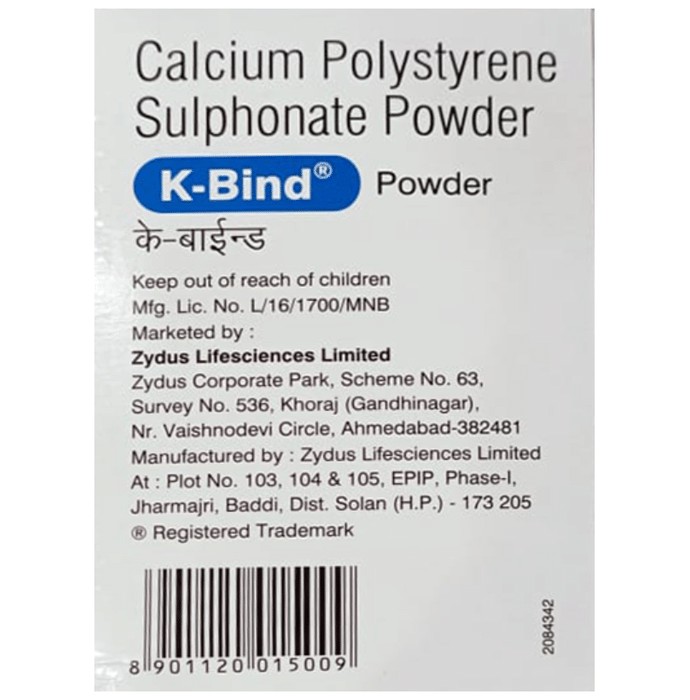
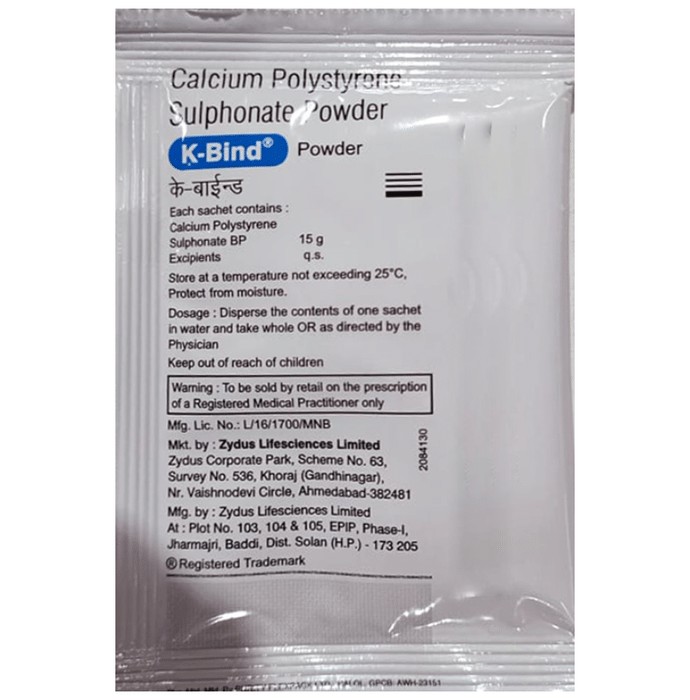
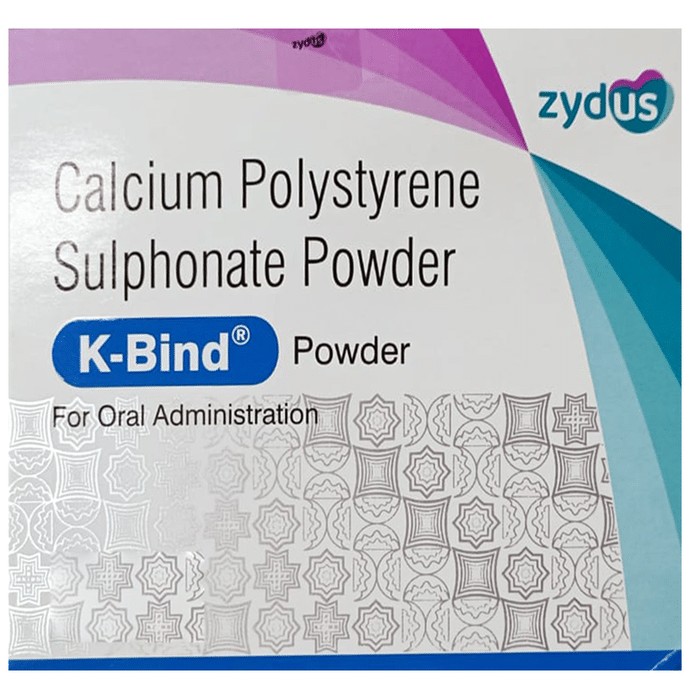
K-Bind Powder

Marketer
Zydus Cadila
Salt Composition
Calcium Polystyrene Sulphonate (15gm)
Overview K-Bind Powder
Dialysis patients with hyperkalemia associated with chronic kidney disease can use K-Bind Powder to lower elevated potassium levels. This medication facilitates potassium excretion, restoring normal potassium concentrations. K-Bind Powder can be administered with or without food; consistent daily dosing is recommended for optimal efficacy. Grapefruit juice should be avoided during treatment. Discontinue use only as directed by your physician. Potential side effects include nausea, vomiting, anorexia, diarrhea, and constipation. Report persistent or worsening side effects to your doctor. Regular blood tests to monitor potassium and other electrolytes, including calcium, are typically required during treatment.
Primary Ingredients of K-Bind Powder
There is no text provided to rewrite.
Uses of K-Bind Powder
Managing hyperkalemia
Major Benefits of K-Bind Powder:
Follow your doctor's instructions precisely regarding dosage and treatment length for K-Bind Powder. Always read the product label carefully before administering. K-Bind Powder can be ingested with or without food, although consistent timing is recommended. Grapefruit juice should not be consumed concurrently with K-Bind Powder.
Common Side effects of K-Bind Powder:
- Vomiting
- Nausea
- Constipation
- Fecal impaction (hardened stool that stays stuck in the rectum or lower colon)
- Gastric irritation
- Decreased appetite
How to use K-Bind Powder:
Follow your doctor's instructions precisely regarding dosage and treatment length for this medication. Always refer to the product label for administration guidelines prior to use. K-Bind Powder can be ingested with or without food; however, consistent timing is recommended. Grapefruit juice should not be consumed with K-Bind Powder.
How K-Bind Powder works:
Potassium-binding agent K-Bind Powder functions as an ion-exchange resin, effectively lowering elevated potassium levels in the body to restore normal ranges. This medication is indicated for individuals with renal impairment and those undergoing dialysis.
SAFETY ADVICE
 AlcoholUNSAFE
Combining K-Bind Powder and alcohol is not recommended due to safety concerns.
 PregnancySAFE IF PRESCRIBED
The use of K-Bind Powder during pregnancy is typically deemed safe. Preclinical trials in animals revealed minimal or no negative consequences for fetal development; however, data from human trials are scarce.
 Breast feedingSAFE IF PRESCRIBED
The use of K-Bind Powder while breastfeeding is likely safe. Available human data indicates minimal risk to the infant.
 DrivingSAFE
Driving ability is typically unaffected by K-Bind Powder.
 KidneySAFE IF PRESCRIBED
K-Bind Powder poses no safety concerns for patients with renal impairment; no dosage modification is necessary.
 LiverCONSULT YOUR DOCTOR
Insufficient data exists regarding K-Bind Powder's application in individuals with hepatic impairment. Physician consultation is advised.
What if you forget to take K-Bind Powder :
Omitting a dose of K-Bind Powder necessitates contacting your physician.
Facts to Know About K-Bind Powder
| Label | Value |
|---|---|
| Chemical Category | Sulfonated polystyrene |
| Developing Habits | No. |
| Type of Therapy | Urological Care |
| Action Class | Potassium-binding ion exchange resins |
 3,018 People bought this recently