


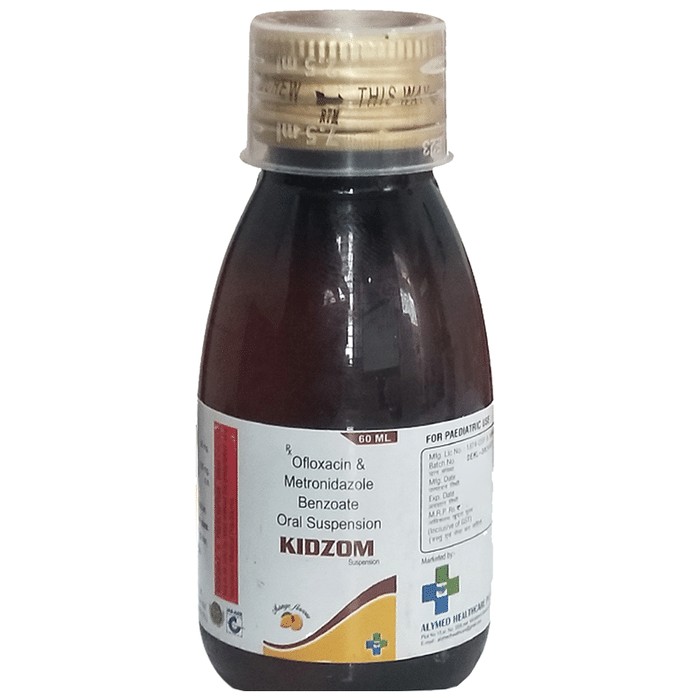

Kidzom Oral Suspension

Marketer
Alymed Healthcare Pvt Ltd
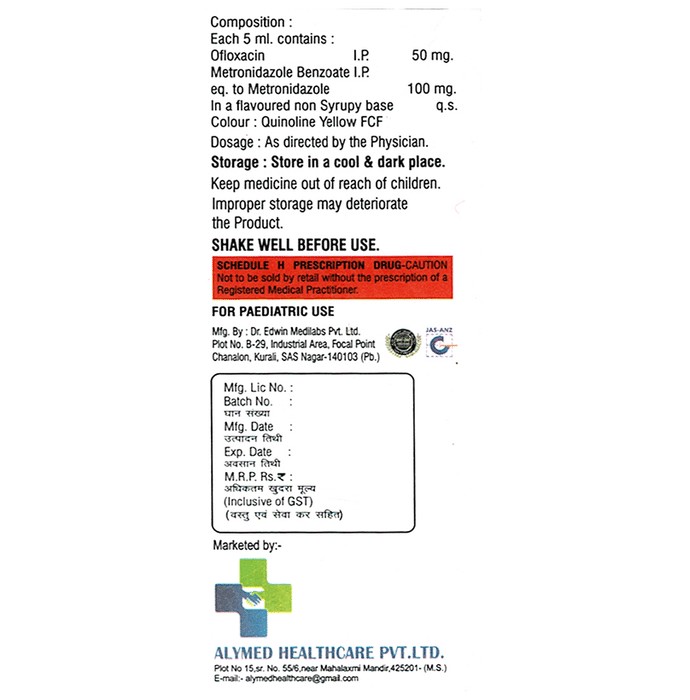
Salt Composition
Ofloxacin (50mg) + Metronidazole (100mg)
Overview Kidzom Oral Suspension
Pediazole Oral Suspension, an antibiotic, combats various bacterial and parasitic infections in children. It's used to treat infections affecting the teeth, lungs, digestive system, urinary tract, and reproductive organs. Administer Pediazole orally to your child, ideally at the same time each day, with or without food. If stomach upset occurs, give it with food. The typical dosage is twice daily, morning and evening. If vomiting happens within 30 minutes, repeat the dose; however, do not double the dose if it's nearing the next scheduled time. Dosage and treatment length depend on the infection's type and severity, your child's age, and weight; follow your doctor's instructions precisely. Minor, temporary side effects, such as nausea, vomiting, a metallic taste, headache, appetite loss, abdominal discomfort, and mild rash, may occur. These usually subside as your child adjusts. Persistent or bothersome side effects require immediate medical attention. Inform your child's physician of any prior allergies, heart conditions, liver problems, or kidney issues to ensure safe and effective treatment.
Uses of Kidzom Oral Suspension
Combating bacterial and parasitic infestations | Managing diarrheal illness | Addressing dysentery
Major Benefits of Kidzom Oral Suspension:
Administer this medication precisely as your physician directs, adhering to both the prescribed dosage and duration. Consult the product label for comprehensive instructions prior to consumption. Use a measuring device for accurate dispensing and ingest orally. Ensure thorough shaking before each use. Kidzom Oral Suspension can be consumed with or without food; however, consistent timing is recommended for optimal efficacy.
Common Side effects of Kidzom Oral Suspension:
- Vomiting
- Nausea
- Weight loss
- Abdominal pain
- Diarrhea
- Loss of appetite
- Headache
- Dizziness
- Insomnia (difficulty in sleeping)
- Metallic taste
- Urine discoloration
How to use Kidzom Oral Suspension:
Administer this medication precisely as your physician prescribes, adhering to both dosage and treatment length. Always consult the product label for usage instructions prior to consumption. Use a measuring device for accurate dosing and ingest orally. Ensure thorough shaking before each use. Kidzom Oral Suspension can be consumed with or without food; however, consistent timing is recommended.
How Kidzom Oral Suspension works:
Kidzom Oral Suspension combines the antibiotics ofloxacin and metronidazole to combat bacterial infections. These active ingredients disrupt the DNA of harmful bacteria, thereby halting their replication and eliminating them. This targeted action effectively controls the infection while minimizing the risk of antibiotic resistance.
SAFETY ADVICE
 KidneyCAUTION
Kidzom Oral Suspension requires careful administration for individuals with impaired kidney function. Dosage modification may be necessary. Physician consultation is recommended.
 LiverCAUTION
Kidzom Oral Suspension requires careful administration for individuals with hepatic impairment. Dosage modification may be necessary. Physician consultation is advised.
What if you forget to take Kidzom Oral Suspension :
Stay calm. Administer the forgotten dose immediately upon recollection, unless your pediatrician instructs differently. Avoid doubling the dose to compensate for the missed one. If unsure, contact your child's doctor for clarification.
Facts to Know About Kidzom Oral Suspension
| Label | Value |
|---|---|
| Potential for Dependence | None. |
| Type of Medication | Gastrointestinal system |
 3,018 People bought this recently