


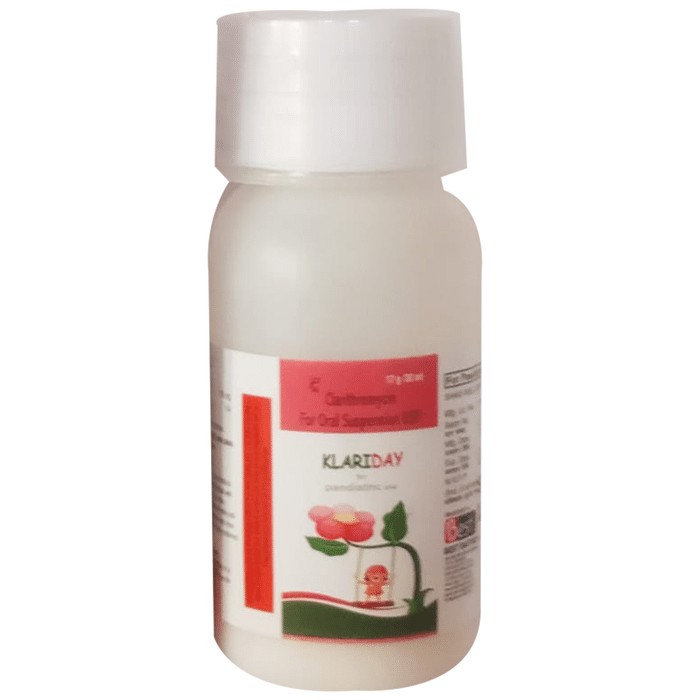
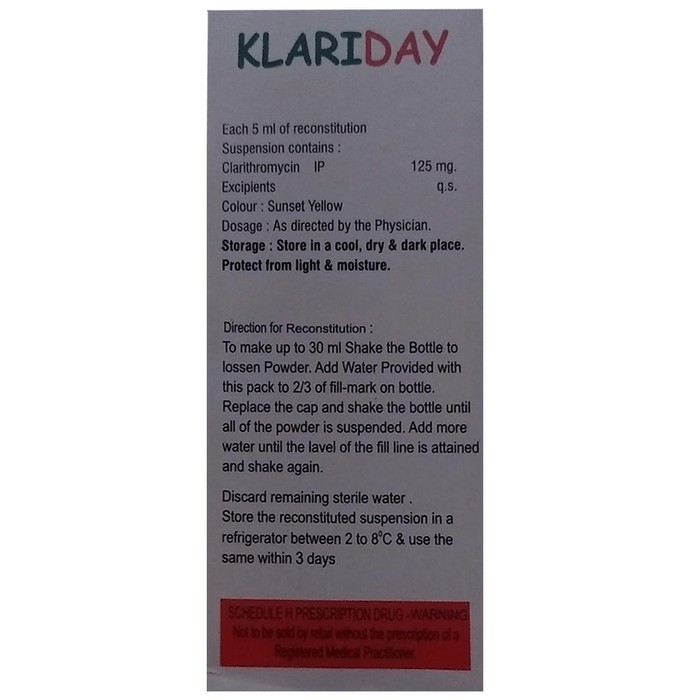
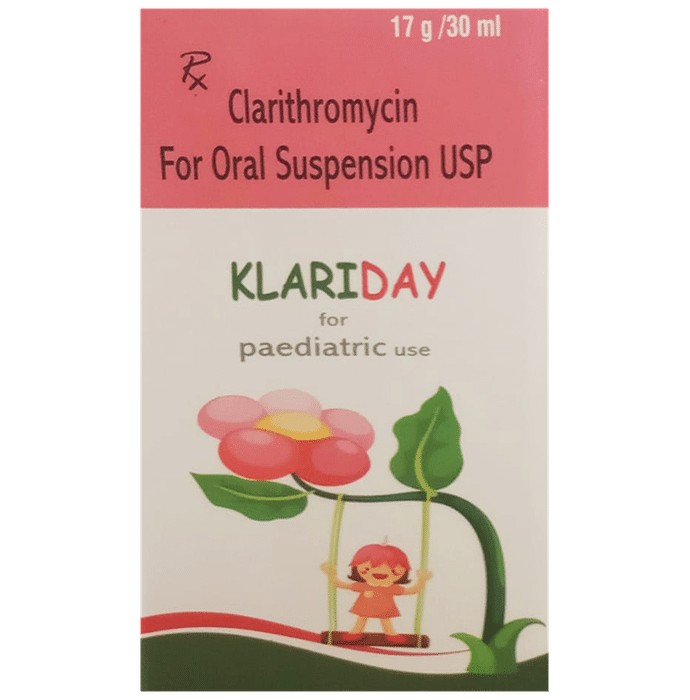
Klariday Oral Suspension

Marketer
Best Biotech
Salt Composition
Clarithromycin (125mg/5ml)
Overview Klariday Oral Suspension
Pedatric suspension, Azithromycin, combats diverse bacterial infections affecting the ears, throat, teeth, lungs, heart, skin, and digestive system in children. Its efficacy extends to treating opportunistic infections in immunocompromised children, including those with HIV. This antibiotic is also effective against certain infections (such as Mycobacterium avium complex – MAC) prevalent in individuals with weakened immune systems. Azithromycin inhibits bacterial growth, alleviating symptoms and resolving the infection. Administer orally, ideally an hour before or two hours after meals; avoid antacids within two hours of ingestion. Follow the prescribed dosage schedule precisely, completing the entire course even with symptom improvement. Premature discontinuation may result in relapse or infection exacerbation. Potential side effects include diarrhea, nausea, altered taste perception, dyspepsia, abdominal discomfort, headache, emesis, and skin rashes. These are usually transient; however, persistent or severe effects warrant immediate medical attention. Prior to commencing treatment, disclose any allergies, cardiac history, or pregnancy/breastfeeding status to your physician.
Primary Ingredients of Klariday Oral Suspension
The provided information is insufficient.
Uses of Klariday Oral Suspension
Managing bacterial infections
Major Benefits of Klariday Oral Suspension:
Administer this medication precisely as your physician prescribes, adhering to both dosage and treatment length. Always consult the product label for detailed instructions prior to consumption. Use a measuring device for accurate dosing and take orally. Ensure thorough shaking before each use. Klariday Oral Suspension can be ingested with or without food; however, consistent timing is recommended. Refrain from consuming Klariday Oral Suspension concurrently with foods high in tyramine, including aged cheeses, smoked seafood, cured meats, and certain beers.
Common Side effects of Klariday Oral Suspension:
- Insomnia (difficulty in sleeping)
- Abnormal taste
- Dyspepsia
- Taste change
- Abnormal liver function tests
- Diarrhea
- Abdominal pain
- Nausea
- Vomiting
- Headache
- Rash
- Skin rash
How to use Klariday Oral Suspension:
Administer this medication precisely as your physician directs, adhering to both the prescribed dosage and duration. Always consult the product label for complete instructions prior to ingestion. Use a measuring device for accurate dosing and take orally. Ensure thorough shaking before each use. Klariday Oral Suspension can be consumed with or without food; however, consistent timing is recommended. Refrain from consuming Klariday Oral Suspension concurrently with foods high in tyramine, including, but not limited to, cheese, cured meats, smoked fish, and certain beers.
How Klariday Oral Suspension works:
Klariday Oral Suspension is an antibacterial medication. Its mechanism of action involves inhibiting bacterial protein synthesis, essential for bacterial survival and function. This effectively halts bacterial proliferation and prevents infection progression.
SAFETY ADVICE
 KidneySAFE IF PRESCRIBED
Klariday Oral Suspension poses no safety concerns for individuals with kidney disease, and no dosage alteration is advised. Its use in children with mild to moderate kidney impairment is generally considered safe; however, severe kidney disease may necessitate dosage adjustments.
 LiverCAUTION
Patients with hepatic impairment should use Klariday Oral Suspension judiciously, as dosage modification may be necessary. Physician consultation is recommended.
What if you forget to take Klariday Oral Suspension :
Remain calm. If your pediatrician hasn't prescribed otherwise, administer the forgotten dose immediately upon recollection. However, ensure at least a 12-hour interval before the next scheduled dose.
Facts to Know About Klariday Oral Suspension
| Label | Value |
|---|---|
| Type of Compound | Macrolide antibiotics |
| Potential for Dependence | None. |
| Medication Classification | Agents against infection |
 3,018 People bought this recently