


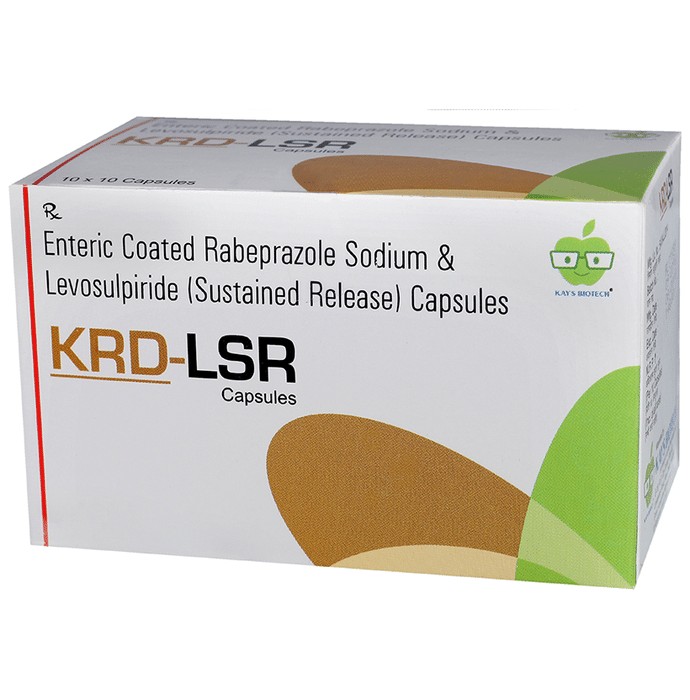
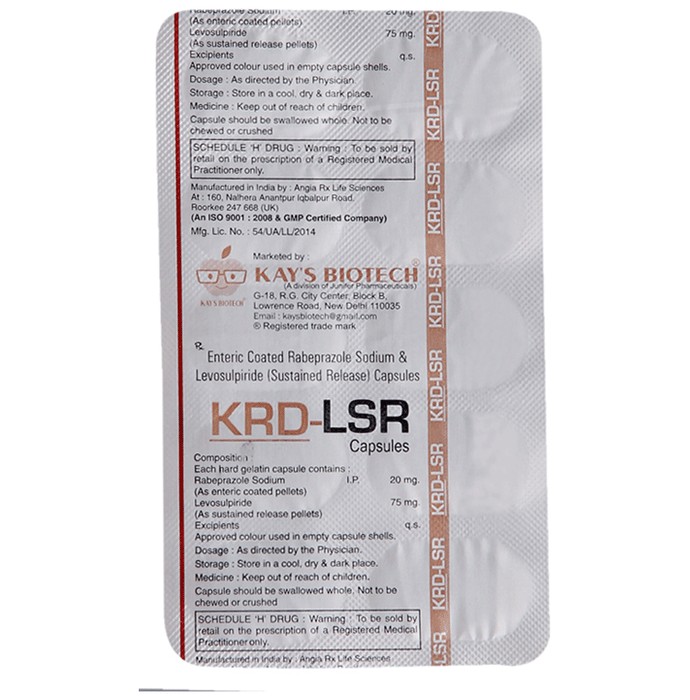
Krd-LSR Capsule

Marketer
Kay's Biotech
Salt Composition
Levosulpiride (75mg) + Rabeprazole (20mg)
Overview Krd-LSR Capsule
Gastroesophageal reflux disease (GERD), peptic ulcers, and irritable bowel syndrome may be treated with the prescription medication, Krd-LSR Capsule. This medication lessens excessive stomach acid and hinders its backflow into the esophagus. Dosage and duration for Krd-LSR Capsules should follow your physician's instructions, tailored to your individual response and condition. Continuing treatment as directed is crucial; premature cessation could lead to symptom recurrence and disease exacerbation. Inform your healthcare provider of all other medications you're using, as interactions are possible. Common side effects include nausea, abdominal discomfort, diarrhea, gas, constipation, headache, fatigue, and flu-like symptoms—most transient and self-limiting. Report any concerning side effects promptly. Drowsiness and dizziness are potential effects; avoid driving or mentally demanding tasks until their impact is known. Alcohol consumption should be avoided due to potential increased drowsiness. A fiber-rich diet, avoidance of trigger foods, increased hydration, and regular exercise can complement treatment. Prior to commencing treatment, disclose any liver or kidney conditions, and inform your doctor of pregnancy, pregnancy planning, or breastfeeding.
Uses of Krd-LSR Capsule
Managing intestinal ulcers, irritable bowel syndrome, and gastroesophageal reflux disease (GERD).
Major Benefits of Krd-LSR Capsule:
Follow your doctor's instructions precisely regarding dosage and treatment length for Krd-LSR Capsules. Ingest the capsules whole; avoid chewing, crushing, or breaking them. Administer on an empty stomach.
Common Side effects of Krd-LSR Capsule:
- Weakness
- Flatulence
- Vomiting
- Nausea
- Abdominal pain
- Diarrhea
- Headache
- Dizziness
- Breast enlargement in male
- Drowsiness
- Altered libido
- Absence of menstrual periods
- Unusual production of breast milk in women and men
- Cough
- Back pain
How to use Krd-LSR Capsule:
Administer this medication precisely as your physician directs, adhering to both the prescribed dosage and treatment length. Ingest the Krd-LSR Capsule whole; avoid chewing, crushing, or breaking it. Consume it on an empty stomach.
How Krd-LSR Capsule works:
Levosulpiride, a gastrointestinal motility stimulant, enhances acetylcholine release, thereby boosting stomach and intestinal contractions and mitigating esophageal reflux. Rabeprazole, a proton pump inhibitor, decreases gastric acid production, providing relief from acid indigestion and ulcers.
SAFETY ADVICE
 AlcoholUNSAFE
Consuming alcohol alongside Krd-LSR Capsule is inadvisable.
 PregnancyCONSULT YOUR DOCTOR
The use of Krd-LSR Capsules during pregnancy may pose risks. While human research is scarce, animal studies indicate potential harm to a developing fetus. A physician will assess the advantages against possible dangers prior to prescribing. Seek medical advice.
 Breast feedingCONSULT YOUR DOCTOR
Data on Krd-LSR Capsule use while breastfeeding is lacking. Seek medical advice from your physician.
 DrivingUNSAFE
Driving ability may be impaired by side effects associated with Krd-LSR Capsule.
 KidneyCONSULT YOUR DOCTOR
Insufficient data exists regarding Krd-LSR Capsule use in individuals with renal impairment. Physician consultation is advised. Available evidence, however, indicates that its administration to such patients should be approached with prudence.
 LiverCAUTION
Patients with significant hepatic impairment should exercise caution when using Krd-LSR Capsules. Dosage modification may be necessary. Physician consultation is recommended.
What if you forget to take Krd-LSR Capsule :
Should you forget to take a Krd-LSR Capsule, administer it at your earliest convenience. Nevertheless, if your next scheduled dose is imminent, omit the missed dose and resume your usual dosing regimen. Avoid taking a double dose.
Facts to Know About Krd-LSR Capsule
| Label | Value |
|---|---|
| Developing Habits | No. |
| Type of Therapy | Gastrointestinal system |
 3,018 People bought this recently