


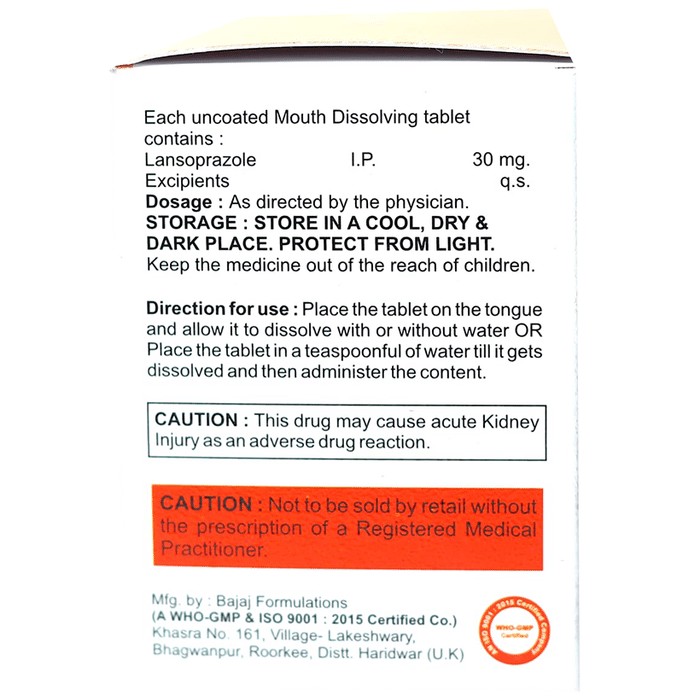
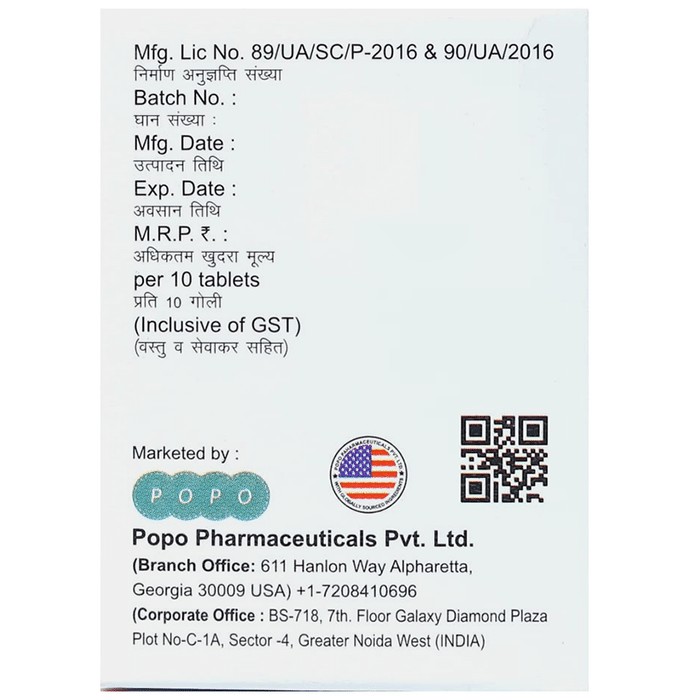
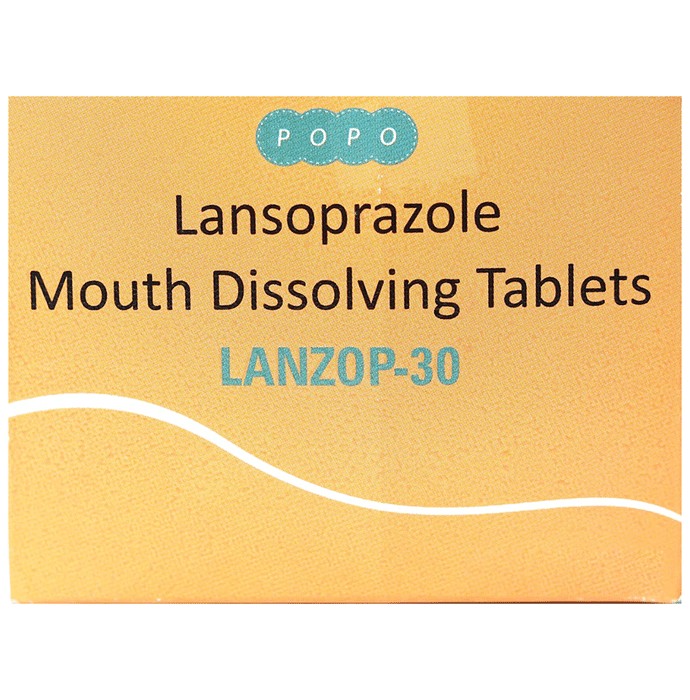
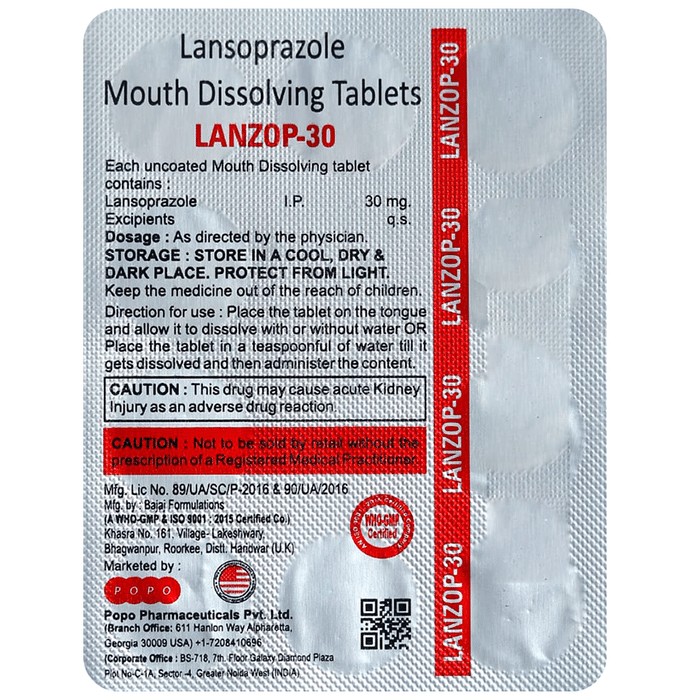
Lanzop 30 Tablet MD

Marketer
Popo Pharmaceutical Pvt. Ltd.
Salt Composition
Lansoprazole (30mg)
Overview Lanzop 30 Tablet MD
Acid reflux, peptic ulcers, and other hyperacidity-related gastrointestinal disorders respond to Lanzop 30 Tablet MD, a proton pump inhibitor (PPI). This medication diminishes stomach acid production. It's also indicated for preventing ulcers and hyperacidity potentially induced by prolonged nonsteroidal anti-inflammatory drug (NSAID) use. Administer one tablet one hour prior to meals, ideally in the morning. Dosage is individualized based on your condition and response. Continue the prescribed regimen even if symptoms abate quickly. Optimizing treatment involves consuming smaller, more frequent meals and limiting caffeine, spicy foods, and fatty foods. Common, typically mild, side effects encompass nausea, headache, flatulence, abdominal pain, constipation, and diarrhea. Persistent or troublesome side effects warrant medical consultation. Prolonged use, especially exceeding one year or with higher doses, may elevate bone fracture risk. Discuss bone loss prevention strategies, such as calcium and vitamin D supplementation, with your physician. Prior to commencing treatment, disclose any severe liver dysfunction, HIV medication use, prior PPI allergies, or pre-existing osteoporosis to your doctor. Pregnant or lactating individuals should seek medical counsel before using Lanzop 30 Tablet MD.
Primary Ingredients of Lanzop 30 Tablet MD
No text provided to rephrase.
Uses of Lanzop 30 Tablet MD
Managing gastroesophageal reflux and peptic ulcers.
Major Benefits of Lanzop 30 Tablet MD:
Administer this medication precisely as your physician directs, adhering to the prescribed dosage and timeframe. Avoid handling the tablets with damp hands. Place the tablet in your mouth, allowing it to dissolve before swallowing. Lanzop 30 Tablet MD should be consumed on an empty stomach.
Common Side effects of Lanzop 30 Tablet MD:
- Nausea
- Headache
- Flatulence
- Diarrhea
- Abdominal pain
- Constipation
How to use Lanzop 30 Tablet MD:
Follow your doctor's instructions precisely regarding dosage and treatment length for this medication. Avoid handling the tablets with damp hands. Place the Lanzop 30 Tablet MD in your mouth, but refrain from swallowing immediately. Administer on an empty stomach.
How Lanzop 30 Tablet MD works:
Lanzop 30mg tablets, a proton pump inhibitor, lessen stomach acid production, providing relief from heartburn and acid indigestion.
SAFETY ADVICE
 AlcoholCAUTION
Exercise caution when combining Lanzop 30 Tablet MD with alcohol. Seek medical advice before doing so.
 PregnancyCONSULT YOUR DOCTOR
Employing Lanzop 30 Tablet MD during pregnancy poses a confirmed risk to fetal development and is therefore inadvisable. Exceptions may exist in critical circumstances where a physician deems the potential advantages outweigh the hazards. Physician consultation is essential.
 Breast feedingCONSULT YOUR DOCTOR
The use of Lanzop 30 Tablet MD while breastfeeding is likely inadvisable. Available human data indicates potential transfer of the medication into breast milk, posing a possible risk to the infant.
 DrivingUNSAFE
Driving may be unsafe while taking Lanzop 30 Tablet MD due to potential drowsiness, blurred vision, and dizziness. Avoid operating vehicles if these side effects manifest.
 KidneySAFE IF PRESCRIBED
Lanzop 30 Tablet MD presents no need for dosage modification in individuals with renal impairment and is considered safe for their use.
 LiverCAUTION
Patients with severe hepatic impairment should use Lanzop 30 Tablet MD cautiously. Dosage modification of Lanzop 30 Tablet MD may be necessary. Physician consultation is recommended.
What if you forget to take Lanzop 30 Tablet MD :
Should you forget a Lanzop 30 Tablet MD dose, take it promptly. Nevertheless, if your next dose is imminent, omit the missed dose and resume your usual dosing regimen. Avoid taking a double dose.
Facts to Know About Lanzop 30 Tablet MD
| Label | Value |
|---|---|
| Chemical Category | Timoconazole Analog |
| Developing Habits | No. |
| Type of Therapy | Gastrointestinal system |
 3,018 People bought this recently