



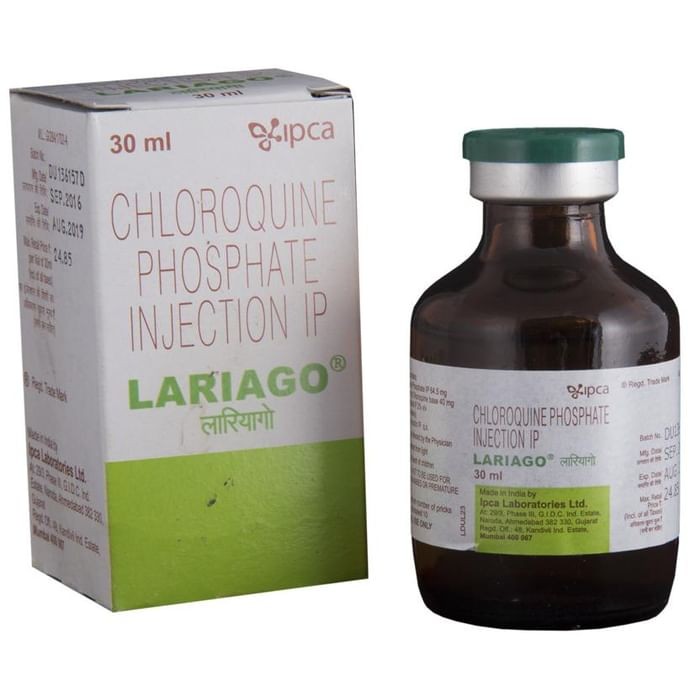
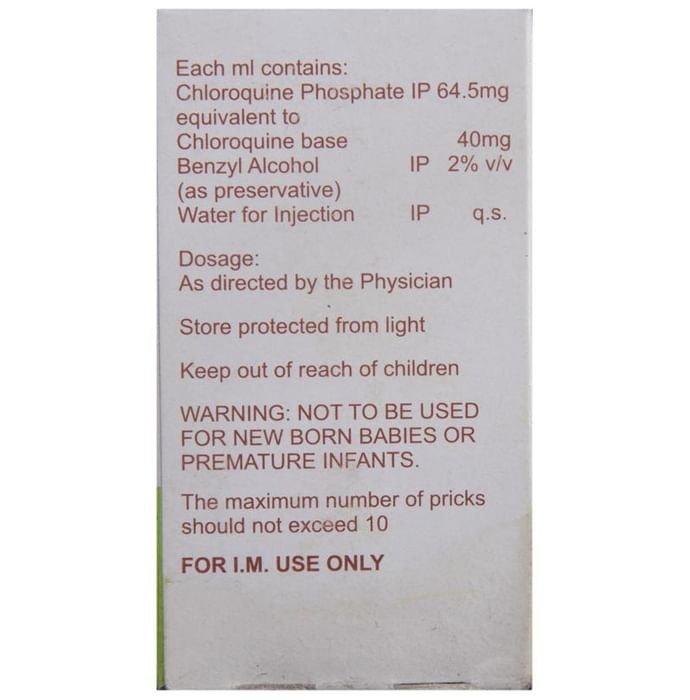
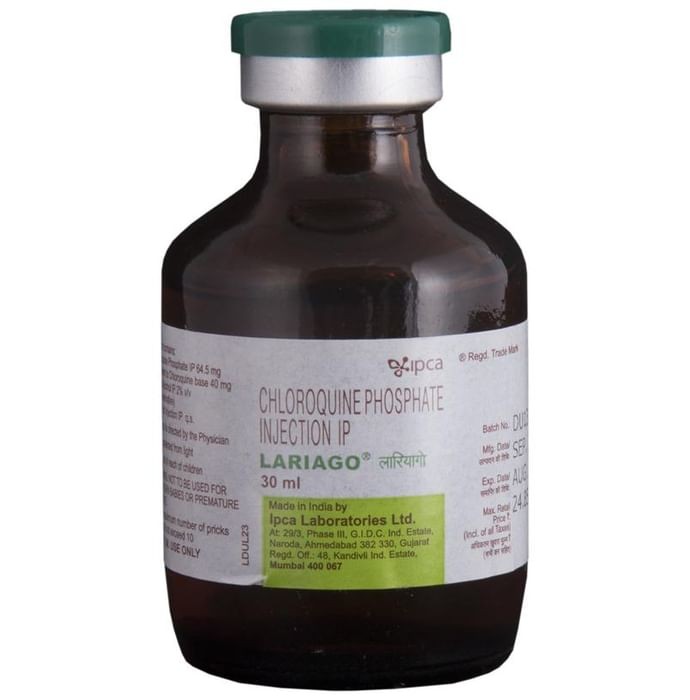
Lariago 40mg Injection

Marketer
Ipca Laboratories Ltd
Salt Composition
Chloroquine (40mg)
Overview Lariago 40mg Injection
Malarex 40mg Injection combats malaria parasites, preventing and treating the infection. Its mechanism involves eliminating the malaria-causing organism, thereby halting infection spread. Administration is strictly by a healthcare provider via injection; self-administration is strongly discouraged. Mosquito avoidance is crucial: apply insect repellent to exposed skin, spray indoor repellents, and wear light-colored, protective clothing after dusk. Potential side effects include weakness, nausea, vomiting, rash, itching, abdominal discomfort, diarrhea, and appetite loss. Injection site reactions (pain, swelling, redness) may also occur. Persistent side effects warrant medical attention. Diabetic patients should inform their physician, as this medication may lower blood glucose levels, requiring regular monitoring. Blurred vision is possible; regular eye exams are recommended during treatment. Long-term use may necessitate routine blood cell count monitoring. Report any unexplained bleeding or bruising, sore throat, fever, or fatigue to your doctor immediately.
Uses of Lariago 40mg Injection
Managing Malaria Infections
Major Benefits of Lariago 40mg Injection:
The medication will be administered by your physician or registered nurse; self-medication is strictly prohibited.
Common Side effects of Lariago 40mg Injection:
- Weakness
- Rash
- Headache
- Dizziness
- Vomiting
- Nausea
- Stomach pain
- Loss of appetite
- Diarrhea
How to use Lariago 40mg Injection:
This medication will be administered by your healthcare provider; self-medication is strictly prohibited.
How Lariago 40mg Injection works:
Malaria is combated by the antiparasitic Lariago 40mg Injection. Its mechanism involves elevating blood haem levels, a compound lethal to the malaria parasite, thus eliminating the parasite and halting infection progression.
SAFETY ADVICE
 AlcoholCONSULT YOUR DOCTOR
Alcohol consumption alongside Lariago 40mg Injection may pose unknown risks. Seek medical advice before combining them.
 PregnancyCONSULT YOUR DOCTOR
Using Lariago 40mg Injection during pregnancy may pose risks. While human data is scarce, animal research indicates potential harm to a developing fetus. A physician will assess the advantages against possible dangers prior to prescribing. Seek medical advice.
 Breast feedingSAFE IF PRESCRIBED
Lariago 40mg Injection poses minimal risk during lactation. Research in humans indicates negligible transfer of the medication into breast milk, presenting no appreciable danger to the infant.
 DrivingUNSAFE
Administration of Lariago 40mg Injection may induce adverse reactions that impair driving capabilities. These reactions can include blurred vision or impaired visual focus, potentially affecting safe driving.
 KidneyCAUTION
For individuals with impaired kidney function, the administration of Lariago 40mg Injection requires careful monitoring. Dosage modification of Lariago 40mg Injection might be necessary. A physician's consultation is recommended.
 LiverCAUTION
Patients with hepatic impairment should use Lariago 40mg Injection cautiously, potentially requiring dosage modification. Physician consultation is recommended. Routine liver function assessments may be prudent during treatment.
What if you forget to take Lariago 40mg Injection :
NA
Facts to Know About Lariago 40mg Injection
| Label | Value |
|---|---|
| Chemical Category | Aminoquinoline derivative (4-substituted) |
| Developing Habits | No. |
| Treatment Category | Ophthalmology |
| Active Class | Aminoquinoline antimalarials |
 3,018 People bought this recently