




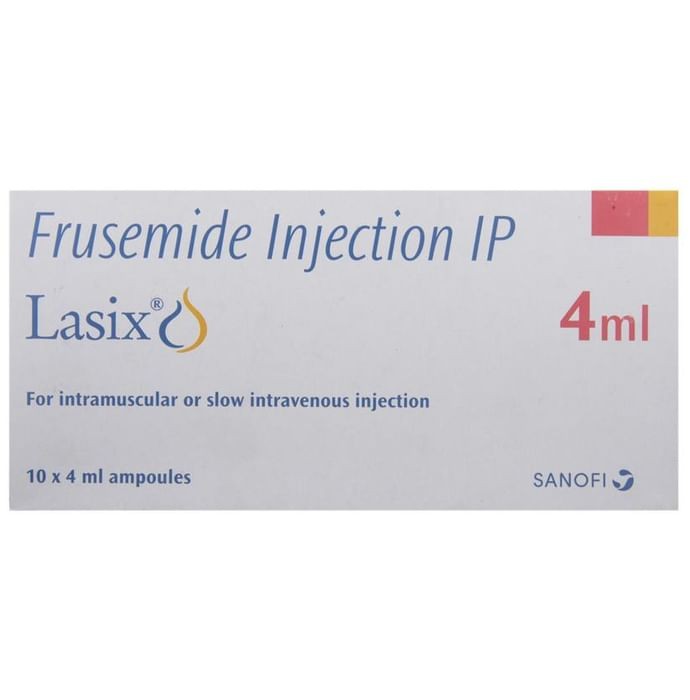


Lasix Injection

Marketer
Sanofi India Ltd
Salt Composition
Furosemide (10mg/ml)
Overview Lasix Injection
Furosemide injection, a potent diuretic, is indicated for rapid management of severely elevated blood pressure (hypertensive crisis), promptly lowering blood pressure. It also effectively diminishes edema resulting from fluid retention. This intravenous medication facilitates the excretion of excess water and sodium via urine. Commonly employed in patients with fluid overload secondary to heart, liver, or kidney disease, administration is strictly under medical supervision. Post-injection blood pressure monitoring is standard practice. Potential side effects, typically mild and transient, include lightheadedness, fatigue, dehydration, hypokalemia, hyperuricemia, hypomagnesemia, and increased thirst. Persistent or bothersome side effects warrant immediate medical consultation. Prior to administration, inform your physician of any hepatic impairment. Pregnant or lactating individuals require specific medical counsel. Routine monitoring of renal function and electrolyte levels is crucial during treatment. As furosemide can induce hypokalemia, dietary potassium supplementation (e.g., bananas, coconut water) or supplements may be recommended. Long-term management of the underlying condition should continue irrespective of this emergency injection.
Uses of Lasix Injection
Managing severe hypertension and edema
Major Benefits of Lasix Injection:
This medication will be administered by your physician or their designated nursing staff; self-medication is strictly prohibited.
Common Side effects of Lasix Injection:
- Dizziness
- Weakness
- Dehydration
- Decreased potassium level in blood
- Increased blood uric acid
- Increased thirst
- Decreased magnesium level in blood
How to use Lasix Injection:
Administering this medication will be handled by your healthcare provider. Self-medication is not recommended.
How Lasix Injection works:
Furosemide Injection, a diuretic medication, facilitates fluid excretion by enhancing urine production, thus eliminating excess water and select electrolytes.
SAFETY ADVICE
 AlcoholUNSAFE
Alcohol and Lasix Injection should not be taken together due to safety concerns.
 PregnancyCONSULT YOUR DOCTOR
Administering Lasix Injection during pregnancy may pose risks. While human research is scarce, animal studies indicate potential harm to the fetus. Your physician will assess the advantages against possible dangers prior to prescribing. Seek medical advice.
 Breast feedingCONSULT YOUR DOCTOR
The administration of Lasix via injection during lactation is likely inadvisable. Available human data indicates a potential for drug transfer to breast milk, posing a possible risk to the infant.
 DrivingUNSAFE
Administering Lasix Injection may cause drowsiness, blurred vision, and dizziness, potentially impairing alertness. Driving should be avoided if these effects are experienced.
 KidneySAFE IF PRESCRIBED
Furosemide injection is generally safe for individuals with kidney impairment; dosage modification is typically unnecessary. However, its administration is contraindicated in patients with severely compromised renal function exhibiting anuria or nephropathy induced by other medications. Consult your physician.
 LiverCAUTION
Patients with hepatic impairment should use Furosemide Injection judiciously; dosage modification may be necessary. Physician consultation is recommended.
What if you forget to take Lasix Injection :
Omit Lasix Injection doses only after physician consultation.
Facts to Know About Lasix Injection
| Label | Value |
|---|---|
| Chemical Type | Sulfonamide derivatives |
| Developing Habits | No. |
| Treatment Category | HEART |
 3,018 People bought this recently