


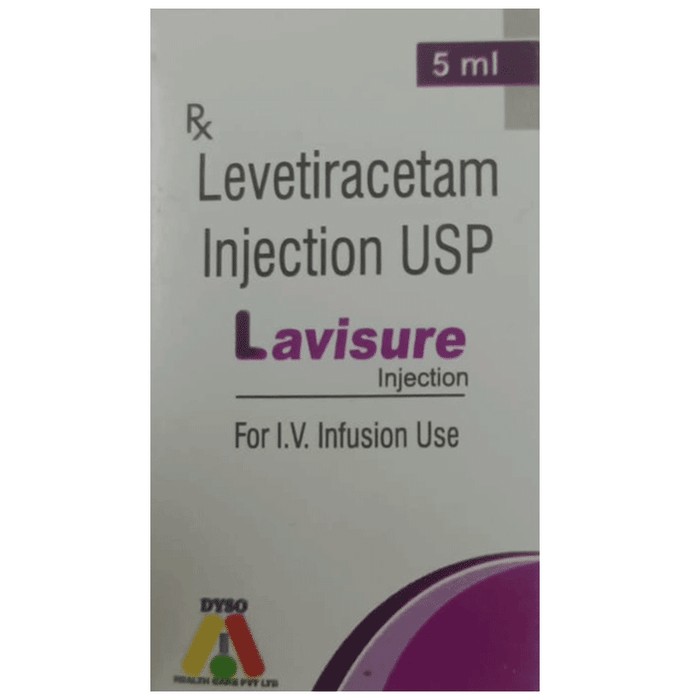
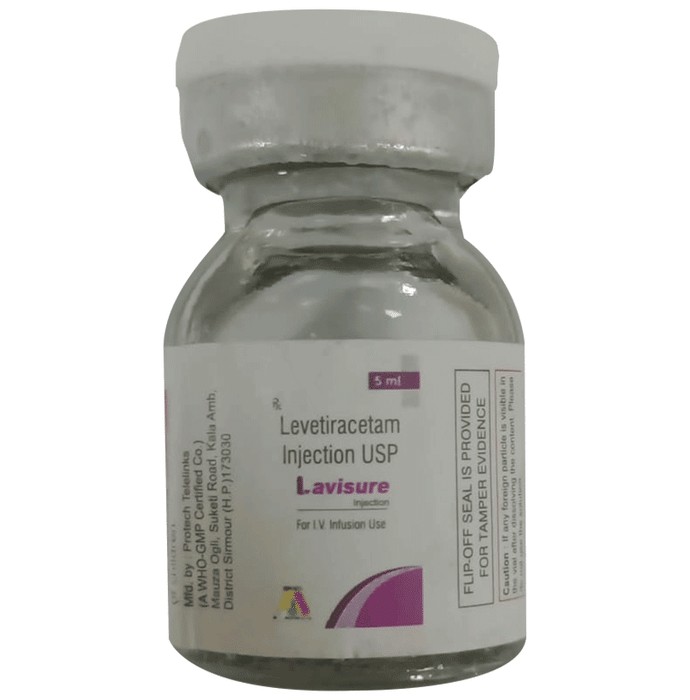
Lavisure Injection

Marketer
Dyso Healthcare Pvt Ltd
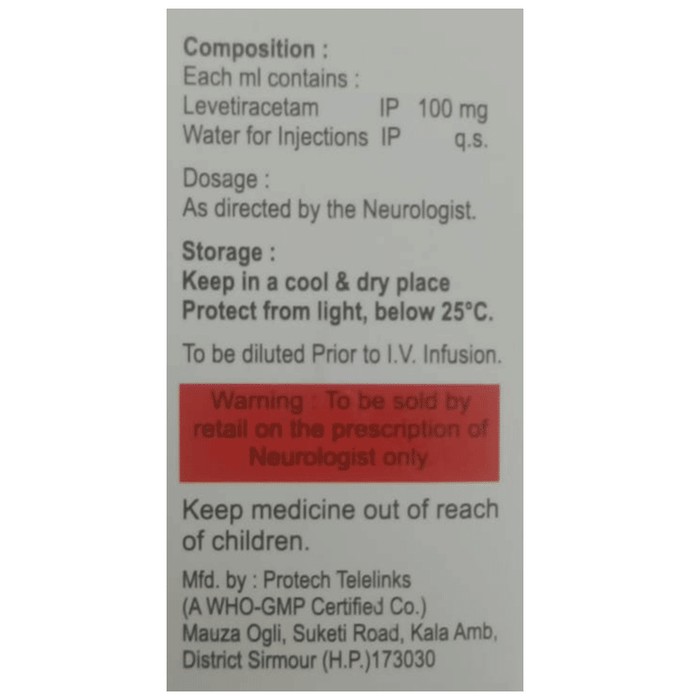
Salt Composition
Levetiracetam (100mg/ml)
Overview Lavisure Injection
Epileptic seizures are managed with the anticonvulsant injection, Lavisure. Administered intravenously by a healthcare provider as a slow infusion, it's indicated for short-term seizure control when oral medication is impractical (e.g., unconscious patients). Lavisure can be used alone or in conjunction with other anti-epileptic drugs, offering seizure prevention as long as treatment continues. Consistent use, as directed by your physician, is crucial; discontinuation or missed doses may exacerbate seizures. Following the injection course, your doctor will likely transition you to oral medication for sustained seizure management. Common, generally transient side effects include drowsiness, headache, infection, local irritation, upper respiratory infection, aggression, and reduced appetite. More serious reactions, such as allergic responses (rash, hives, swelling, breathing difficulty), persistent behavioral changes (confusion, irritability, hostility), and suicidal ideation require immediate medical attention. Inform your doctor of any kidney issues, depression, suicidal thoughts, or pregnancy before commencing treatment. Alcohol should be avoided due to the increased risk of seizures and exacerbated side effects like dizziness and drowsiness. These side effects may impair driving or operating machinery. Regular kidney function monitoring may be necessary during treatment.
Uses of Lavisure Injection
Managing Epileptic Seizures
Major Benefits of Lavisure Injection:
This medication will be administered by your healthcare provider. Self-medication is strictly prohibited.
Common Side effects of Lavisure Injection:
- Sleepiness
- Dizziness
- Decreased appetite
- Fatigue
- Headache
- Behavioral changes
- Irritation
- Aggressive behavior
- Agitation
- Infection
- Nasopharyngitis (inflammation of the throat and nasal passages)
How to use Lavisure Injection:
This medication will be administered by your healthcare provider. Self-medication is strictly prohibited.
How Lavisure Injection works:
Lavisure Injection, an anticonvulsant, targets specific nerve cell receptors (SV2A) to modulate neuronal activity. This action inhibits aberrant brain signaling, thus preventing seizure propagation.
SAFETY ADVICE
 AlcoholUNSAFE
Alcohol and Lavisure Injection should not be used together.
 PregnancyCONSULT YOUR DOCTOR
The use of Lavisure Injection during pregnancy may pose risks. While human data is scarce, animal research indicates potential harm to the fetus. A physician will assess the advantages against possible dangers prior to prescribing. Seek medical advice.
 Breast feedingSAFE IF PRESCRIBED
Breastfeeding mothers can likely use Lavisure Injection safely. Available data from humans indicates minimal infant risk. Observe the infant for drowsiness and appropriate weight increase.
 DrivingUNSAFE
Administration of Lavisure Injection can lead to reduced alertness, visual impairment, drowsiness, and dizziness. Driving should be avoided if these effects are experienced.
 KidneyCAUTION
Exercise caution when administering Lavisure Injection to individuals with impaired renal function. Dosage modification for Lavisure Injection might be necessary. Physician consultation is advised.
 LiverSAFE IF PRESCRIBED
The use of Lavisure Injection in individuals with liver conditions is likely safe. Existing evidence indicates dose modification may be unnecessary for most such patients. A physician's consultation is recommended. Nevertheless, reduced dosages might be considered for those exhibiting severe hepatic impairment.
What if you forget to take Lavisure Injection :
Should you forget a Lavisure Injection, administer it at your earliest convenience. If, however, your next scheduled dose is imminent, omit the missed injection and resume your usual dosing regimen. Never take a double dose.
Facts to Know About Lavisure Injection
| Label | Value |
|---|---|
| Chemical Category | Pyrrolidinone-Acetamide Derivative |
| Developing Habits | No. |
| Treatment Category | Neuroscience |
| Action Class | AED: A protein ligand bound to synaptic vesicle 2 |
 3,018 People bought this recently