


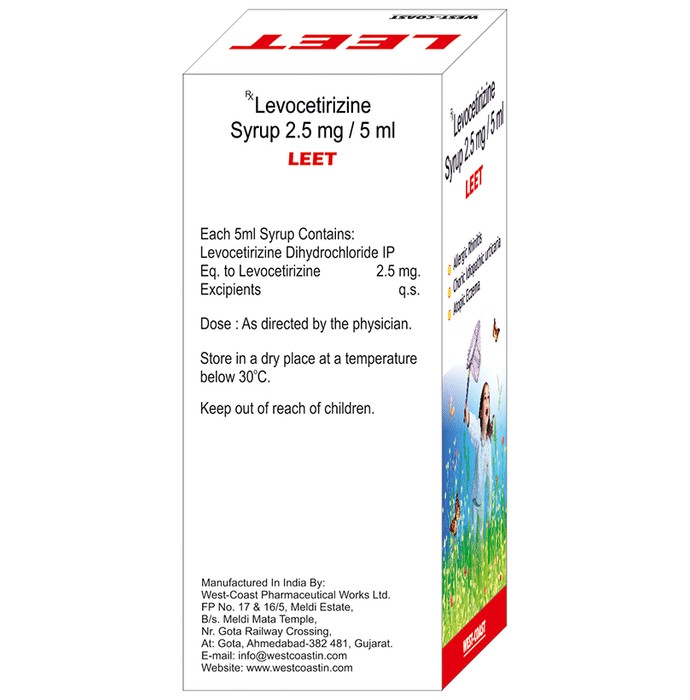
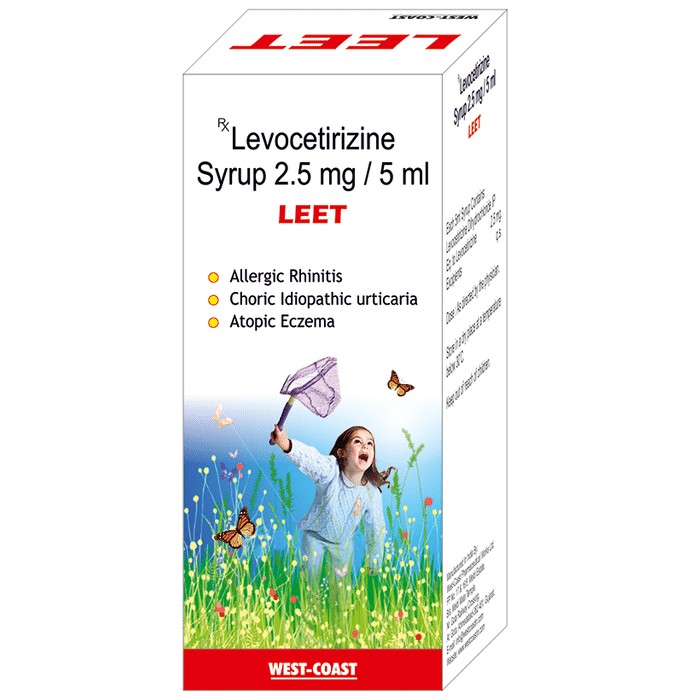
Leet Syrup

Marketer
West-Coast Pharmaceutical Works Ltd
Salt Composition
Levocetirizine (2.5mg/5ml)
Overview Leet Syrup
Allerhist Syrup, an antihistamine, effectively manages diverse allergic reactions including seasonal allergies (hay fever), conjunctivitis, and dermatological manifestations like eczema, urticaria, and insect bite responses. It alleviates symptoms such as nasal discharge, sneezing, itchy eyes, and watery eyes. Allerhist Syrup can be administered with or without food. Dosage varies depending on the specific allergy being treated; your physician will determine the appropriate regimen. While often taken at bedtime, always adhere to your doctor's instructions. Intermittent use is acceptable for symptom control, but regular use is recommended for prophylaxis. Discontinuing or missing doses may lead to symptom recurrence. Generally well-tolerated, common, usually transient, side effects include drowsiness, dizziness, dry mouth, tiredness, and headache. Persistent or concerning side effects warrant medical consultation. Pre-existing kidney disease or epilepsy necessitates informing your doctor before commencement, as dosage adjustments may be required. Concurrent medication use should be disclosed to your healthcare provider due to potential drug interactions. Consult your doctor prior to use if pregnant or breastfeeding, though it's generally considered safe.
Primary Ingredients of Leet Syrup
There is no text provided to rephrase.
Uses of Leet Syrup
Managing Allergic Reactions
Major Benefits of Leet Syrup:
Follow your doctor's instructions precisely regarding dosage and treatment length for this medication. Always refer to the product label for administration guidelines prior to use. Administer orally using a measuring cup. Ensure thorough shaking before each dose. Leet Syrup can be consumed with or without food; however, consistent timing is recommended.
Common Side effects of Leet Syrup:
- Nausea
- Constipation
- Dizziness
- Sleepiness
- Fatigue
- Dryness in mouth
- Headache
- Vomiting
- Nasopharyngitis (inflammation of the throat and nasal passages)
How to use Leet Syrup:
Administer this medication according to your physician's prescribed dosage and schedule. Always consult the product label for instructions prior to consumption. Use a measuring device for accurate dosing and ingest orally. Ensure thorough shaking before each use. Leet Syrup can be ingested with or without food, however, consistent timing is recommended for optimal results.
How Leet Syrup works:
Histamine blocker Leet Syrup is an antihistamine that counteracts the body's histamine release during allergic reactions. This action moderates the immune system's response, providing symptomatic relief for your child.
SAFETY ADVICE
 KidneyCAUTION
Patients with kidney impairment should use Leet Syrup judiciously; dosage modification may be necessary. Physician consultation is advised.
 LiverSAFE IF PRESCRIBED
Leet Syrup poses no safety concerns for individuals with liver impairment and requires no dosage modification. Nevertheless, patients exhibiting severe hepatic dysfunction may necessitate altered dosing. Physician consultation is advised prior to administering Levocetirizine to children with severe liver disease.
What if you forget to take Leet Syrup :
Remain calm. If your pediatrician hasn't instructed otherwise, give the missed dose immediately upon recollection. Omit the missed dose if the next scheduled dose is imminent. Avoid doubling the dose to compensate; adhere precisely to the recommended medication schedule.
Facts to Know About Leet Syrup
| Label | Value |
|---|---|
| Chemical Category | Piperazine-Based Compounds |
| Developing Habits | No. |
| Treatment Category | Breathing |
 3,018 People bought this recently