


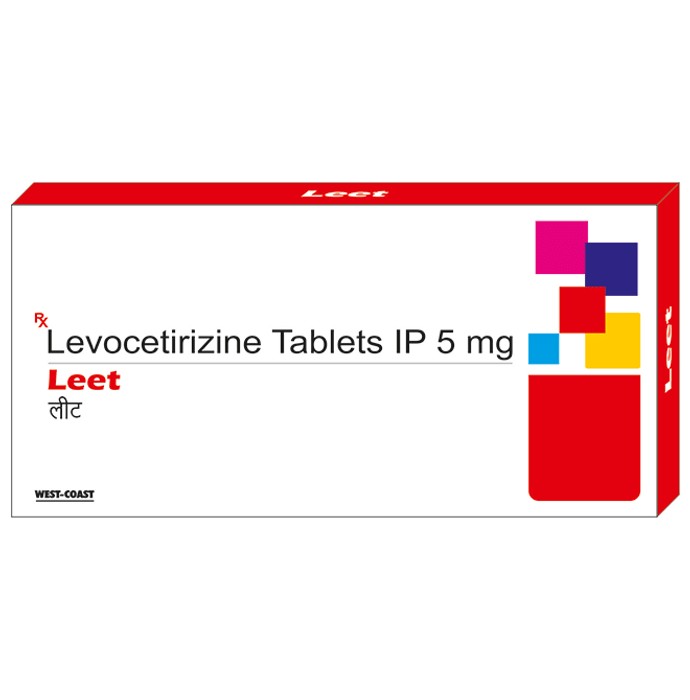
Leet Tablet

Marketer
West-Coast Pharmaceutical Works Ltd
Salt Composition
Levocetirizine (5mg)
Overview Leet Tablet
Allerstop tablets are classified as antihistamines, effective in managing diverse allergic responses. These include hay fever, conjunctivitis, certain skin conditions like eczema and hives, and reactions to insect bites or stings. The medication alleviates symptoms such as itchy, watery eyes, runny nose, sneezing, and itching. Allerstop tablets may be taken with or without food. Dosage depends on the specific condition being treated and should be determined by your physician. Generally, it's administered in the evening, but always follow your doctor's instructions. Use may be symptom-driven or preventative, requiring regular intake if symptom prevention is the goal. Discontinuing treatment prematurely or missing doses can lead to symptom recurrence. Common, typically mild and transient side effects include drowsiness, dry mouth, tiredness, fever, cough, upper respiratory infection, and nosebleeds. Persistent or concerning side effects warrant medical attention. Prior to use, inform your doctor of any kidney issues or epilepsy, as dosage adjustments or alternative treatments may be necessary. Potential drug interactions exist; therefore, disclose all other medications to your healthcare provider. Pregnant or breastfeeding individuals should also consult their physician before using Allerstop tablets, although it's generally considered safe.
Primary Ingredients of Leet Tablet
No information provided. Please provide the text you wish me to rephrase.
Uses of Leet Tablet
Managing Allergic Reactions
Major Benefits of Leet Tablet:
Administer this medication precisely as prescribed by your physician, adhering to both the dosage and treatment duration. Ingest the tablet whole; avoid chewing, crushing, or fracturing it. Leet Tablet can be consumed with or without food, although consistent timing is recommended.
Common Side effects of Leet Tablet:
- Sleepiness
- Fatigue
- Dryness in mouth
- Nasopharyngitis (inflammation of the throat and nasal passages)
- Sore throat
- Fever
- Cough
- Nosebleeds
How to use Leet Tablet:
Administer this medication according to your physician's prescribed dosage and schedule. Ingest the tablet whole; avoid chewing, crushing, or fracturing it. Leet Tablet can be consumed with or without food, although consistent timing is recommended.
How Leet Tablet works:
Allergy symptoms like itching, swelling, and skin rashes respond to Leet Tablet, an antihistamine that counteracts the body's histamine response.
SAFETY ADVICE
 AlcoholUNSAFE
Concurrent use of Leet Tablet and alcohol may result in significant sleepiness.
 PregnancyCONSULT YOUR DOCTOR
Pregnant individuals should exercise caution when considering Leet Tablet. While human research is scant, animal studies indicate potential harm to the fetus. A physician will assess the advantages against possible risks prior to any prescription. Medical advice is recommended.
 Breast feedingCONSULT YOUR DOCTOR
Employing Leet Tablet while breastfeeding is likely inadvisable. Available human data indicate potential drug transfer into breast milk, posing a risk to the infant. Increased dosages or extended Leet Tablet use might induce infant drowsiness or other adverse reactions, and could potentially reduce milk production.
 DrivingUNSAFE
Taking Leet Tablet may cause drowsiness, blurred vision, and dizziness, reducing alertness. Refrain from driving if you experience these effects.
 KidneyCAUTION
Caution is advised when prescribing Leet Tablet to individuals with impaired renal function. Dosage modification for Leet Tablet may be necessary. Physician consultation is recommended.
 LiverSAFE IF PRESCRIBED
Leet Tablet presents no contraindications for use in patients with hepatic impairment; dosage modification is unnecessary.
What if you forget to take Leet Tablet :
Should you forget a Leet Tablet dose, take it immediately. However, if your next dose is nearly due, omit the missed dose and resume your usual dosing regimen. Never take a double dose.
Facts to Know About Leet Tablet
| Label | Value |
|---|---|
| Chemical Classification | Piperazine-Based Compounds |
| Developing Habits | No. |
| Treatment Category | Breathing |
 3,018 People bought this recently