


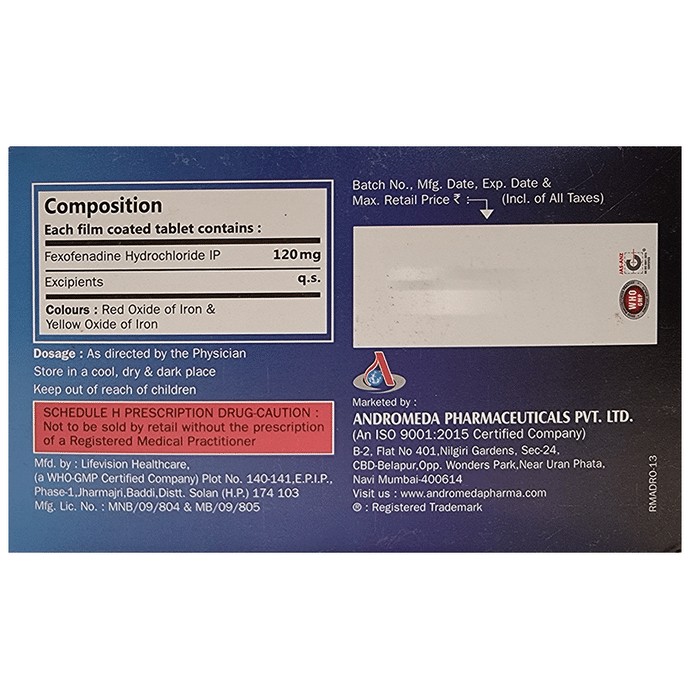
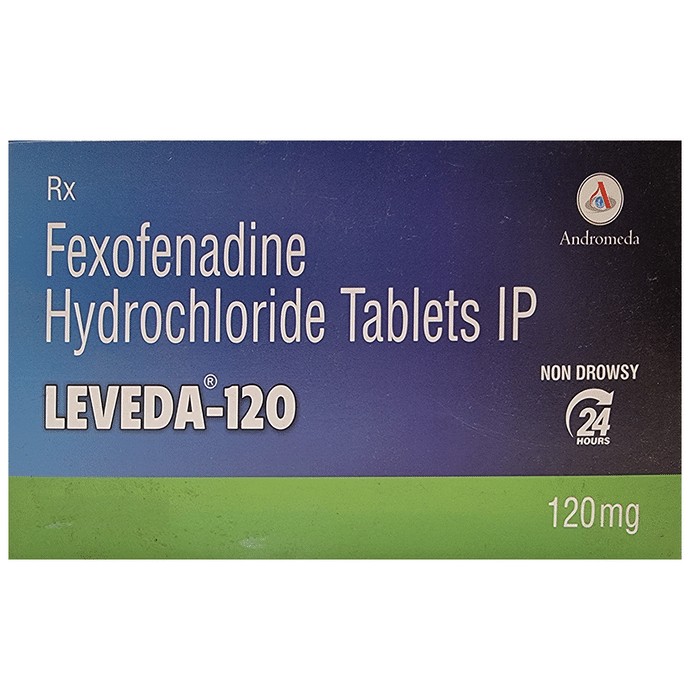
Leveda 120 Tablet

Marketer
Andromeda Pharmaceutical Private Limited
Salt Composition
Fexofenadine (120mg)
Overview Leveda 120 Tablet
Aller-Ease 120mg tablets provide relief from allergic reactions. This medication effectively manages symptoms including nasal congestion, sneezing, itchy or watery eyes, and swelling. It also addresses skin allergies manifesting as itching, redness, or inflammation. Aller-Ease 120mg should be taken as prescribed, with or without food, following your doctor's instructions regarding dosage and treatment length. Your prescribed dose will be tailored to your individual needs and response. Continue the medication as directed by your physician; do not discontinue use without consulting them. Common side effects, such as headache, sleepiness, lightheadedness, and stomach upset, are generally temporary. However, persistent or bothersome side effects warrant medical attention. Never self-treat or share this medication. Always seek professional medical advice for optimal results. Patients with kidney, liver, or heart conditions, as well as pregnant or breastfeeding individuals, must consult their doctor before using Aller-Ease 120mg.
Uses of Leveda 120 Tablet
Managing allergic rhinitis symptoms, including sneezing and nasal discharge.
Major Benefits of Leveda 120 Tablet:
Follow your doctor's instructions precisely regarding dosage and treatment length for Leveda 120 Tablet. Ingest the tablet whole; avoid chewing, crushing, or breaking it. This medication can be taken with or without food, however, consistent timing is recommended.
Common Side effects of Leveda 120 Tablet:
- Headache
- Drowsiness
- Dizziness
- Nausea
How to use Leveda 120 Tablet:
Consume this medication precisely as directed by your physician, adhering to both the prescribed dosage and treatment period. Ingest the tablet whole; avoid chewing, crushing, or fracturing it. Leveda 120 Tablet can be administered with or without food, though consistent timing is recommended.
How Leveda 120 Tablet works:
Leveda 120mg tablets are classified as antihistamines. Their mechanism involves counteracting histamine, a substance that triggers inflammatory responses manifested as itching, redness, swelling, and irritation.
SAFETY ADVICE
 AlcoholCONSULT YOUR DOCTOR
The interaction of alcohol with Leveda 120 Tablet is undetermined; therefore, physician consultation is advised.
 PregnancyCONSULT YOUR DOCTOR
Using Leveda 120 Tablet during pregnancy may pose risks. While human research is scarce, animal studies indicate potential harm to a developing fetus. A physician will assess the advantages against possible risks prior to prescription. Seek medical advice before using this medication.
 Breast feedingSAFE IF PRESCRIBED
Leveda 120 Tablet poses minimal risk during lactation. Research in humans indicates negligible transfer of the medication into breast milk, posing no discernible threat to infants. The low concentration in breast milk, coupled with the absence of drowsiness, suggests no detrimental effects on breastfed newborns.
 DrivingSAFE
Driving ability is typically unaffected by Leveda 120 Tablets. Nevertheless, it's advisable to confirm the absence of drowsiness or dizziness before driving or operating equipment.
 KidneyCAUTION
Patients with kidney disease should use Leveda 120 Tablets cautiously, potentially requiring dosage modification. Physician consultation is advised. In those with end-stage renal failure, significant drowsiness may occur.
 LiverSAFE IF PRESCRIBED
Leveda 120 Tablet appears to pose minimal risk for individuals with hepatic impairment. Existing evidence indicates dose modification may be unnecessary; however, physician consultation is recommended.
What if you forget to take Leveda 120 Tablet :
Should you forget a Leveda 120 Tablet dose, administer it promptly. Nevertheless, if your next scheduled dose is imminent, omit the missed dose and resume your usual dosing regimen. Avoid taking a double dose.
Facts to Know About Leveda 120 Tablet
| Label | Value |
|---|---|
| Type of Compound | Benzhydryl compound |
| Addictive | None. |
| Type of Medication | BREATHING |
| Mechanism of Action | Second-generation H1 receptor antagonists |
 3,018 People bought this recently