



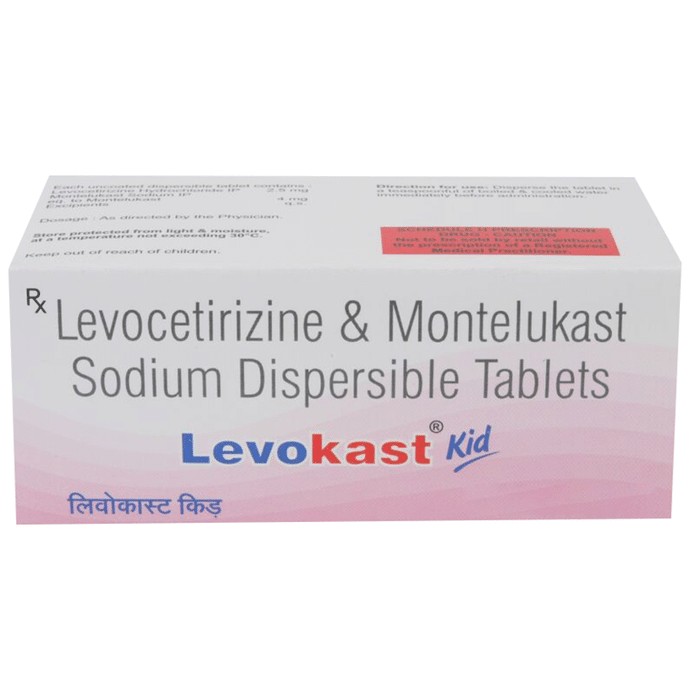

Levokast Kid Tablet

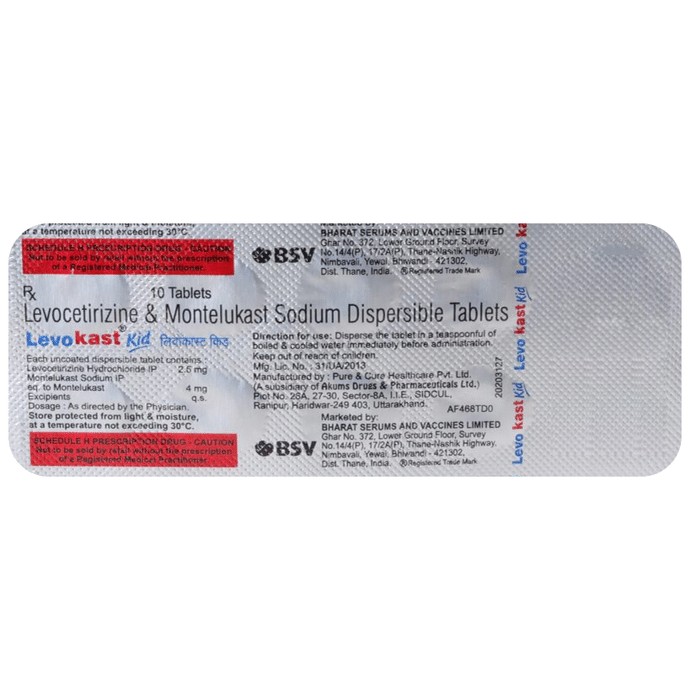
Marketer
Bharat Serums & Vaccines Ltd
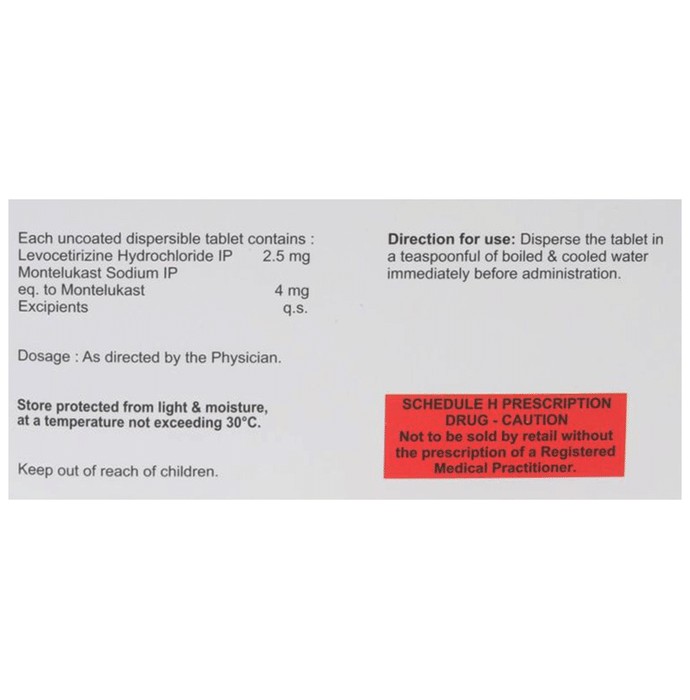
Salt Composition
Levocetirizine (2.5mg) + Montelukast (4mg)
Overview Levokast Kid Tablet
Pediatric allergy sufferers often receive Levokast Kid Tablets to alleviate symptoms like nasal discharge, sneezing fits, itching, swelling, nasal congestion, and tearing eyes. This medication can also aid in managing asthma and skin allergies. Administer the prescribed dosage to your child at the same time each day, either before or after meals, as directed. For asthma, evening administration or two hours prior to exercise is recommended. For allergies, morning or evening dosing is suitable, depending on symptom onset; for children with both, evening is preferable. If vomiting occurs within 30 minutes, repeat the dose; otherwise, omit if the next dose is imminent. Symptom improvement may be noticeable after several doses, but the full prescribed course is crucial for optimal results. Sudden cessation may exacerbate the condition. Minor, transient side effects such as vomiting, diarrhea, nausea, dizziness, dry mouth, rash, and headache are possible, generally resolving with continued use. Persistent or bothersome side effects warrant immediate consultation with your child's physician. Disclose all current medications and your child's complete medical history, including any past allergies, heart conditions, blood disorders, vascular issues, birth defects, airway obstructions, lung problems, skin conditions, liver impairment, and kidney dysfunction. This is vital for appropriate dosage and treatment planning.
Primary Ingredients of Levokast Kid Tablet
The provided information is insufficient.
Uses of Levokast Kid Tablet
Managing allergic skin reactions | Alleviating allergy-induced nasal congestion and rhinorrhea | Treating seasonal allergic rhinitis
Major Benefits of Levokast Kid Tablet:
Follow your doctor's instructions precisely regarding the dosage and treatment length for this medication. Ingest the tablet whole; do not crush, chew, or break it. Levokast Kid Tablet can be administered with or without food, however, consistent timing is recommended.
Common Side effects of Levokast Kid Tablet:
- Nausea
- Diarrhea
- Dryness in mouth
- Fatigue
- Headache
- Skin rash
- Sleepiness
- Vomiting
- Rash
- Upper respiratory tract infection
- Fever
- Sore throat
- Abdominal pain
- Increased liver enzymes
How to use Levokast Kid Tablet:
Follow your doctor's instructions precisely regarding dosage and treatment length for this medication. Ingest the tablet whole; do not damage it by chewing, crushing, or breaking. Levokast Kid Tablet can be administered with or without food, although consistent timing is recommended.
How Levokast Kid Tablet works:
Levokast Kid Tablet combines levocetirizine and montelukast to alleviate allergy symptoms like sneezing and nasal discharge. Levocetirizine, an antihistamine, counteracts histamine, a substance triggering allergic reactions such as runny nose, watery eyes, and sneezing. Montelukast, a leukotriene receptor antagonist, inhibits the action of leukotrienes, inflammatory mediators, thus lessening airway and nasal swelling and improving symptoms.
SAFETY ADVICE
 KidneyCAUTION
Children using Levokast Kid Tablets and experiencing kidney problems should be closely monitored. Dosage modification might be necessary; physician consultation is advised. Levokast Kid Tablets are contraindicated for children with severely impaired kidney function.
 LiverSAFE IF PRESCRIBED
Levokast Kid Tablets are considered safe for use by individuals with liver conditions; no dosage alteration is typically needed. Nevertheless, a physician should be consulted if the liver disease is severe.
What if you forget to take Levokast Kid Tablet :
Remain calm. Unless otherwise directed by your child's physician, administer the missed dose immediately upon recollection. However, omit the missed dose if the next scheduled dose is imminent. Avoid doubling the dose to compensate, and adhere to the recommended medication schedule.
Facts to Know About Levokast Kid Tablet
| Label | Value |
|---|---|
| Potential for Dependence | None. |
| Type of Medication | BREATHING-RELATED |
 3,018 People bought this recently