


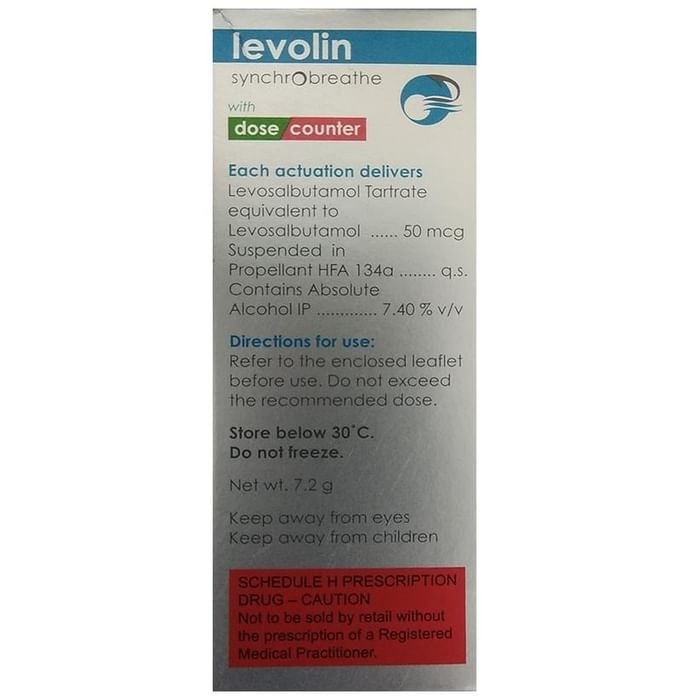
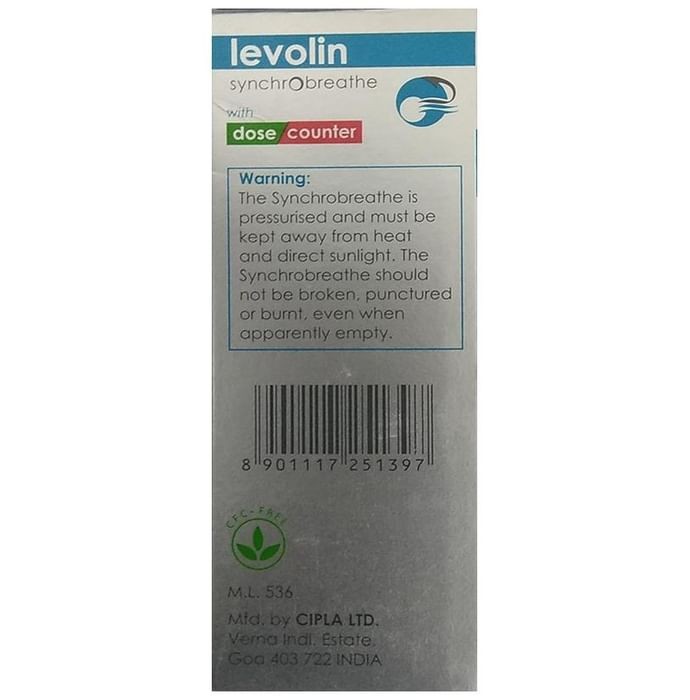
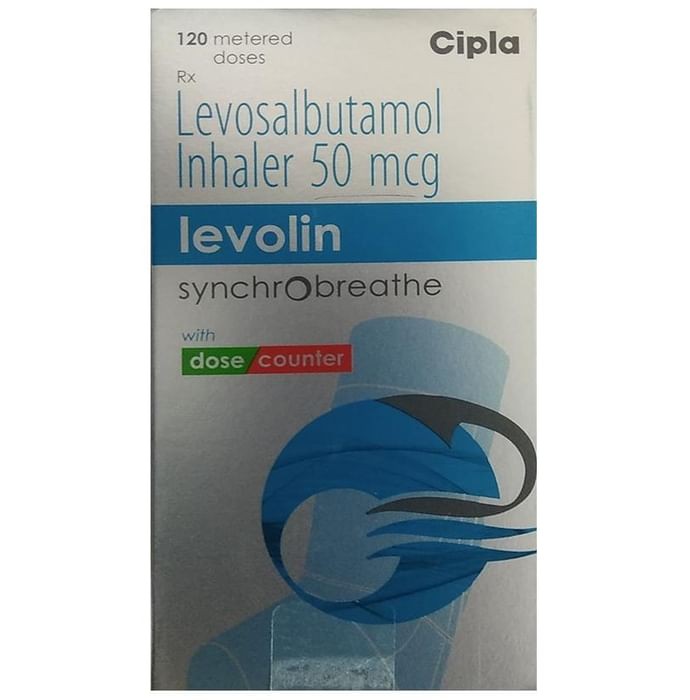
Levolin Synchrobreathe Inhaler

Marketer
Cipla Ltd
Salt Composition
Levosalbutamol (50mcg)
Overview Levolin Synchrobreathe Inhaler
Seretide Accuhaler is a fast-acting bronchodilator, part of a class of medications providing quick relief from breathing difficulties. It's used to manage asthma and COPD symptoms like coughing, wheezing, and breathlessness, offering rapid symptom alleviation. Typically, a preventative inhaler is prescribed alongside Seretide Accuhaler for long-term symptom control. Its effects endure for several hours; use only when symptoms appear (coughing, wheezing, chest tightness, shortness of breath) or before anticipated exertion triggering breathlessness. During asthma attacks, administer the prescribed number of puffs. Proper inhaler technique is crucial for effectiveness. Discontinue use only under your doctor's guidance; abrupt cessation may worsen breathing problems. Common, usually mild and transient side effects include injury, bronchitis, dizziness, pain, sore throat, pharyngitis, nasal congestion, vomiting, tremors, palpitations, chest pain. Severe side effects (chest pain, intense headache, severe dizziness) necessitate immediate medical attention. Before use, inform your doctor about high blood pressure, hyperthyroidism, heart conditions, diabetes, or low potassium levels. Pregnancy or breastfeeding should also be disclosed. Dizziness or shakiness may impair coordination; avoid driving, cycling, or operating machinery until these subside. Smoking exacerbates lung damage and should be avoided.
Uses of Levolin Synchrobreathe Inhaler
Asthma and chronic obstructive pulmonary disease (COPD) management
Major Benefits of Levolin Synchrobreathe Inhaler:
Before using, carefully read the medication instructions. Agitate the inhaler well. Simultaneously initiate inhalation and depress the inhaler once to dispense the medicine; retain your breath for ten seconds. Repeat this process until the prescribed number of inhalations is reached. Finally, rinse your mouth completely with water and discard the rinse water.
Common Side effects of Levolin Synchrobreathe Inhaler:
- Accidental injury
- Bronchitis (inflammation of the airways)
- Dizziness
- Pain
- Pharyngitis
- Nasal congestion (stuffy nose)
- Vomiting
- Chest pain
- Palpitations
- Sore throat
- Tremors
How to use Levolin Synchrobreathe Inhaler:
Before administering, carefully review the product label's instructions. Activate the inhaler by shaking it vigorously. Simultaneously initiate a breath and depress the inhaler once to dispense the medication. Retain your breath for a count of ten. Continue this process until the prescribed dosage, as determined by your physician, is complete. Finally, rinse your mouth completely with water and discard the rinse water.
How Levolin Synchrobreathe Inhaler works:
Synchrobreathe Levolin inhaler opens the airways by relaxing the muscles that constrict them, thus improving breathing function. It acts as a bronchodilator.
SAFETY ADVICE
 AlcoholUNSAFE
Concurrent use of Levolin Synchrobreathe Inhaler and alcohol can result in increased sleepiness.
 PregnancyCONSULT YOUR DOCTOR
Using Levolin Synchrobreathe Inhaler during pregnancy may pose risks. While human research is scarce, animal studies indicate potential harm to a developing fetus. A physician will assess the potential advantages against any risks prior to prescribing. Physician consultation is advised.
 Breast feedingSAFE IF PRESCRIBED
Use of the Levolin Synchrobreathe inhaler is considered safe while breastfeeding. Research in humans indicates minimal drug transfer to breast milk, posing no known risk to the infant.
 DrivingNone
No drug interactions identified.
 KidneyNone
No known drug interactions.
 LiverNone
No known drug interactions.
What if you forget to take Levolin Synchrobreathe Inhaler :
Omit any missed Levolin Synchrobreathe Inhaler dose and resume your usual inhalation regimen. Avoid taking a double dose.
Facts to Know About Levolin Synchrobreathe Inhaler
| Label | Value |
|---|---|
| Chemical Category | Benzyl Alcohol Derivatives |
| Developing Habits | No. |
| Treatment Category | Breathing |
| Action Category | Short-acting beta-2 agonists |
 3,018 People bought this recently