


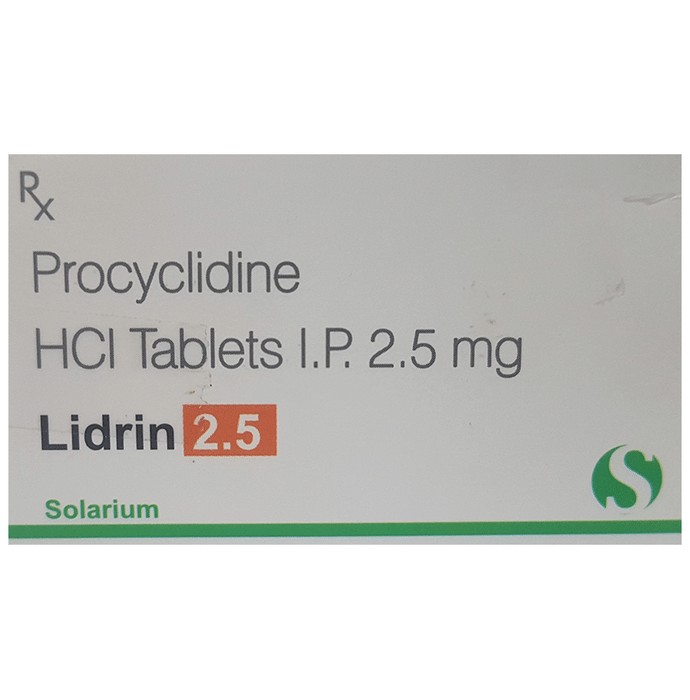
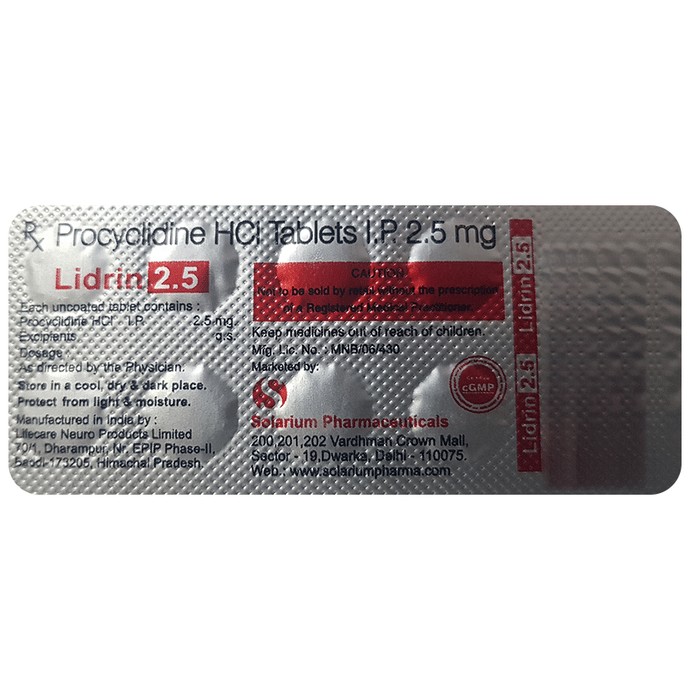
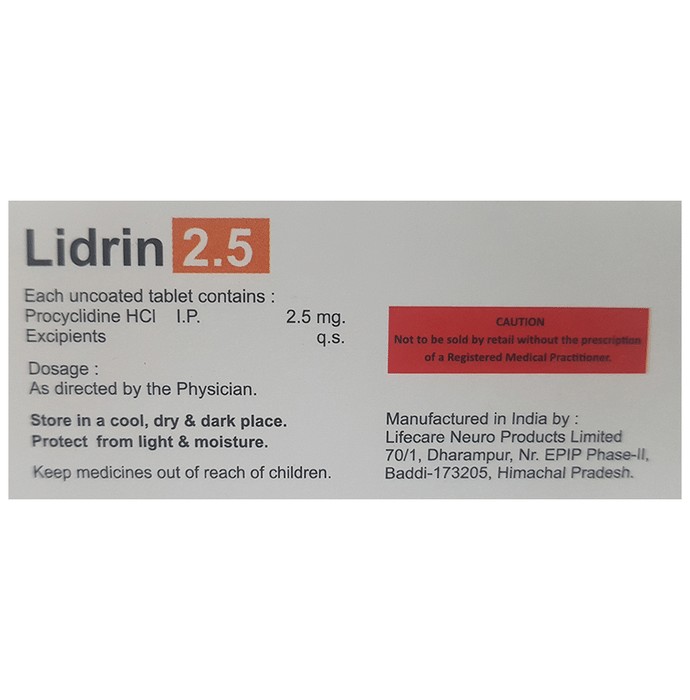
Lidrin 2.5 Tablet

Marketer
Solarium Pharmaceuticals
Salt Composition
Procyclidine (2.5mg)
Overview Lidrin 2.5 Tablet
Parxon 2.5mg tablets are a prescription medication for managing Parkinson's disease and movement disorders caused by other medications. This treatment enhances muscle control, alleviating stiffness for improved mobility. For optimal absorption and minimized side effects, take Parxon 2.5mg with food at the same time daily. Follow your doctor's prescribed dosage and duration; if a dose is missed, take it immediately upon recollection. Complete the entire course, even if symptoms improve, and never discontinue use abruptly without consulting your physician, as this could worsen your condition. Potential side effects include blurred vision, dilated pupils, lightheadedness, nausea, vomiting, upper abdominal discomfort, and constipation. Dizziness is also possible; avoid driving or activities requiring alertness until the medication's effects are known. Dry mouth is common; address this with frequent rinsing, good oral hygiene, and increased fluid intake. Contact lens use should be avoided due to potential dry eye. Inform your doctor about glaucoma or urinary difficulties before starting treatment. Prior to taking Parxon 2.5mg, disclose any history of heart problems, urinary issues, liver or kidney disease, and all other medications you are currently using to ensure safe interaction. Pregnant or breastfeeding women must seek medical advice before commencing this treatment.
Uses of Lidrin 2.5 Tablet
Movement disorders secondary to Parkinson's disease and medication
Major Benefits of Lidrin 2.5 Tablet:
Consume this medication precisely as directed by your physician, adhering to both the prescribed dosage and treatment period. Ingest the tablet whole; avoid chewing, crushing, or fracturing it. It is recommended to take Lidrin 2.5 Tablet with a meal.
Common Side effects of Lidrin 2.5 Tablet:
- Dryness in mouth
- Nausea
- Vomiting
- Constipation
- Blurred vision
- Dizziness
- Lightheadedness
- Dilatation of pupil
- Epigastric pain
How to use Lidrin 2.5 Tablet:
Consume this medication precisely as your physician directs, adhering to the prescribed dosage and timeframe. Ingest the entire tablet; avoid chewing, crushing, or fracturing it. It's recommended to take Lidrin 2.5 Tablet with a meal.
How Lidrin 2.5 Tablet works:
Acarbose 2.5mg tablets offer muscle relaxation by modulating excessive acetylcholine levels in the brain. This action enhances motor control and alleviates rigidity. Consequently, patients with Parkinson's disease experience improved movement fluidity and reduced stiffness. The medication also addresses drug-induced movement disorders, such as akathisia, involuntary movements, or muscle spasms.
SAFETY ADVICE
 AlcoholUNSAFE
Concurrent use of Lidrin 2.5 Tablet and alcohol may result in increased sleepiness.
 PregnancyCONSULT YOUR DOCTOR
The use of Lidrin 2.5 Tablet during pregnancy may pose risks. While human research is scarce, animal studies indicate potential harm to a developing fetus. A physician will assess the potential benefits against these risks prior to prescribing. Physician consultation is recommended.
 Breast feedingCAUTION
The use of Lidrin 2.5 Tablet while breastfeeding requires careful consideration. Mothers should discontinue breastfeeding throughout their treatment and until the medication is fully cleared from their system.
 DrivingUNSAFE
Taking a Lidrin 2.5 Tablet might reduce alertness, impair vision, and cause drowsiness or dizziness. Driving should be avoided if these effects are experienced.
 KidneyCAUTION
Patients with kidney impairment should use Lidrin 2.5mg tablets cautiously; dosage modification may be necessary. Physician consultation is advised.
 LiverCAUTION
Patients with hepatic impairment should use Lidrin 2.5mg tablets cautiously; dosage modification may be necessary. Physician consultation is advised.
What if you forget to take Lidrin 2.5 Tablet :
NA
Facts to Know About Lidrin 2.5 Tablet
| Label | Value |
|---|---|
| Chemical Category | Aralkyl Amine Derivative |
| Developing Habits | No. |
| Treatment Category | Neuroscience, Central Nervous System |
| Behavioral Class | Centrally acting anticholinergic |
 3,018 People bought this recently