


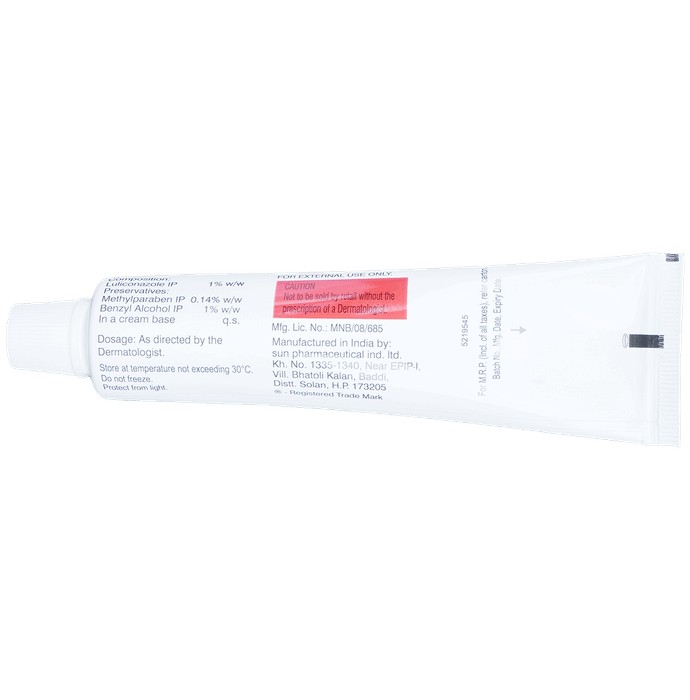
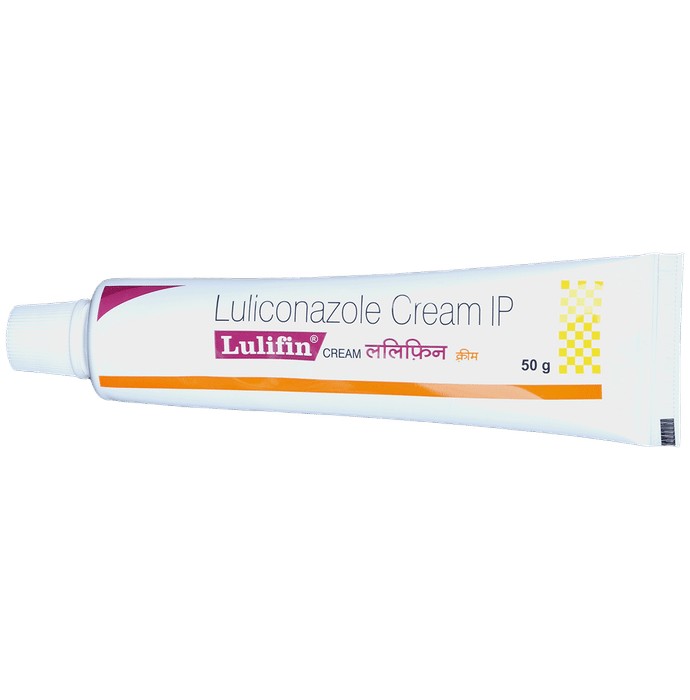
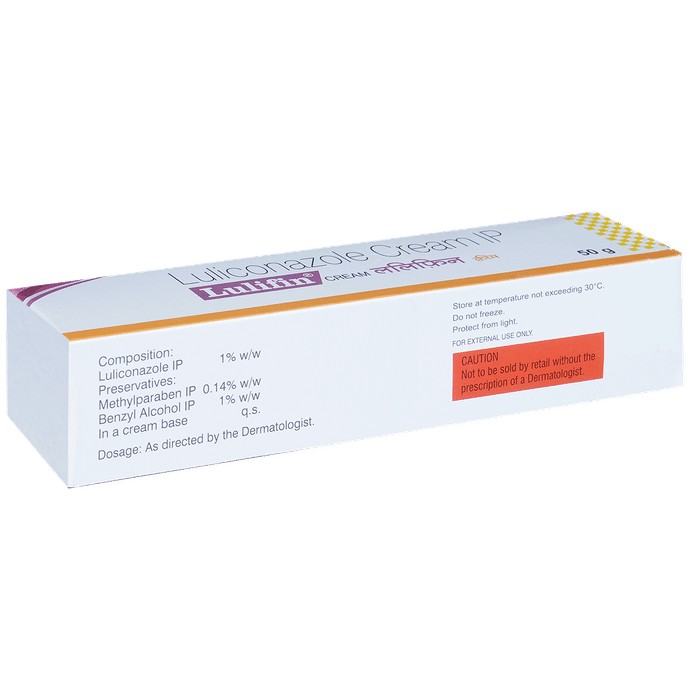
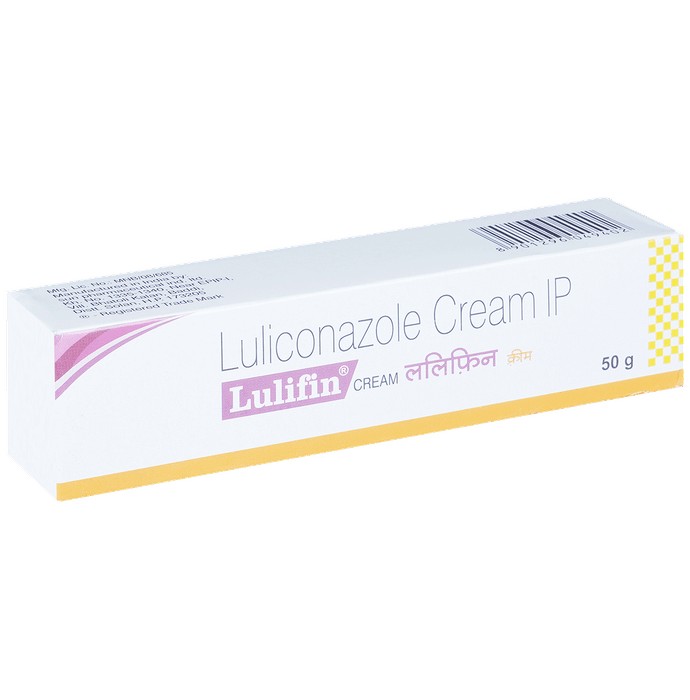
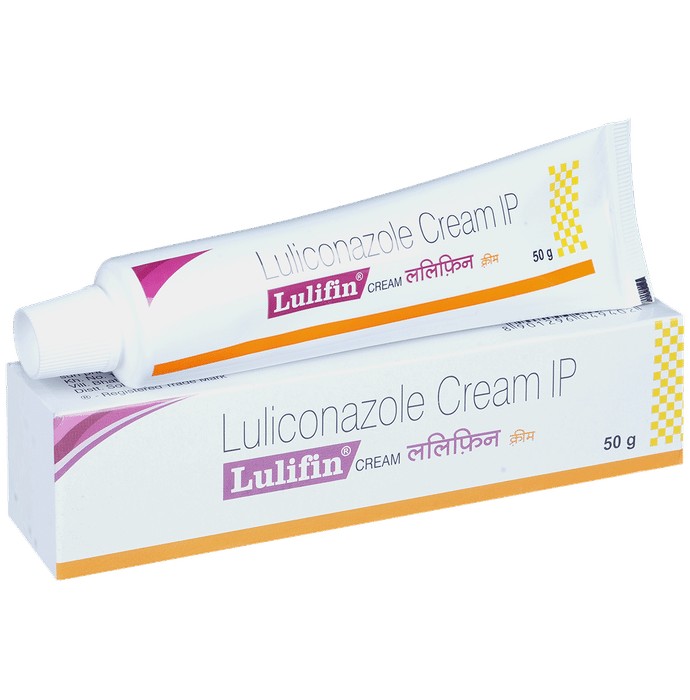
Lulifin Cream

Marketer
Sun Pharmaceutical Industries Ltd
Salt Composition
Luliconazole (1% w/w)
Overview Lulifin Cream
Dermafungin Cream combats various fungal skin infections, including athlete's foot, tinea cruris, candidiasis, ringworm, and xerosis. Its mechanism involves eliminating the causative fungi. Always adhere to your physician's prescribed dosage and duration; exceeding this won't expedite healing and may heighten adverse effects. Most infections resolve within 2–4 weeks. Report any lack of improvement to your doctor. Maintaining a clean, dry affected area and practicing hand hygiene before and after application enhances efficacy. For athlete's foot, ensure thorough sock cleaning and daily shoe changes if feasible. Common, typically transient side effects comprise localized burning, irritation, pruritus, erythema, and dryness. Persistent or bothersome side effects warrant medical consultation. Seek immediate medical assistance for allergic reactions (rash, facial/throat swelling, respiratory distress, nausea). Avoid eye contact; rinse thoroughly with water and seek medical advice if accidental contact occurs. While unlikely, inform your doctor of concurrent medications, especially recent steroid use or prior antifungal allergies. Pregnant or breastfeeding individuals should consult their doctor before use.
Primary Ingredients of Lulifin Cream
There is no text provided to rephrase.
Uses of Lulifin Cream
Managing cutaneous fungal infections
Major Benefits of Lulifin Cream:
Apply this medication solely to the skin's surface. Follow your physician's instructions regarding dosage and treatment length. Always consult the product label for application guidelines. Ensure the affected area is clean and dry before applying the cream. Wash your hands thoroughly afterward, unless the application site is on your hands themselves.
Common Side effects of Lulifin Cream:
- Application site reactions (burning, irritation, itching and redness)
- Dry skin
How to use Lulifin Cream:
Apply this medication topically only. Follow your physician's instructions regarding dosage and treatment length. Always consult the product label for application guidelines. Ensure the affected skin is clean and dry before applying the cream. Wash your hands thoroughly afterward, unless the application site is on your hands.
How Lulifin Cream works:
Fungal skin infections respond to Lulifan Cream, an antifungal agent. Its mechanism of action involves disrupting the fungal cell membrane, thereby eliminating the infection and alleviating associated itching, irritation, and discomfort.
SAFETY ADVICE
 AlcoholNone
No known drug interactions.
 PregnancyCONSULT YOUR DOCTOR
The use of Luliflin Cream during pregnancy may pose risks. While human research is scarce, animal studies indicate potential harm to the fetus. A physician will assess the potential benefits against any risks prior to prescribing. Seek medical advice before use.
 Breast feedingCONSULT YOUR DOCTOR
The use of Lulifen Cream while breastfeeding is likely inadvisable. Available human data indicate a potential for the medication to transfer into breast milk, posing a possible risk to the infant.
 DrivingNone
No known drug interactions.
 KidneyNone
No known drug interactions.
 LiverNone
No known drug interactions.
What if you forget to take Lulifin Cream :
Should you forget a Lulifin Cream application, apply it at your earliest convenience. Nevertheless, if your next scheduled application is imminent, omit the missed application and resume your usual regimen. Avoid applying a double dose.
Facts to Know About Lulifin Cream
| Label | Value |
|---|---|
| Chemical Category | Azole-based compounds |
| Developing Habits | No. |
| Treatment Category | DERMATOLOGY |
 3,018 People bought this recently